When you pick up a prescription, you might see two options: the familiar brand-name pill with the flashy packaging, or a small, plain tablet with a different color and shape-same name, different price. The generic version costs 80-85% less. That’s not a sale. It’s not a discount. It’s the normal way the system works. And here’s why.
Same Medicine, Different Price Tag
Generic drugs aren’t cheaper because they’re weaker. They’re not made with lower-quality ingredients. They don’t skip testing. They work the same way. The FDA requires generics to have the exact same active ingredient, strength, dosage form, and route of administration as the brand-name drug. If you take generic atorvastatin, it’s the same molecule as Lipitor. Generic omeprazole is chemically identical to Prilosec. The body can’t tell the difference.Why Brand Drugs Cost So Much
Brand-name drug companies spend years and billions of dollars before a single pill hits the shelf. On average, it takes 8 to 12 years to develop a new drug. That includes lab research, animal testing, and three phases of clinical trials on thousands of people. The Tufts Center for the Study of Drug Development estimates the total cost per approved drug is about $2.6 billion. That’s not just salaries and lab supplies-it’s failed drugs, lawsuits, marketing campaigns, and years of lost revenue while waiting for approval. Once the drug is approved, the company gets 20 years of patent protection from the date they first filed. That’s their chance to make back that money-and then some. During those 20 years, no one else can legally make the same drug. That’s monopoly pricing. And it’s why you might pay $500 a month for Lipitor, while the generic version costs $4.How Generics Skip the Cost
Generic manufacturers don’t have to start from scratch. When a brand-name drug’s patent expires, any company can apply to make a copy. But they don’t need to repeat the animal studies or clinical trials. Instead, they submit an Abbreviated New Drug Application (ANDA). All they have to prove is bioequivalence: that their version delivers the same amount of active ingredient into the bloodstream at the same rate as the brand. The FDA requires this difference to be within 80-125%-a tight range that ensures the effect is identical. This cuts development time from over a decade to just 1 to 3 years. The cost? Around $1 to $5 million per generic drug. That’s a 99% drop in upfront investment. No need to fund massive trials. No need to pay for years of marketing to doctors. No need to recover billions in lost time. The savings are real-and they’re passed on to you.It’s Not Just One Company-It’s a Race
Once a patent expires, multiple generic companies jump in. On average, 14 different manufacturers will make the same generic drug. That’s not just competition-it’s a price war. The first company to file might get a 180-day exclusivity period, but after that, everyone else enters. Prices drop fast. Within a year, generics often cost 80-90% less than the brand. By year three, you might see multiple brands selling for under $10 a month. This isn’t theoretical. In 2022, generics made up 90.5% of all prescriptions filled in the U.S.-but only 18% of total drug spending. Brand-name drugs, which make up less than 10% of prescriptions, account for 82% of the money spent. That’s the power of competition.
What’s Different About Generics?
You might notice the pill looks different. Maybe it’s a different color, shape, or has a different imprint. That’s because trademark laws prevent generics from looking exactly like the brand. The inactive ingredients-fillers, dyes, flavorings-can also vary. These don’t affect how the drug works. But they can cause minor differences in how fast the pill dissolves or how it tastes. For most people, this doesn’t matter. But for drugs with a narrow therapeutic index-like warfarin, levothyroxine, or phenytoin-small changes in blood levels can matter. That’s why some doctors prefer to keep patients on the same brand or generic manufacturer. But the FDA says: if a generic is approved, it’s safe to use. Switching between approved generics is not dangerous.Why People Still Doubt Generics
Even though 84% of Americans agree generics are just as effective, 62% still trust brand-name drugs more. Why? Because of appearances. A pill that looks different feels unfamiliar. A 2023 Tebra survey found that 27% of patients complained about the size, color, or shape of generic pills. Some people report side effects after switching-even though studies show it’s often the placebo effect. There’s also misinformation. On Reddit, you’ll find posts like, “I switched from Concerta to generic methylphenidate and my ADHD got worse.” But in most cases, the issue isn’t the drug-it’s the difference in how the pill is absorbed. Some generic versions use different release technologies. If you’re used to an extended-release brand, switching to a generic that releases faster can cause a spike in side effects. The solution? Talk to your pharmacist. Ask if the generic is the same release type. Most are.How Insurance Makes Generics Even Cheaper
Most insurance plans have a three-tier system. Tier 1 is generics. Copay: $0 to $15. Tier 2 is brand-name drugs. Copay: $25 to $50. Tier 3 is specialty drugs. Coinsurance: 25-33% of the full price. Your plan doesn’t just encourage generics-it forces you to use them. If you ask for the brand when a generic is available, your pharmacy will usually fill the generic unless your doctor requests an exception. Pharmacists are trained to substitute generics automatically in 49 states. They’re supposed to explain the switch. A good pharmacist will spend 3 to 5 minutes telling you: “This is the same medicine. It just looks different. It’s cheaper. And it works the same.”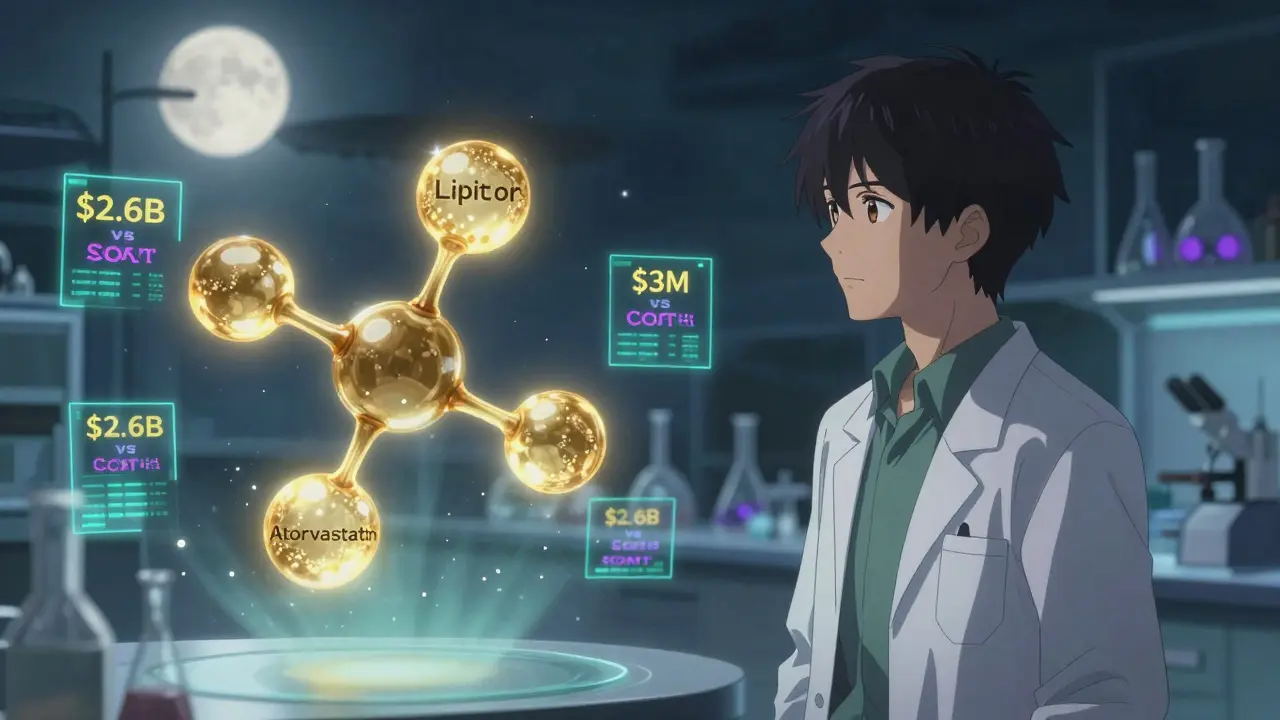
The Real Impact: Billions Saved
In 2022 alone, generic drugs saved the U.S. healthcare system $293 billion. From 2007 to 2016, they saved $1.67 trillion. That’s not just money in your pocket. It’s fewer people skipping doses because they can’t afford their meds. It’s fewer hospital visits from uncontrolled diabetes or high blood pressure because patients stayed on treatment. The top five generic manufacturers-Teva, Viatris, Sandoz, Amneal, and Aurobindo-control nearly half the market. The FDA approved over 1,000 generic drugs in 2022. And with 150 brand-name drugs set to lose patent protection by 2028, those savings will keep growing.What You Can Do
If you’re paying full price for a brand-name drug, ask your doctor or pharmacist: “Is there a generic?” If there is, and your insurance covers it, you’re likely paying 80-85% more than you need to. Don’t assume the brand is better. Don’t assume the generic is weaker. The science says they’re the same. The price difference isn’t a trick-it’s the system working as designed.What About Biosimilars?
There’s a new wave coming: biosimilars. These are generic versions of complex biologic drugs-like insulin, rheumatoid arthritis treatments, or cancer therapies. They’re harder to copy, so they cost less than the brand but more than traditional generics. Still, they’re saving patients thousands a year. By 2028, biosimilars could save the system another $50 billion annually.Final Thought
You don’t need to choose between quality and cost. Generics give you both. The reason they’re so cheap isn’t because they’re inferior. It’s because they don’t have to pay for the brand’s R&D, marketing, or monopoly pricing. The system is built to reward innovation-but also to reward competition. And that’s good for everyone.Are generic drugs as safe as brand-name drugs?
Yes. The FDA requires generic drugs to meet the same strict standards for safety, purity, and strength as brand-name drugs. They must contain the same active ingredient, work the same way in the body, and deliver the same therapeutic effect. The FDA inspects over 12,000 manufacturing facilities worldwide each year, and both brand and generic manufacturers follow the same quality rules.
Why do generic pills look different?
Trademark laws prevent generic manufacturers from making their pills look identical to the brand-name version. That means the color, shape, size, or imprint may be different. But these changes only affect appearance-not how the drug works. The active ingredient is identical. If you’re concerned, ask your pharmacist to explain what each pill contains.
Can I switch between different generic brands?
Yes, for most medications. All FDA-approved generics are bioequivalent. But for drugs with a narrow therapeutic index-like warfarin, levothyroxine, or seizure medications-some doctors prefer you stick with one manufacturer. If you notice changes in how you feel after switching generics, talk to your doctor. It’s rare, but not impossible.
Do generics take longer to work?
No. Bioequivalence testing ensures generics enter your bloodstream at the same rate and to the same extent as the brand. If you take a generic version of a fast-acting painkiller, it will work just as quickly. If you take a slow-release generic, it will release over the same time period. The only exception is if the generic uses a different release technology-something your pharmacist can clarify.
Why do some people say generics don’t work for them?
Sometimes, it’s psychological-people expect a different result because the pill looks different. Other times, it’s a switch from a brand to a generic with a different release profile. Rarely, it’s a manufacturing issue. If you feel worse after switching, don’t assume the generic is bad. Talk to your doctor. They can check your blood levels or switch you back. But in most cases, the problem isn’t the drug-it’s the change.
Are generics made in the same places as brand-name drugs?
Yes. Many brand-name and generic drugs are made in the same factories. The FDA doesn’t distinguish between them in inspections. In fact, about 40% of brand-name drugs sold in the U.S. are made overseas, mostly in India and China. The same is true for generics. The location doesn’t determine quality-the FDA’s inspections do.


