More than 90% of prescriptions in the U.S. are filled with generic drugs. They’re cheaper, widely available, and trusted - or at least they used to be. But today, hospitals are scrambling. Pharmacists are calling patients to explain why their usual medication isn’t in stock. Cancer treatments, antibiotics, heart meds, even basic pain relievers like acetaminophen are vanishing. And it’s not random. This isn’t a temporary glitch. It’s a system breaking down - and the root cause isn’t bad luck. It’s generic manufacturing.
The price game that broke the system
Generic drug makers don’t compete on quality. They compete on pennies. A single tablet of a common generic antibiotic might sell for $0.02. A new manufacturer enters the market and offers it for $0.018. The next one drops to $0.015. Soon, no one can make money. That’s not speculation - it’s how group purchasing organizations (GPOs) and pharmacy benefit managers (PBMs) structure contracts. They pick the lowest bidder, every time. Margins for generic manufacturers have collapsed to 15-20%, and for some drugs, they’re below 5%. When your profit per pill is less than the cost of the packaging, you stop making it.Where your medicine is really made
You might think your generic pill is made in America. It’s not. Nearly 80% of the active ingredients (APIs) in U.S. generic drugs come from just two countries: India and China. The FDA found that 97% of antibiotics, 92% of antivirals, and 83% of the top 100 generic drugs have zero API production in the U.S. That means your heart medication, your insulin, your chemotherapy drug - the raw chemical that makes it work - was likely made in a factory thousands of miles away. This global supply chain isn’t just long. It’s fragile. In early 2020, India halted exports of 26 essential medicines, including acetaminophen. China shut down 44 drug-making facilities during the pandemic. Suddenly, hospitals ran out of critical drugs. No backups. No stockpiles. Just silence.Quality control in a broken chain
Making a generic drug sounds simple: copy the brand-name version. But it’s not. The API might be made in India, blended with fillers in the Philippines, coated in Germany, and packaged in Mexico. Each step adds risk. The FDA found serious quality issues at Intas Pharmaceuticals in 2022 - systematic problems with their cancer drug cisplatin. The result? A full recall. No more cisplatin in the U.S. for months. Patients had to wait. Some died. A 2023 study showed generic drugs made in India had 54% more serious adverse events - including hospitalizations and deaths - compared to identical drugs made in the U.S. That doesn’t mean all Indian-made drugs are dangerous. But it does mean the oversight isn’t consistent. U.S. manufacturers maintain 95%+ accuracy in their batch records. Some foreign suppliers hover around 78%. That gap isn’t just paperwork. It’s patient safety.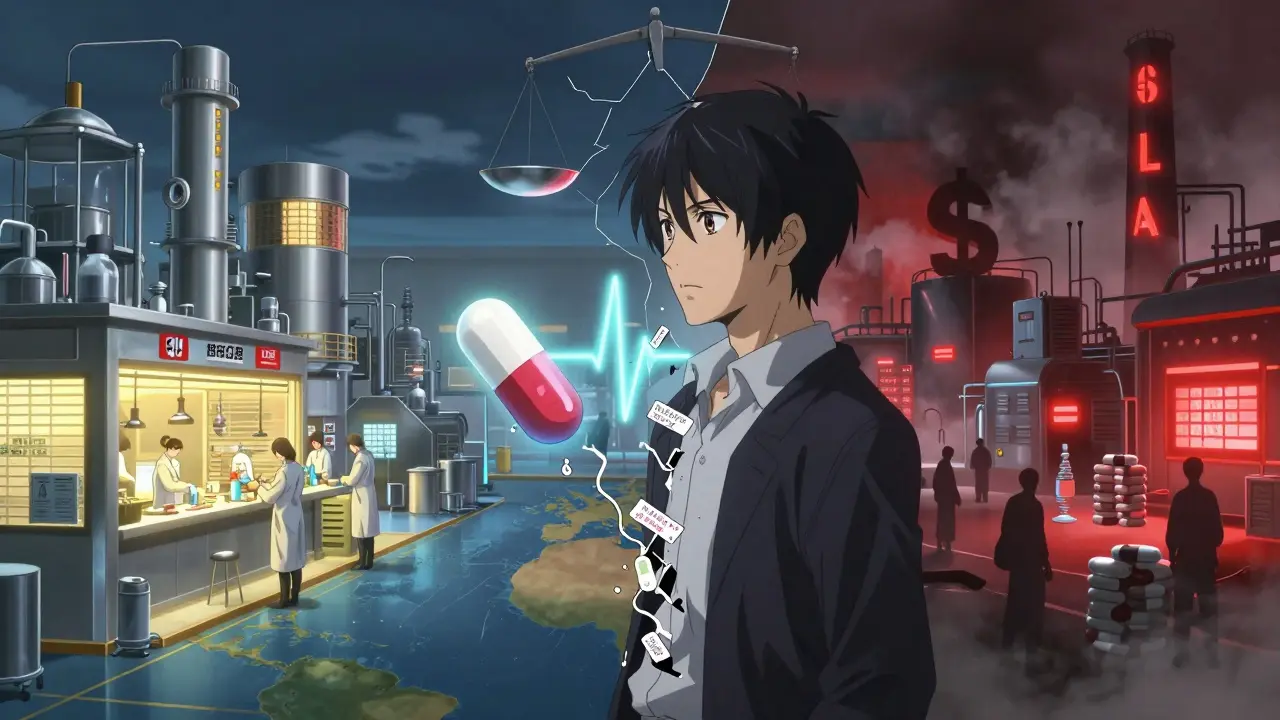
The cost of doing it right
Building a single FDA-compliant manufacturing facility in the U.S. costs between $250 million and $500 million. It takes 3 to 5 years. In India or China, it’s $50 million and 18 months. The FDA requires unannounced inspections, 5-7 years of documentation, and immediate fixes for any violations. A single FDA Form 483 - a list of inspection flaws - can cost a company $1.7 million and 18 months to fix. That’s why so many generic manufacturers avoid the U.S. market entirely. They can’t afford the cost of compliance. Meanwhile, the U.S. government spends less than $100 million a year on inspecting foreign drug plants. There are now 40% more foreign facilities needing inspection than there were in 2020. The FDA’s response? Call manufacturers and ask them nicely to make more.Who’s left standing?
The market has consolidated. In 2010, the top five generic makers controlled 22% of the market. Today, they control 48%. Over the past decade, 37% of U.S.-based generic manufacturers have shut down or run idle. The ones still in business? They’re stretched thin. When Akorn Pharmaceuticals went bankrupt in 2023, it pulled 100+ generic drugs off the market overnight. No alternatives. No backups. Just chaos. Hospitals are starting to fight back. In 2023, 68% of health systems reported bypassing GPOs and signing direct contracts with manufacturers. Why? Because they’re tired of being priced out of life-saving drugs. But that’s a patch, not a fix. It doesn’t solve the root problem: no one is paid enough to make quality drugs reliably.
What’s being done - and why it’s not enough
Congress has introduced bills to offer tax breaks for U.S. API production. The FDA has a program to approve continuous manufacturing - a modern, more reliable method - but only 12 facilities have adopted it since 2019. That’s less than 3% of total production. The Biden administration added $80 million to FDA inspection budgets in 2024. That’s a 12% increase. But with 72% of API facilities overseas and 278 active drug shortages as of October 2023 - the highest number ever - it’s like pouring a cup of water into a sinking ship. Experts agree: this isn’t a supply issue. It’s an economic one. The market rewards the cheapest product, not the safest, most reliable one. And when quality and reliability are punished, the system collapses.What this means for you
If you take a generic drug daily - for blood pressure, thyroid, depression, or diabetes - you’re at risk. When a shortage hits, you may be forced to switch to the brand-name version. One Medicare patient saw their monthly cost jump from $10 to $450. Others had to delay cancer treatment because the generic chemo drug wasn’t available. Nurses report switching 80+ patients to alternative meds, with careful monitoring. That’s not care. That’s damage control. The next time you hear about a drug shortage, don’t think it’s just bad luck. Think about the factory in India that couldn’t afford the upgrade. Think about the U.S. company that walked away because they couldn’t make a dime. Think about the system that values a penny less per pill over your life.What needs to change
We need to stop pretending generic drugs are just cheaper versions of the same thing. They’re not. They’re made under different rules, by different companies, with different incentives. To fix this:- Pay manufacturers enough to make quality drugs - even if it means higher prices for a few cents more per pill.
- Incentivize domestic API production with real funding, not tax credits.
- Require stockpiles of critical generics - like we do for vaccines and antibiotics.
- Stop letting GPOs pick suppliers based solely on price.
- Give the FDA real authority to enforce quality - not just ask nicely.
The answer is already here. It’s not about supply. It’s about value.
Why are generic drugs running out if they’re so common?
Generic drugs make up 90% of prescriptions but only 20% of drug spending. Manufacturers make so little profit per pill - sometimes less than a penny - that they can’t afford to keep making them. When prices drop below production costs, companies stop. No one makes money, so no one makes the drug.
Are generic drugs made in the U.S.?
Only 14% of active pharmaceutical ingredients (APIs) for U.S. generic drugs are made domestically. The rest come from India and China. Even pills labeled ‘Made in the USA’ often contain foreign-sourced ingredients. The final packaging might happen here, but the key chemical? Almost always imported.
Why don’t U.S. companies just build more factories?
Building a single FDA-compliant drug factory in the U.S. costs $250-500 million and takes 3-5 years. In India or China, it’s $50-100 million and takes half the time. With razor-thin margins, U.S. companies can’t justify the investment. Foreign manufacturers can undercut them on price, so why bother?
Are foreign-made generics less safe?
Not all, but the data shows a pattern. A 2023 study found generic drugs made in India had 54% more serious adverse events - like hospitalizations and deaths - than identical drugs made in the U.S. This doesn’t mean every foreign-made drug is dangerous. But it does mean quality control is inconsistent. The FDA can’t inspect every facility often enough to catch every problem.
What can I do if my generic drug is unavailable?
Talk to your doctor or pharmacist. Ask if there’s an alternative brand or formulation. Some patients end up switching to the brand-name version - which can cost 10-50 times more. If you’re on Medicare or Medicaid, ask about patient assistance programs. You can also check the FDA’s drug shortage website for updates and alternatives.
Will this get better on its own?
No. Without changes to how generics are priced and regulated, shortages will keep getting worse. The number of manufacturers is shrinking. The supply chain is more fragile than ever. Experts predict at least 15 major drug shortages every year through 2030 unless the system is fixed. This isn’t a temporary problem - it’s a structural collapse.


