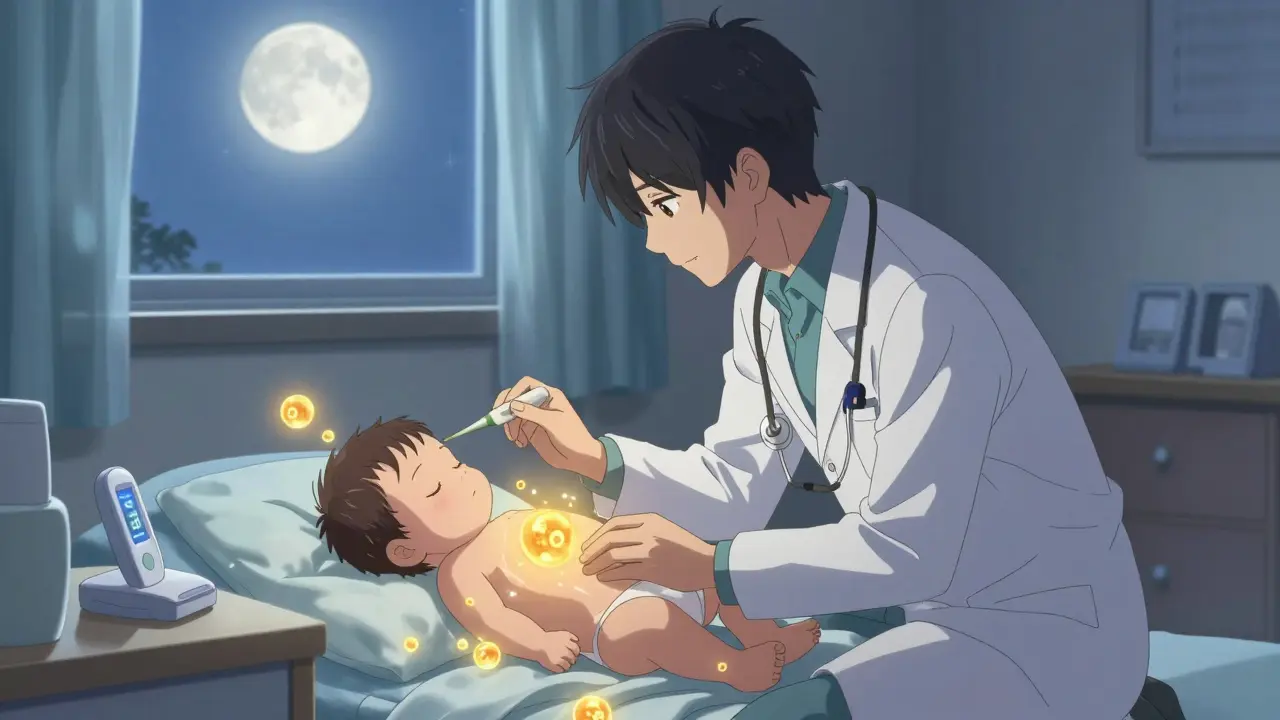
It’s normal to worry when your child gets a fever after a vaccine. You want to help them feel better-fast. But giving fever reducers too soon might actually make the vaccine less effective. The science is clear: vaccination fever reducers should not be given before or right after the shot, unless your child is truly uncomfortable or has a high fever.
Why Fever After Vaccines Is Normal
Fever isn’t a side effect-it’s a sign your child’s body is doing exactly what it’s supposed to. Vaccines work by tricking the immune system into thinking it’s fighting an infection. That triggers inflammation, which can raise body temperature. It’s not dangerous. It’s proof the vaccine is working. Studies show that about 1 in 3 babies develop a fever after common vaccines like Prevnar 13 or Pediarix. The MenB vaccine is even more likely to cause fever-up to 40% of infants. But here’s the key: fever usually starts within 12 hours and lasts less than 48 hours. Most children bounce back without any medicine at all.The Problem with Giving Medicine Too Early
In the early 2000s, many doctors recommended giving acetaminophen (Tylenol) before or right after vaccines to prevent fever. Parents thought they were helping. But research published in The Lancet in 2009 and later studies revealed something surprising: preemptive fever reducers can lower antibody responses. One major study compared two groups of babies. One group got acetaminophen at the time of vaccination and again at 6 and 12 hours. The other group only got medicine if they developed a fever after 4 hours. The babies who got medicine early had significantly lower antibody levels against several vaccine components-including pneumococcus and tetanus. It’s not that the vaccines failed. Antibody levels were still above the protective threshold. But the immune system didn’t respond as strongly as it could have. Think of it like training for a race. If you take painkillers before your workout, you might feel better, but you won’t build as much strength.When to Wait-and When to Act
The best rule? Wait at least 4 hours after the vaccine before giving any fever reducer. By then, if your child is developing a fever, it’s clear the body is reacting-and giving medicine won’t interfere with the immune response. Use fever reducers only if your child has a temperature above 102°F (39°C) or seems unusually fussy, lethargic, or uncomfortable. For low-grade fevers (100-102°F), skip the medicine. Let the fever do its job. Dress your child in light clothes, offer extra fluids, and keep the room cool. A warm bath can help too.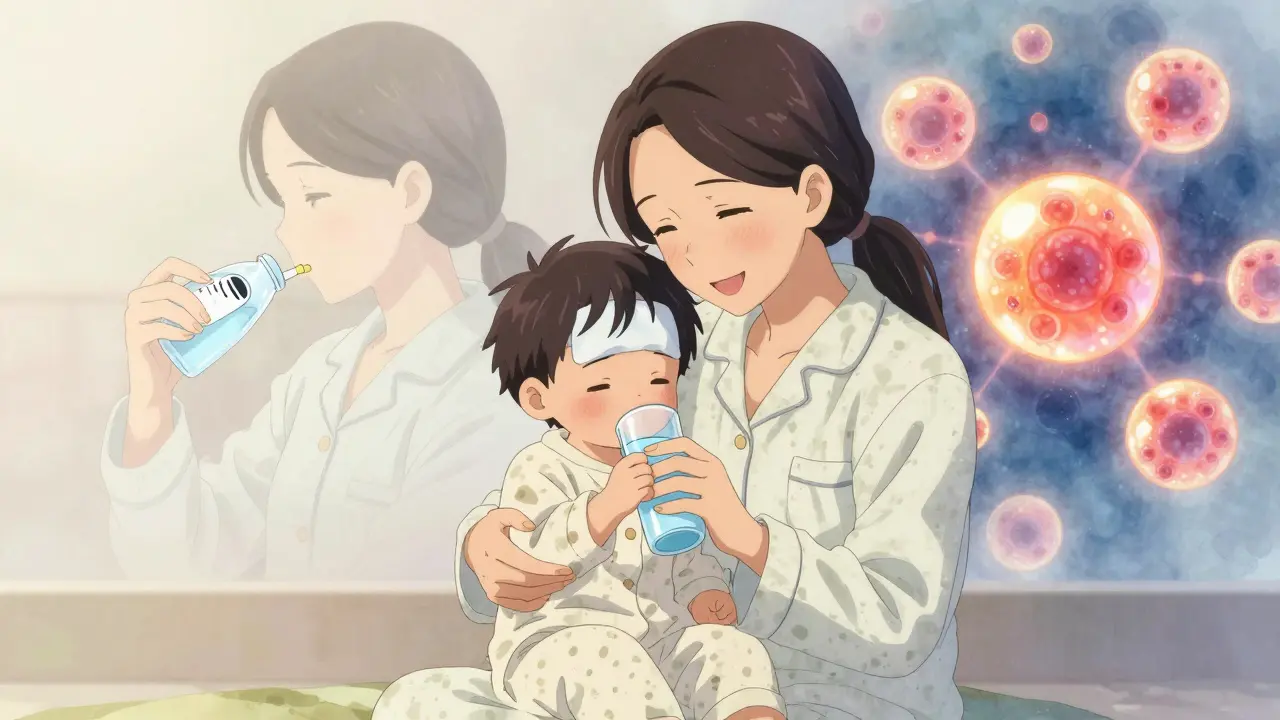
Which Medicine to Use-and How Much
Only two fever reducers are safe for infants: acetaminophen (Tylenol) and ibuprofen (Advil, Motrin). Never give aspirin. It’s linked to Reye syndrome, a rare but deadly condition in children. Acetaminophen: Can be used in babies 12 weeks and older. Dose is based on weight. For a baby weighing 18-23 lbs (8-10 kg), that’s 1.25 mL of infant drops. Give every 4 to 6 hours, no more than 4 doses in 24 hours. Ibuprofen: Only for babies 6 months and older. Same weight-based dosing: 2.5 mL for an 18-23 lb infant. Give every 6 to 8 hours, no more than 4 doses in 24 hours. If your baby is under 12 weeks old and has a fever, call your doctor immediately. Don’t give any medicine without medical advice.The One Big Exception: MenB Vaccine
The UK’s National Health Service (NHS) is the only major health body that recommends giving paracetamol (acetaminophen) right after the MenB vaccine-at 8 weeks and 16 weeks. Why? Because this vaccine causes high fevers more often than others, and in some babies, those fevers can lead to seizures. The NHS advises giving three doses: one right after the shot, then again at 6 and 12 hours later. This is a targeted, evidence-based exception-not a general rule. If your child is getting MenB, check your country’s guidelines. In the U.S., most pediatricians still follow the 4-hour wait rule, even for MenB.
What to Do If Your Child Gets a Fever
1. Check the temperature. Use a digital thermometer under the armpit or rectum for babies under 3 months. 2. Wait 4 hours. Don’t rush to medicine. Monitor behavior. 3. Hydrate. Offer breast milk, formula, or water more often. 4. Dress lightly. Over-bundling traps heat and makes fever worse. 5. Call your doctor if: fever lasts more than 48 hours, your child won’t drink, is unusually sleepy, has a rash, or is under 12 weeks old.What Doesn’t Work
- Giving medicine before the vaccine to "prevent" fever. It reduces immunity. - Using alcohol rubs or cold baths. These cause shivering, which raises body temperature. - Giving adult doses or mixing medicines. Always use pediatric formulations. - Waiting too long to act. If your child is in distress at 103°F, don’t wait until midnight to call the doctor.Final Thought: Trust the Process
It’s hard to watch your child feel unwell. But fever after a vaccine is a sign of a strong immune system-not a broken one. The goal isn’t to eliminate every bump in the road. It’s to let your child’s body learn how to fight off dangerous diseases. Vaccines have cut childhood deaths from infections by more than 90% over the last 50 years. Even if a fever reducer slightly lowers antibody levels, the protection is still far better than no vaccine at all. But giving medicine at the right time? That gives your child the best chance of full, lasting immunity.Can I give my baby fever medicine before their vaccines?
No. Giving fever reducers like acetaminophen or ibuprofen before vaccination can reduce how well the vaccine works. Studies show lower antibody responses when medicine is given before or right after the shot. Wait at least 4 hours after vaccination unless your child is in obvious distress.
Is it safe to give Tylenol after the vaccine?
Yes, but only if needed. If your child develops a fever above 102°F (39°C) or seems very uncomfortable more than 4 hours after the shot, acetaminophen is safe and effective. Always use the correct dose based on weight. Do not give it to babies under 12 weeks old without talking to your doctor first.
Should I give medicine if my child has a low-grade fever after vaccination?
No. Fevers between 100°F and 102°F are normal and help the immune system respond better. Giving medicine for low-grade fevers may actually slow down the body’s natural defense. Focus on keeping your child hydrated and comfortable instead.
Can I give ibuprofen instead of acetaminophen after vaccines?
Ibuprofen is safe after vaccines, but only for babies 6 months and older. Like acetaminophen, wait at least 4 hours after vaccination before giving it. Use weight-based dosing-never guess. Do not use ibuprofen in infants under 6 months unless directed by a doctor.
Why does the NHS recommend paracetamol after MenB vaccine?
The MenB vaccine causes high fevers in up to 40% of infants, and in rare cases, those fevers can lead to seizures. The NHS recommends three doses of paracetamol after the 8-week and 16-week MenB shots to reduce this risk. This is a specific exception based on high fever rates for this vaccine only. Other vaccines don’t require this approach.
What if my baby has a fever before the vaccine?
A mild fever (under 102°F) or cold doesn’t stop your child from getting vaccinated. The CDC says vaccines still work well even if your child has a minor illness. Only delay the shot if your child has a high fever (above 102°F) or seems very unwell. Talk to your doctor if you’re unsure.
How long does vaccine fever usually last?
Most vaccine-related fevers last 1 to 2 days. They usually peak within 24 hours and then start to drop. If the fever lasts longer than 48 hours, or if your child develops new symptoms like a rash, vomiting, or extreme sleepiness, contact your healthcare provider.


