
There is a specific kind of panic that hits when you are standing at the airport security line, realizing your carry-on bag is too heavy to lift onto the scale. Now imagine that same panic, but multiplied by ten because your insulin is in that bag. Traveling with diabetes isn't just about booking flights; it is a logistical operation that requires military-grade precision. If you mess up the packing, you risk hypoglycemia, hyperglycemia, or worse-a medical emergency in a country where you don't speak the language.
The good news? You can travel safely. In fact, thousands of people with Type 1 and Type 2 diabetes fly, drive, and cruise every day without incident. The difference between a smooth trip and a disaster comes down to one thing: preparation. This guide cuts through the noise and gives you the exact checklist, temperature rules, and TSA hacks you need to pack your diabetes management kit correctly.
The Golden Rule: Pack Double, Always
If you take nothing else from this article, remember this: pack twice the amount of medication and supplies you think you will need. This is not paranoia; it is standard advice from the American Diabetes Association (ADA) and major healthcare providers like Byram Healthcare. Planes get delayed. Luggage gets lost. Sensors fail. You do not want to be stranded in an airport terminal trying to find a pharmacy that sells Dexcom transmitters or U-100 insulin.
- Insulin: Bring enough for the entire trip plus an extra 3-5 days.
- CGM Sensors: If your trip is one week long, bring three sensors instead of two. One wears out, one might reject upon application, and one is for backup.
- Test Strips: Pack 50-100% more than your daily usage rate. Batteries die, meters glitch, and you always need a fingerstick backup if your CGM loses signal.
- Lancets: These are small, cheap, and easy to forget. Bring a full box.
Why double up? Because supply chains break. A 2022 survey by Beyond Type 1 found that 68% of diabetic travelers experienced at least one travel-related incident, with "inability to access backup supplies" being a top stressor. Having that extra buffer turns a potential crisis into a minor inconvenience.
Temperature Control: Keeping Insulin Safe
Insulin is fragile. It works best when kept between 40°F and 86°F (4°C - 30°C). Once opened, it needs to stay at room temperature, but "room temperature" in a car parked under the July sun in Durban or Phoenix can easily hit 120°F. Conversely, the cargo hold of an airplane can drop below freezing, which ruins insulin instantly.
Never check your insulin. The ADA explicitly states that all diabetes medications must travel in your carry-on luggage. Checked bags are stored in unpressurized, unheated compartments where temperatures fluctuate wildly. A study published in the *Journal of Diabetes Science and Technology* showed that exposure to temperatures below 40°F can reduce insulin effectiveness by up to 30%.
To keep your insulin safe, invest in specialized cooling gear:
- Frio Insulin Cooling Sleeve: This is a phase-change material case that keeps insulin cool for up to 7 days without ice packs or electricity. It’s perfect for summer travel or hot climates.
- Sugar Medical Insulated Travel Bag: Great for short trips or keeping multiple vials organized. Users report maintaining safe temperatures during 12+ hour flights.
- Soft Coolers: For longer trips, use a soft-sided cooler with gel ice packs. Just ensure the ice packs are frozen solid before you go through security (more on that later).
Note: Newer insulins like Tresiba U-200 offer room-temperature stability for up to 8 weeks, which simplifies packing significantly. Check with your doctor if switching formulations makes sense for your travel lifestyle.
Packing Your CGM and Pump Gear
Continuous Glucose Monitors (CGMs) like Dexcom G7 or Abbott FreeStyle Libre have changed the game for travelers. No more fingersticks every few hours means less hassle at restaurants and airports. But they come with their own packing quirks.
Sensors and Adhesives: Sensors can fall off due to sweat, rain, or friction from backpack straps. Pack extra sensors, but also pack adhesive support. Products like Skin Grip CLEAR tape or SenStick protectors are lifesavers. They add waterproofing and keep the sensor glued to your skin during swimming or hiking.
Transmitters and Chargers: If you use a Dexcom, your transmitter is reusable but fragile. Keep it in a hard case. Don’t rely on finding a charger at your hotel; bring your own USB cable and a portable power bank. Airplane Wi-Fi often interferes with Bluetooth signals, so knowing how to manually upload data or read values directly from the sensor site is crucial.
For Insulin Pump Users: Pumps are complex machines. If yours fails, you need a manual backup plan. Pack:
- Extra infusion sets (at least 2-3 backups).
- Reservoirs.
- Syringes and needles for subcutaneous injections.
- A letter from your pump company (Tandem, Omnipod, Medtronic) confirming you are a patient. Many companies offer "loaner pumps" for international travel-apply for these weeks in advance.
Navigating Airport Security (TSA Rules)
Going through airport security with diabetes supplies used to be a nightmare. Today, the Transportation Security Administration (TSA) has clear rules, but you still need to advocate for yourself.
What You Can Carry: The TSA allows all diabetes-related liquids, gels, and aerosols in quantities greater than 3.4 ounces (100ml). This includes insulin vials, syringes, lancets, and even ice packs. You do not need to declare them separately unless asked, but having them organized helps.
How to Speed Up Screening:
- Use Clear Bags: Put all your meds, strips, and testing devices in a separate, clear, sealable plastic bag. When you reach the bin, place this bag in its own tray. TSA agents can see exactly what it is without digging through your toiletries.
- TSA Disability Notification Card: Download and print the TSA Cares card or the general Disability Notification Card. Hand it to the officer as you approach the scanner. Studies show this reduces screening delays by over 40%.
- Declare Ice Packs: If you have frozen gel packs, tell the agent immediately. They may need to be screened separately, but they are allowed.
- Insulin Pumps: You can wear your pump through metal detectors. However, you may be asked to walk through a millimeter-wave scanner. Inform the officer that you have a medical device. Do not put your pump through the X-ray machine; request a hand wand search instead.
Remember: You have the right to request a private screening if you feel uncomfortable exposing your device or supplies in public.
Essential Documentation: Your Paper Trail
Technology fails. Phones die. In a foreign hospital, a doctor won’t trust your phone app. They need paper.
Doctor’s Letter: Dr. Anne Peters, a leading endocrinologist, calls this the "most overlooked item." Get a letter from your doctor on official letterhead that includes:
- Your diagnosis (Type 1 or Type 2).
- List of all medications and dosages.
- Medical necessity for carrying needles, syringes, and sharps.
- Emergency contact information for your care team.
- Your blood glucose targets and correction factors.
Insurance Cards: Carry physical copies of your health insurance card and any travel insurance policy details. Know the name and address of the nearest hospital or urgent care center to your destination. Apps like "Find a Hospital" can help, but having it written down is safer.
Medication Labels: Keep all insulin and meds in their original pharmacy-labeled containers. Generic bottles raise red flags at customs, especially in countries with strict drug laws.

Snacks and Low-Blood Sugar Management
Travel disrupts eating schedules. Flights delay meals. Sightseeing burns more calories than expected. Hypoglycemia (low blood sugar) is the most common travel emergency, affecting 42% of diabetic travelers according to Beyond Type 1.
Ditch the Glucose Tablets: While effective, glucose tablets are bulky and tasteless. Instead, pack compact, high-carb snacks that are easy to eat on the go:
- Fruit Leathers: Pure organic fruit leathers are lightweight, non-perishable, and provide quick carbs without the bulk of bars.
- Hard Candy: Skittles or jellybeans are universal. Everyone knows how many carbs are in a handful.
- Crackers and Cheese: For sustained energy, pair carbs with protein/fat to prevent rapid spikes and crashes.
Always keep a "low-bag" in your pocket or purse, separate from your main diaper bag or backpack. If you need to treat a low, you shouldn't have to unpack everything to find your juice box.
International Travel: Watch Out for Concentration Differences
If you are traveling outside the United States, Canada, or Australia, pay attention to insulin concentration. Most countries use U-100 insulin (100 units per mL), which is standard in the US. However, some countries still use U-40 or U-80 insulin.
The Danger: If you buy local insulin abroad without checking the label, you could inject the wrong dose. U-40 insulin has fewer units per mL, meaning you would need to inject a larger volume to get the same dose. Using a pen designed for U-100 with U-40 fluid can lead to severe overdose or underdose.
Best Practice: Bring enough insulin for the entire trip plus extras. Avoid buying local insulin unless absolutely necessary. If you must, consult a local pharmacist and verify the concentration carefully. Better yet, stick to your home-country supplies.
Final Checklist Before You Leave
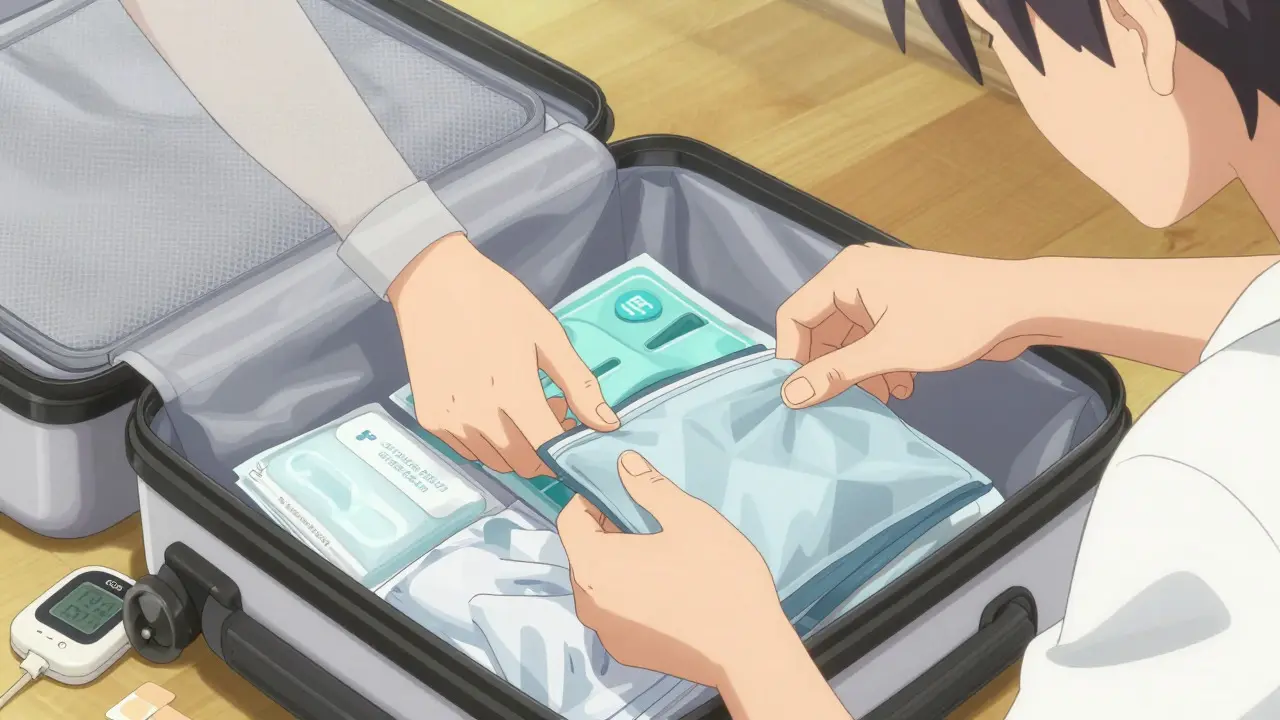
Before you zip up your suitcase, run through this final mental check:
| Item | Action |
|---|---|
| Insulin Supply | Packed in carry-on, double quantity, cooled appropriately. |
| CGM/Pump Gear | Extra sensors, adhesives, chargers, and loaner pump arranged if needed. |
| Documentation | Doctor’s letter, insurance cards, and emergency contacts printed. |
| Snacks | Fast-acting carbs (fruit leather/candy) and slow-acting snacks packed. |
| Time Zone Math | Calculated insulin adjustments for each time zone crossed. |
| Post-It Note | Placed on front door: "Did you pack your insulin?" |
Traveling with diabetes takes effort, but it doesn’t have to stop you from seeing the world. With the right packing strategy, you can focus on the adventure, not the anxiety. Stay safe, pack smart, and enjoy the journey.
Can I bring my insulin pump through airport security?
Yes. You can wear your insulin pump through metal detectors. However, you may be asked to undergo additional screening. Request a hand-wand search instead of putting your pump through the X-ray machine, as radiation can potentially damage the electronics. Always inform the TSA officer that you are wearing a medical device.
Do I need a doctor's note to travel with diabetes supplies?
While not always required domestically, a doctor's letter is highly recommended, especially for international travel. It proves medical necessity for carrying needles, syringes, and large quantities of liquid insulin. Include your diagnosis, medication list, and emergency contacts. This document can be a lifesaver if you face scrutiny at customs or need emergency care abroad.
How should I store insulin during a flight?
Keep insulin in your carry-on bag, never in checked luggage. Use an insulated travel case or soft cooler with gel ice packs. Ensure the ice packs are frozen solid before security screening. Avoid placing your bag near overhead vents or direct sunlight on the plane. If traveling in extreme heat, consider a phase-change cooling sleeve like the Frio.
What should I do if my CGM sensor falls off while traveling?
First, switch to fingerstick monitoring using your glucometer and test strips. Then, apply a new sensor if available. To prevent future detachment, use adhesive products like Skin Grip tape or SenStick barriers before applying the sensor. These create a waterproof, secure bond that withstands sweat and movement.
Is it safe to buy insulin abroad?
It can be risky. Insulin concentrations vary by country (e.g., U-40 vs. U-100). Buying local insulin without verifying the concentration can lead to dangerous dosing errors. It is safest to bring enough insulin for your entire trip plus extra. If you must buy abroad, consult a local pharmacist and double-check the label against your home supply.