
Travel Medication Time Zone Calculator
ℹ️ Determine whether to keep your home schedule or switch to destination time based on the number of time zones crossed and your specific medication type.
Analysis Results
Time Difference:
Medication Flexibility:
Imagine you’re halfway through a flight to Tokyo. You remember your blood pressure pill is due, but looking at the clock, you realize it’s technically morning in Japan and night back home. Do you take it now? Wait until landing? Skip it? This isn’t just a minor inconvenience; for many travelers, getting this wrong can lead to dangerous side effects, reduced drug efficacy, or even medical emergencies. Managing medications across borders involves more than just packing them in your bag. It requires a strategic plan that accounts for shifting clocks, varying temperatures, and strict international laws.
A solid travel medication plan is not optional if you rely on daily prescriptions. According to data from the International Society of Travel Medicine, nearly 80% of specialists consider time zone management critical for patient safety. Without a clear strategy, the risk of missed doses skyrockets. Let’s break down exactly how to handle timing, storage, and legal hurdles so you can travel with confidence, not anxiety.
Decoding the Clock: Time Zone Adjustment Strategies
The biggest headache for most travelers is figuring out when to take their pills. The answer depends heavily on two factors: how many time zones you are crossing and the specific pharmacokinetics (how your body processes the drug) of your medication.
If you are traveling across fewer than three time zones, keeping your home schedule is usually safe and less confusing. However, once you cross that threshold, sticking to your home time becomes impractical. For example, if you fly from New York to London (5 hours difference), taking your evening pill at 8 PM London time means taking it at 3 AM New York time. By the time you land, your internal clock is already drifting. Most experts recommend switching to the destination time immediately upon boarding or shortly after takeoff to prevent confusion later.
| Medication Type | Timing Window | Risk Level | Adjustment Strategy |
|---|---|---|---|
| Protease Inhibitors (HIV) | ±2 hours | Moderate | Immediate switch to destination time |
| Integrase Inhibitors (e.g., Dolutegravir) | ±1 hour | High | Strict adherence required; consult doctor |
| Progestin-Only Contraceptives | 3 hours | Very High | Use backup protection; adjust immediately |
| Combined Oral Contraceptives | 12 hours | Moderate | Flexible; align with new meal times |
| Statins | Up to 4 hours | Low | Minimal impact on efficacy |
For eastward travel involving five or more time zones, some studies suggest a gradual pre-travel adjustment-shifting doses one hour earlier each day for five days before departure. This method was shown to reduce side effects by 37%. However, it increases the cognitive load significantly. If you are juggling multiple medications, this complexity might lead to errors. In such cases, immediate adjustment to the destination time is often safer despite the initial disruption.
Critical Storage Requirements: Heat, Humidity, and Light
Getting the timing right is useless if the medication itself degrades during transit. Airplane cabins and tropical destinations pose unique threats to drug stability. While cabin air is pressurized and temperature-controlled, cargo holds are not. Never check your medication. Always keep it in your carry-on luggage where you can monitor conditions.
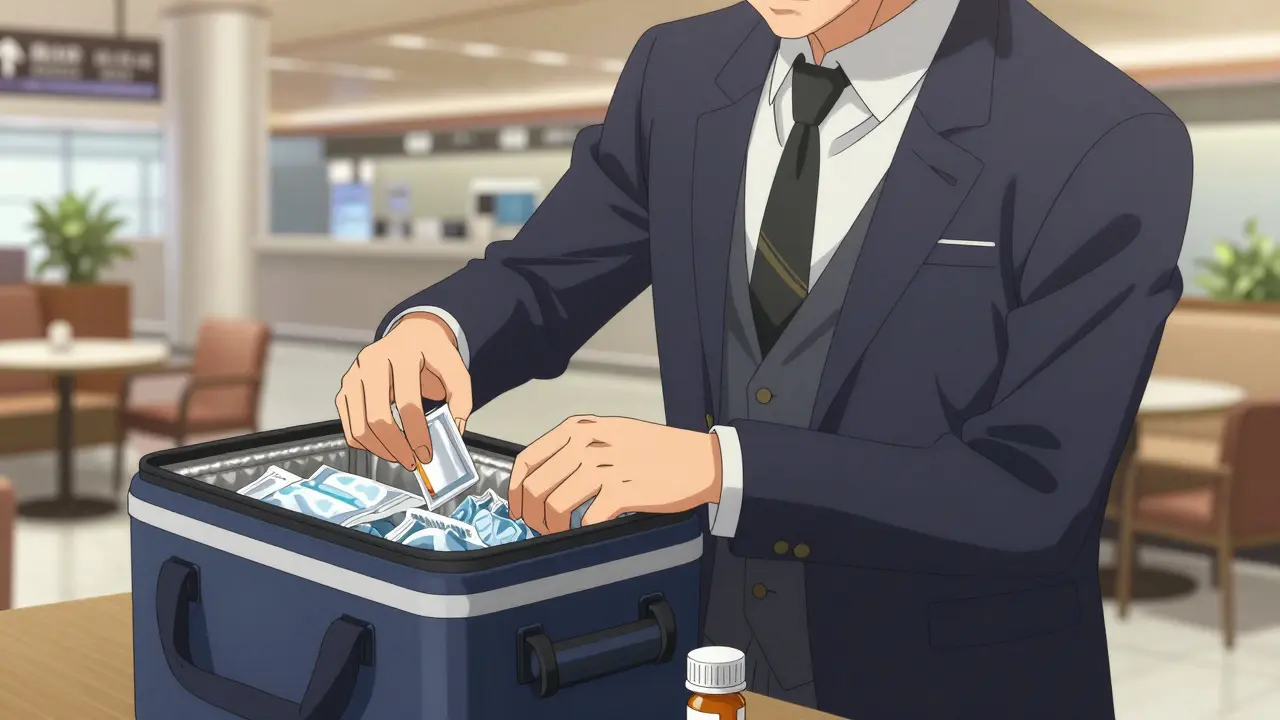
Temperature control is paramount. Insulin, for instance, must be kept between 2°C and 8°C (36°F-46°F). If you are traveling to a hot climate, a simple plastic bag won’t cut it. You need an insulated cooler bag with gel packs. Note that TSA and international security agencies generally allow medically necessary ice packs, provided they are frozen solid at security screening. For most solid oral medications, the enemy is heat above 30°C (86°F) and humidity exceeding 65%. Leaving pills in a hot car or on a sunny beach towel can render them ineffective.
Light sensitivity is another overlooked factor. Research indicates that 23% of commonly prescribed medications degrade when exposed to light. If your prescription comes in a clear bottle, transfer it to an opaque container or wrap it in aluminum foil before packing. This small step protects drugs like nitroglycerin and certain antibiotics from UV damage.
Navigating Legal Restrictions and Customs
Your prescription is valid in your country, but that doesn’t mean it’s legal everywhere else. Many travelers face confiscation or detention because they didn’t research local drug laws. Countries have vastly different regulations regarding controlled substances, stimulants, and even common over-the-counter remedies.
Japan, for example, strictly prohibits 52 U.S.-prescribed medications, including those containing ephedrine or codeine. The United Arab Emirates requires special permits for 17 common drugs. Before you book your flight, check the embassy website of your destination country. Always carry your medications in their original pharmacy-labeled containers. Security personnel and customs officers need to see the match between your name, the doctor’s name, and the prescription details. Carrying a letter from your physician explaining your condition and necessity for the medication is also highly recommended.
Preventing Side Effects and Managing Risks
Time zone changes disrupt your circadian rhythm, which can amplify side effects. Blood pressure medications, for instance, show 15-20% greater variability in effectiveness during the first 72 hours of adjustment. If you feel dizzy or lightheaded, sit down immediately. Hydration plays a key role here; dehydration exacerbates side effects like nausea and headaches.
Don’t take new medications for the first time while traveling. If you need a new script, start it at least a week before your trip to gauge your reaction. For existing medications, be aware that interactions with alcohol or unfamiliar foods can change. Stick to familiar routines as much as possible. If you are taking anticoagulants like warfarin, which has a long half-life of 20-60 hours, timing flexibility is higher, but consistency remains key to maintaining therapeutic levels.

Essential Packing Checklist
To ensure nothing slips through the cracks, follow this structured packing protocol:
- Consult Early: See your doctor 4-6 weeks before travel. Discuss your itinerary and get a written adjustment plan.
- Overpack Slightly: Bring enough medication for the entire trip plus seven extra days. Delays happen, and running out abroad is a nightmare.
- Original Containers: Keep everything in labeled bottles. Avoid loose pill organizers for primary storage; use them only for daily dispensing.
- Documentation: Carry a copy of your prescriptions and a doctor’s note in both English and the local language if possible.
- Tech Aids: Use apps like Medisafe or MyTherapy. These tools automatically adjust reminders based on your location, reducing mental fatigue.
- Backup Power: If you use electronic devices for insulin pumps or monitors, bring spare batteries and chargers.
Frequently Asked Questions
Should I take my medication according to home time or destination time?
For short trips or small time differences (less than 3 hours), keeping home time is fine. For longer journeys or larger time shifts, switch to destination time immediately to avoid confusion. Always consult your doctor for specific advice based on your medication type.
Can I bring liquid medications through airport security?
Yes. Liquid medications are exempt from the standard 3-1-1 liquids rule. Declare them at security screening. Ensure they are in clearly labeled containers and carry a doctor’s note if possible to speed up the process.
What should I do if I miss a dose while traveling?
Do not double up on doses unless instructed by your pharmacist. Take the missed dose as soon as you remember, unless it is almost time for the next dose. For critical medications like antiretrovirals or contraceptives, refer to the specific guidelines provided by your healthcare provider.
Is it safe to store insulin in a hotel mini-fridge?
Generally yes, but verify the temperature first. Hotel fridges can sometimes be too cold or fluctuate widely. Use a thermometer to ensure it stays between 2°C and 8°C. Alternatively, use a portable insulated cooler with gel packs for better control.
Do I need a doctor's note for international travel?
While not always legally mandatory, a doctor's note is highly recommended. It explains your medical condition, lists your medications, and confirms they are personally prescribed. This document can help resolve issues with customs officials or local pharmacies if you need refills.