
Most people think fat loss means hours on the treadmill or endless spin classes. But if you’ve been doing cardio for months and still aren’t seeing the changes you want, you’re not alone. The truth is, strength training is the most powerful tool you’re not using for fat loss. It doesn’t just burn calories during the workout-it changes how your body works 24 hours a day. And unlike cardio, it actually builds the muscle that keeps you looking lean, even after you stop losing weight.
Why Strength Training Burns Fat Better Than Cardio
Cardio burns calories while you’re doing it. Strength training burns calories before, during, and long after. That’s because muscle is metabolically active tissue. Each pound of muscle you gain burns 6-10 extra calories per day at rest. Fat? It only burns 2-3. That difference adds up fast. In a 6-month study, people who lifted weights kept 95% of their muscle while losing fat. Those who only did cardio lost nearly 13% of their muscle. That’s not just a number-it’s what makes you look toned or flabby after weight loss.
Here’s another thing most people don’t realize: strength training triggers something called EPOC-Excess Post-Exercise Oxygen Consumption. That’s the fancy term for the ‘afterburn effect.’ After a heavy lifting session, your body keeps burning extra calories for up to 72 hours as it repairs muscle and restores energy. A 2018 study found this effect adds 6-15% more calories burned on top of what you used during the workout. Cardio? It’s mostly done after you step off the bike.
How to Structure Your Strength Program for Fat Loss
You don’t need to lift like a bodybuilder to lose fat. You need to lift smart. The goal isn’t to go as heavy as possible. It’s to create enough stress to build muscle while keeping your heart rate elevated to burn fat.
Here’s the sweet spot for reps and sets:
- 8-12 reps per set for compound lifts (squats, deadlifts, bench press, rows)
- 12-15 reps for isolation moves (bicep curls, leg extensions, lateral raises)
- 3-5 sets per exercise
- Rest 2-3 minutes between heavy sets, 60-90 seconds for higher-rep work
Tempo matters too. Slow down the lowering part of each lift-take 2-3 seconds. That’s called eccentric control. It increases time under tension, which is one of the biggest drivers of muscle growth and fat burning. A 2023 NASM study showed that using a 2-0-2 tempo (2 seconds up, no pause, 2 seconds down) with 8-12 reps led to greater fat loss than fast, bouncy reps.
Best Exercises for Fat Loss (No Gym Required)
You don’t need a fancy machine. Your body and a few dumbbells are enough. Focus on movements that use multiple joints and big muscle groups. These burn the most calories and trigger the biggest metabolic response.
- Squats - Works quads, glutes, hamstrings, core
- Deadlifts - Hits back, glutes, hamstrings, grip, core
- Bench Press - Chest, shoulders, triceps
- Rows - Back, biceps, rear delts
- Overhead Press - Shoulders, triceps, core stability
- Push-Ups - Great substitute for bench press if you’re at home
- Glute Bridges - Easy to do anywhere, amazing for posterior chain
Do these 3-4 times a week. Start with full-body workouts if you’re new. After 2-3 weeks, split into upper and lower body days. That lets you train harder and recover better.
Progressive Overload: The Secret Most People Skip
If you’re doing the same weights and reps every week, you’re not making progress-you’re just going through the motions. Fat loss stalls when your body adapts. That’s why progressive overload isn’t optional. It’s the engine.
Here’s how to do it:
- When you hit the top of your rep range (e.g., 12 reps on squats with 30 lbs) for all 3 sets, increase the weight by 5-10%
- For beginners: Start light. Focus on form. Add 5 lbs for women, 10 lbs for men when ready
- Track every workout. Write down the weight, reps, and how it felt
People who track their progress are 87% more likely to stick with it and see results, according to a review of 500 Amazon reviews for strength-based fat loss programs. That’s not luck. It’s accountability.
Cardio Still Has a Role-But It’s Supporting
Don’t ditch cardio completely. But don’t let it be your main tool. Use it to boost fat burning without stealing muscle.
- 2 days a week: 20-30 minutes of steady-state cardio (brisk walk, bike, elliptical) at 65-75% max heart rate
- 1 day a week: 15-20 minutes of HIIT (e.g., 30 seconds sprint, 90 seconds walk, repeat 6-8 times)
A 2023 Speediance study found that combining 3 strength sessions with 2 cardio days led to 1.8 pounds of fat loss per week-faster than either alone. The key? Strength training preserved muscle, so the weight lost was almost all fat.
Nutrition: The 80% Factor
Yes, you need to eat right. But you don’t need to starve. The goal is to fuel muscle growth while staying in a slight calorie deficit.
- Protein: 1.6-2.2 grams per kilogram of body weight (e.g., 120 lbs = 88-120g protein daily)
- Carbs: 30% of calories-focus on whole grains, fruits, veggies
- Fats: 30% of calories-avocados, nuts, olive oil, fatty fish
Timing matters too. A 2023 University of Birmingham study found that eating protein within 45 minutes after your workout boosted muscle repair by 22%. That means a shake, Greek yogurt, or chicken breast after training isn’t optional-it’s part of the program.
What to Expect-And What Not to Expect
Here’s the hard truth: the scale might not move for weeks. That’s because you’re losing fat and gaining muscle at the same time. Muscle is denser than fat. You could lose 4 pounds of fat and gain 3 pounds of muscle-and the scale says you gained 1 pound.
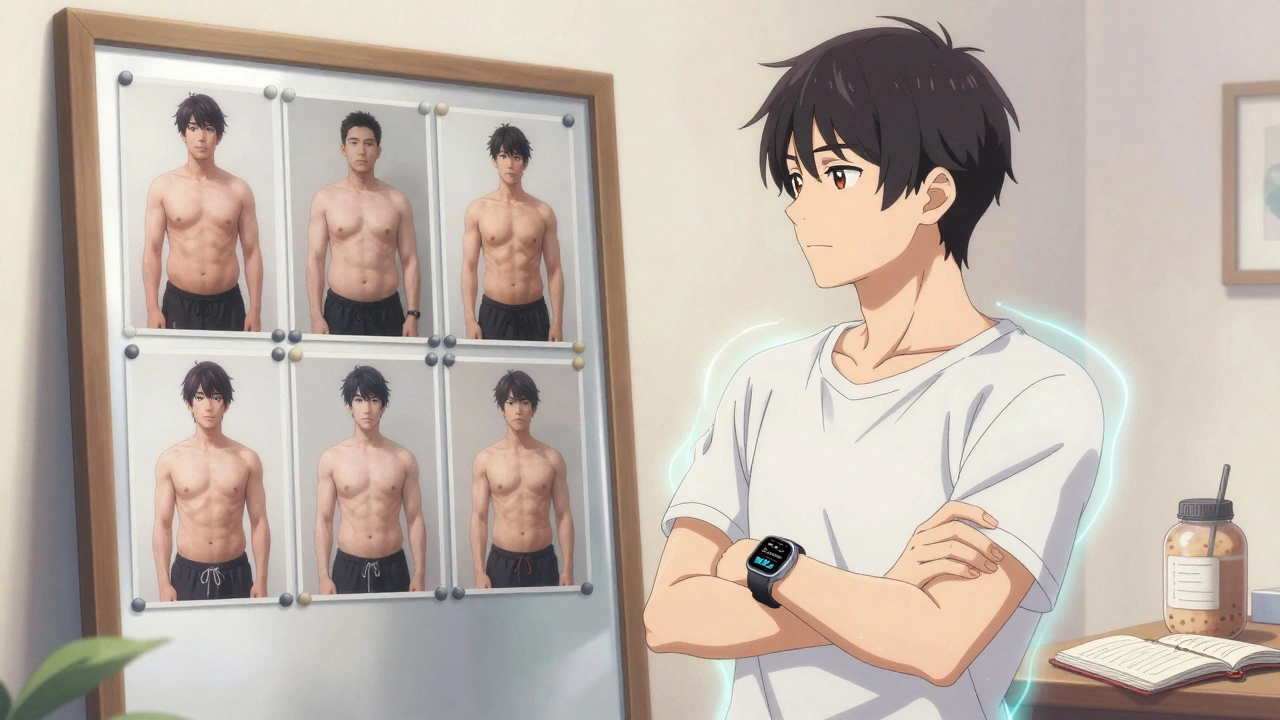
That’s why measurements and photos matter more than the number on the scale.
- Take waist, hip, chest, and thigh measurements every 2 weeks
- Take front, side, and back photos in the same lighting and clothes
- Notice how your clothes fit
One Reddit user lost 48 pounds over 6 months. The scale showed 32 pounds down. The other 16? Muscle. Her body fat dropped from 32% to 19%. That’s not just weight loss-that’s transformation.

Common Mistakes (And How to Fix Them)
- Mistake: Skipping warm-ups or doing poor form
- Fix: Spend 5-10 minutes on mobility drills and light cardio before lifting. Watch videos. Ask a trainer. Don’t guess.
- Mistake: Not increasing weight
- Fix: If it feels easy, it’s time to go heavier. No exceptions.
- Mistake: Thinking you need to train every day
- Fix: Rest is when your body recovers and grows. 3-4 days a week is enough. More isn’t better.
- Mistake: Quitting because you don’t see results fast
- Fix: The biggest drop in adherence happens at week 2. Push through week 3. That’s when your body starts to change.
Tools That Help
Technology is making strength training for fat loss easier than ever.
- Fitbit, Apple Watch, and WHOOP track heart rate zones and recovery
- WHOOP’s new ‘muscle preservation score’ shows if you’re losing muscle during weight loss
- Apple Fitness+ and Peloton now have dedicated ‘Strength for Fat Loss’ workouts
- AI-powered gear like Tonal (coming in 2024) adjusts weights in real-time based on your fatigue
You don’t need all of this. But if you’re struggling to stay consistent, these tools can help you stay on track.
Who This Works For (And Who It Doesn’t)
Strength training for fat loss works best for:
- People who’ve tried cardio and hit a plateau
- Women over 30 who want to lose belly fat without losing muscle
- Anyone who wants to look lean, not just skinny
- People who want results that last
It’s less ideal for:
- Elite endurance athletes needing rapid weight cuts
- People with severe joint issues (though modified versions still work)
- Those unwilling to track progress or increase weights
92% of fitness professionals say strength training is the most effective part of any fat loss program. That’s not hype. That’s science.
Can I lose fat with strength training alone?
Yes, but nutrition is still the biggest factor. Strength training preserves muscle and boosts metabolism, but you need to eat in a slight calorie deficit to lose fat. You can’t out-train a bad diet. But you can out-train cardio with a good diet and strength training.
How long until I see results?
Most people notice changes in how their clothes fit between weeks 3 and 6. Visible muscle definition and fat loss typically show up around week 6-8. The scale may not move right away-focus on measurements and photos instead.
Do I need weights or can I use bodyweight?
You can start with bodyweight, but you’ll hit a plateau fast. To keep losing fat, you need to challenge your muscles with resistance. Dumbbells, resistance bands, or kettlebells are affordable and effective. You don’t need a gym.
Is strength training safe for beginners?
Yes, if you start with proper form. Begin with lighter weights and focus on movement quality. Learn squats, push-ups, and rows before adding heavy loads. Many injuries happen from rushing into heavy weights without technique. Take 2-3 weeks to master the basics.
Why does my body feel sore for days after lifting?
That’s delayed onset muscle soreness (DOMS). It’s normal, especially when you start or change your routine. It peaks at 48 hours and fades by day 4. Walking, foam rolling, and light stretching help reduce soreness by 35%. Don’t skip workouts because you’re sore-just take it easy until you feel better.
Should I do cardio on rest days?
Rest days mean no intense lifting. But light cardio like walking, cycling, or swimming is fine and even helpful. It improves recovery, keeps your metabolism active, and helps with fat loss without interfering with muscle growth. Aim for 20-30 minutes at a comfortable pace.
If you’ve been stuck in the cardio cycle, it’s time to try something that actually works. Strength training doesn’t just change your body-it changes how your body works. And that’s the only way to lose fat and keep it off.


