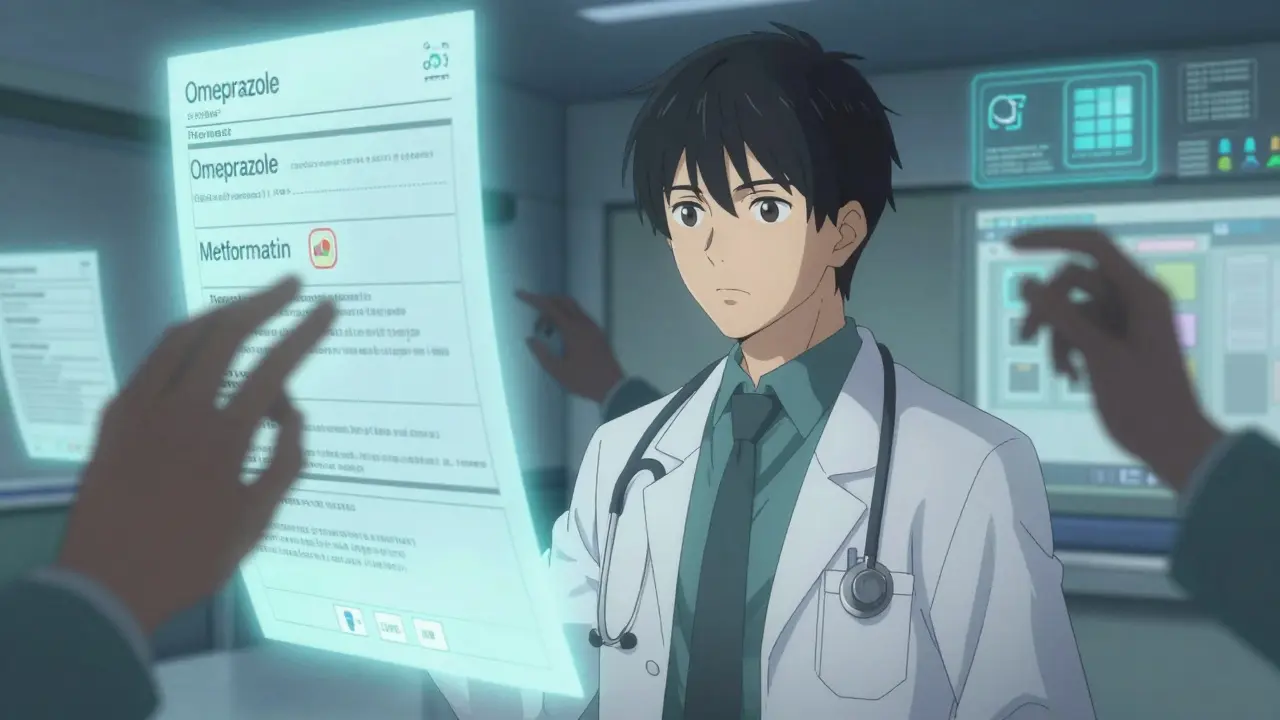
When a doctor prescribes a generic drug, you might think it’s a simple step-cheap, effective, and widely available. But for many patients, that prescription doesn’t automatically get filled. Behind the scenes, providers are stuck in a bureaucratic maze just to get approval for medications that cost a fraction of their brand-name counterparts. In 2024, generic medications still face prior authorization hurdles in 89% of commercial health plans, even though they’ve been on the market for years and are proven safe. This isn’t about safety-it’s about control. And for providers, it’s a daily grind.
Why Generics Still Need Approval
You’d think insurers would welcome generics. They save money. But many plans don’t just accept any generic-they pick one. If your patient needs a different version, you need paperwork. This happens for three main reasons: quantity limits, duration restrictions, and therapeutic interchange rules.Take omeprazole, a common acid reflux drug. Most plans allow a 30-day supply without approval. But if your patient has Barrett’s esophagus and needs 90 days? You’re submitting a prior authorization. Same with proton pump inhibitors: even though guidelines say most ulcers heal in eight weeks, some patients need longer. Without documentation, the claim gets denied.
Then there’s the issue of generic manufacturers. Some pharmacy benefit managers (PBMs) only cover one brand of generic. If your patient had a bad reaction to the preferred version, you need to prove it. That means lab results, clinic notes, even past prescription records. One physician on Sermo reported being denied for switching from metformin to sitagliptin-despite ADA guidelines saying intolerance is enough reason. The insurer demanded proof of three failed drugs. That’s not clinical judgment. That’s bureaucracy.
How Providers Actually Get Approval
The process isn’t magic. It’s methodical. Here’s how it works in practice:- Check the payer’s formulary. Which generic version is preferred? What are the quantity and duration limits?
- Document why the requested generic is necessary. Did the patient have an allergic reaction? Did another version fail? Is there a specific formulation needed (e.g., extended-release, dye-free)?
- Submit electronically. As of 2024, 78% of commercial insurers and 63% of Medicare Part D plans require electronic submission through systems like CoverMyMeds or Surescripts. Fax is fading. Phone requests? Rare.
- Attach supporting documents. Lab reports, diagnostic imaging, past prescriptions. The Pennsylvania Department of Human Services says it clearly: chart notes, test results, anything that proves medical necessity.
Auto-approval exists. About 41% of generic prior authorizations get approved instantly if the quantity is within limits and the system has a history of prior claims. But if anything’s missing? You’re looking at 5-10 business days. And if the payer requests more info? That can stretch to two weeks.
Differences Between Insurance Types
Not all plans are created equal. Medicaid requires prior authorization for 67% of select generics, mostly because of Preferred Drug Lists. Medicare Part D? 89%. Commercial insurers? 93%. The tighter the network, the more hoops.Speed varies too. Generic approvals typically take 1-3 days. Brand-name drugs? 3-7. Why? Because generics have less risk. They’re bioequivalent. They’re cheaper. So payers process them faster-if you’ve got the right docs.
But here’s the catch: even though generics are approved faster, denial rates are still high-18.7% on average. The top reasons? Missing documentation (42%), failing to show medical necessity (38%), and not trying the preferred alternative first (20%).
What Works: Real Strategies Providers Use
Providers aren’t just waiting. They’re adapting.Some clinics now have dedicated prior authorization teams. Medical assistants handle routine requests under physician supervision. That’s right-78% of routine authorizations are managed by support staff. Training takes 2-3 weeks. After that, efficiency jumps.
Standardized templates are game-changers. Capital Rx found that providers using them get approvals 32% faster. Why? Because they include all the required fields upfront: diagnosis, dosage, duration, reason for deviation from formulary. No guesswork.
Building relationships with payer reps helps. One provider in Durban told me she calls her PBM liaison every Monday. She asks: “What’s changed this week?” Sometimes, a formulary update slips through unnoticed. Knowing ahead of time saves days.
And electronic systems? They cut processing time by 35-50% compared to fax. Eighty-seven percent of major PBMs now offer them. If your office still uses fax machines, you’re not just slow-you’re at risk of losing patients to delays.
The Hidden Costs
It’s not just time. It’s money. Physicians spend 16.1 hours a week on prior authorization. That’s over three full workdays a month. And 78% say they’d rather use that time with patients.Then there’s the patient cost. A 2023 survey of 1,200 pharmacists found that 83% have seen patients unable to pay out-of-pocket for a generic while waiting for approval. That means people go without meds. Or worse-they pay cash for a brand-name drug because they can’t wait.
And let’s not forget the administrative burden. The Congressional Budget Office estimates provider costs could hit $1.2 billion by 2026 if nothing changes. That’s money spent on forms, not care.
What’s Changing in 2025 and Beyond
There’s movement. In July 2024, CMS mandated that Medicaid managed care organizations use standardized electronic transactions. That’s a win. It should cut processing time by 25%.Auto-approve pathways are expanding. Express Scripts saw a 40% increase in automatic approvals for generics in 2023. The idea? If the quantity is within limit and the patient has a history of use, approve it. No paperwork needed.
And AI is coming. McKinsey predicts that by 2026, 75% of generic prior authorization decisions will be handled by AI systems. That could mean approvals in under 24 hours. No human review. Just rules-based logic.
But reform is slow. The AMA is pushing legislation to eliminate prior authorization for generics that’ve been on the market for over five years with multiple manufacturers. It’s a reasonable ask. If a drug’s been used safely for years, why block it?
Bottom Line: It’s Broken-But Fixable
Prior authorization for generics isn’t about saving money. It’s about control. And right now, that control is hurting patients and providers alike.The system works best when it’s simple: if the generic is safe, effective, and already on the market, it should be covered without a fight. The data proves it. The AMA, CMS, and even PBMs agree-auto-approval for low-risk generics is the future.
Providers who succeed are the ones who treat prior authorization like a workflow, not a barrier. They use templates. They train staff. They track systems. They call reps. And they document everything-not because they have to, but because their patients depend on it.
The goal isn’t to eliminate prior authorization. It’s to eliminate the unnecessary parts. For generics? That’s most of them.
Why do insurers require prior authorization for generic drugs if they’re cheaper?
Insurers use prior authorization not to block generics, but to control which version gets used. Many plans have preferred generic manufacturers or limit quantities to reduce costs. Even though generics are cheaper than brand names, insurers still want to steer patients toward the lowest-cost option within the generic class. If a patient needs a different version due to allergies or side effects, providers must prove medical necessity.
How long does prior authorization for generics usually take?
With complete documentation and electronic submission, most generic prior authorizations are approved in 1-3 business days. If the request is urgent (e.g., the patient can’t go without the medication), some Medicaid and Medicare plans must respond within 24 hours. However, if additional information is requested or the submission is incomplete, it can take 7-14 days. Electronic systems reduce this time by 35-50% compared to fax.
Can patients pay out-of-pocket while waiting for approval?
Yes, but many can’t. A 2023 survey by the National Community Pharmacists Association found that 83% of pharmacists have seen patients unable to afford paying cash for a generic while waiting for insurance approval. This often leads to skipped doses or treatment delays. Some providers offer bridge prescriptions or samples, but that’s not always possible. The financial burden falls hardest on patients without emergency funds.
What documentation is needed to get approval for a generic?
You need proof that the requested generic is medically necessary. This includes clinic notes, lab results, diagnostic reports (like endoscopy or MRI), and records showing adverse reactions or therapeutic failure with other generics. For example, if a patient had a rash with one generic version of levothyroxine, you’d submit that reaction history. The Pennsylvania Department of Human Services and CMS both require objective, clinical evidence-not just a doctor’s note.
Are there any new laws changing how generics are handled?
Yes. The Improving Seniors’ Timely Access to Care Act of 2023 requires Medicare Advantage plans to respond to 90% of prior authorization requests within 72 hours for standard cases and 24 hours for urgent ones-effective January 2024. In July 2024, CMS mandated standardized electronic transactions for Medicaid, expected to cut processing time by 25%. The AMA is also lobbying to eliminate prior authorization for generics that have been on the market over five years with multiple manufacturers.
Do electronic systems really make a difference?
Absolutely. As of 2024, 87% of major pharmacy benefit managers offer electronic prior authorization systems like CoverMyMeds and Surescripts. These systems reduce processing time by 35-50% compared to fax. They also cut errors-paper submissions have a 22% rejection rate due to missing info. Electronic systems auto-check for required fields, flag incomplete forms, and track submission status in real time. Practices using them report 32% faster approvals for generics.


