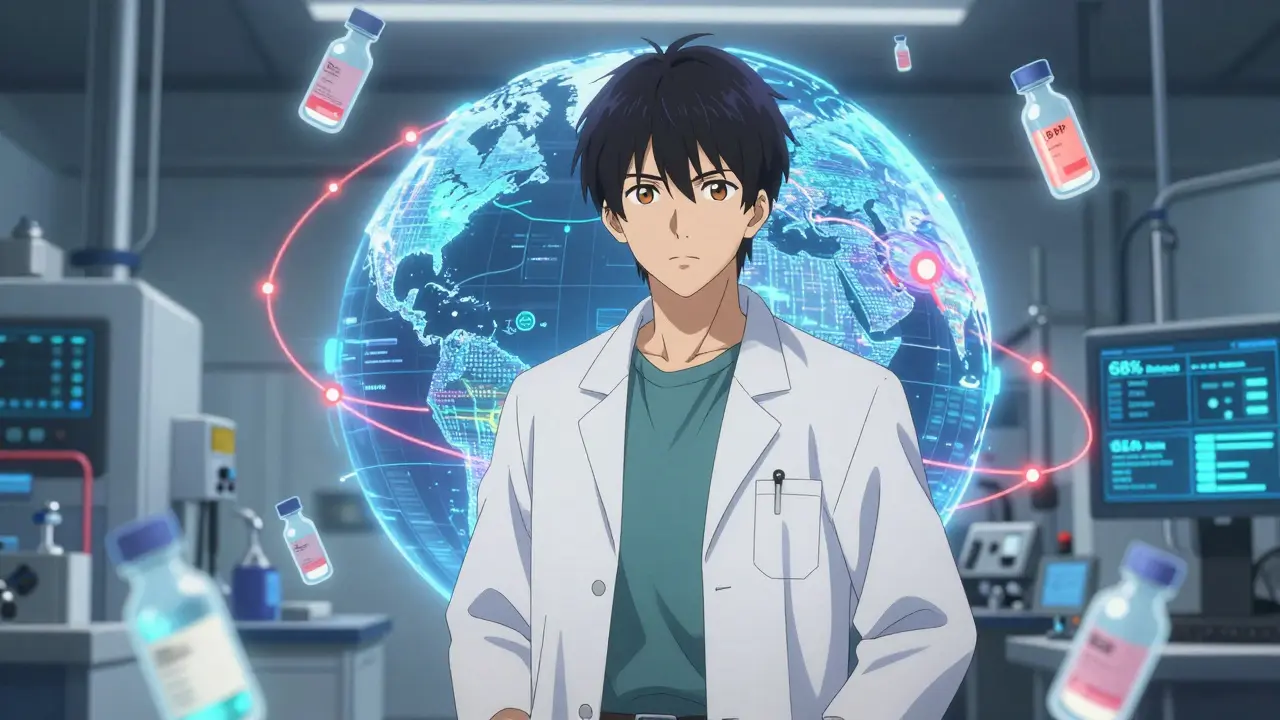
When a life-saving drug disappears from pharmacy shelves, it’s not an accident. It’s the result of a supply chain that was built for efficiency, not safety. In 2025, nearly 1 in 5 essential medicines in the U.S. still face periodic shortages. Insulin. Antibiotics. Chemotherapy drugs. These aren’t rare exceptions - they’re symptoms of a system that still treats global cost-cutting as a strategy, not a risk.
Why Resilience Isn’t Optional Anymore
The idea that supply chains should be lean and global made sense in the 2000s. But after COVID-19, after geopolitical clashes, after factory fires in India and export bans from China, it’s clear: efficiency without resilience is a ticking clock. The U.S. FDA reports that 80% of active pharmaceutical ingredients (APIs) - the core chemical components of drugs - come from overseas. China and India together produce 68% of them. That means if a flood shuts down a single API plant in Hyderabad, or a trade restriction hits a chemical export hub in Shanghai, millions of patients across America could be left without their medication. The cost isn’t just financial. It’s human. A 2024 ZS Associates study found that hospitals treating cancer patients during drug shortages saw 17% longer wait times for treatment. Elderly patients on blood thinners faced higher hospitalization rates. These aren’t statistics - they’re real people delaying care because a chemical synthesis step halfway across the world got disrupted.What Resilience Actually Means
Resilience in pharmaceutical supply chains isn’t about building everything in the U.S. It’s about having options. The Mathematica Inc. definition from 2023 breaks it down simply: the ability to anticipate, prepare for, respond to, and recover from disruptions while keeping drugs flowing. That means three things:- Preparedness: Knowing where your risks are - not just your top suppliers, but their suppliers, and their suppliers’ suppliers. Leading companies now map 12 to 15 tiers of dependency.
- Response: Having backup plans that actually work. Not just a list of alternatives, but tested, pre-approved, and legally ready-to-go sources.
- Recovery: Getting back to normal faster. This includes inventory buffers, flexible manufacturing, and real-time data tracking.
The Three Biggest Levers for Change
There’s no single fix. But three strategies are proving most effective for companies that have avoided major shortages since 2023.1. Dual-Sourcing Critical APIs
Relying on one supplier for a life-saving drug is like driving with one tire. The best companies now dual-source 70-80% of their critical APIs. That means if the factory in China goes offline, the backup in Germany or Mexico kicks in within weeks, not months. A 2024 case study from a mid-sized biotech firm showed that after dual-sourcing three key antibiotics, their outage risk dropped by 68%. The catch? It requires upfront investment in regulatory approvals for multiple suppliers - which can take 18-24 months. But when a shortage hits, that time pays off.2. Strategic Stockpiles for Essential Drugs
The U.S. government’s 2025 executive order to build a Strategic Active Pharmaceutical Ingredients Reserve is a big deal. It aims to hold 90 days’ worth of 150 essential medicines by 2027. But companies don’t have to wait for the government to act. Leading firms now keep 60-90 days of inventory for critical drugs - not because they’re wasteful, but because they’re smart. Insulin, epinephrine, heparin, and certain cancer drugs are now routinely held in buffer stock. One manufacturer reduced emergency production runs by 73% just by increasing their stockpile from 30 to 75 days.3. Regional Manufacturing Networks
The old model: make everything in one place, ship globally. The new model: make in three regions - North America, Europe, and Asia-Pacific - with each region serving its own market. This isn’t about nationalism. It’s about geography. If a storm hits the Gulf Coast, a plant in Tennessee can keep supplying the Midwest while a plant in Ohio covers the East. Companies using this model cut response time during disruptions by 55%, according to PwC’s 2024 analysis. The biggest shift? The U.S. share of API production rose from 22% in 2022 to 28% in 2025. Not because of tariffs - but because companies invested in regional hubs in Tennessee, North Carolina, and Puerto Rico.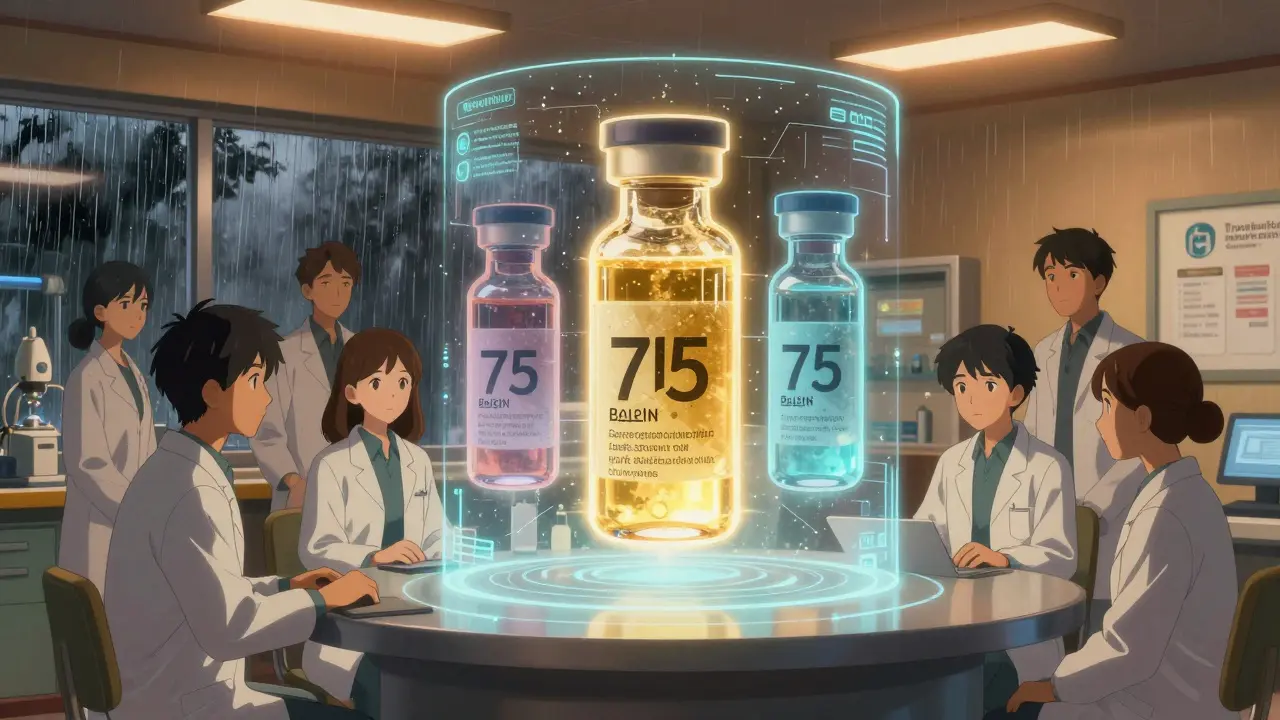
The Tech That’s Making It Possible
Technology isn’t a buzzword here - it’s the engine.- Continuous manufacturing: Instead of making drugs in big batches (which takes weeks), this method produces them in a steady, 24/7 flow. It cuts facility size by 30-40%, reduces waste by 15-20%, and slashes production time from months to days. But only 12 FDA-approved facilities exist today - mostly because of regulatory delays.
- AI-driven forecasting: One pilot program used AI to predict API shortages 85 days in advance with 90% accuracy. It flagged a potential insulin shortage six weeks before the FDA did - giving hospitals time to switch suppliers.
- Blockchain traceability: In trials, blockchain systems reduced counterfeit drugs by 75%. If you can track every gram of API from raw material to pill, you can spot tampering, diversion, or contamination before it reaches patients.
The Hidden Costs - And the Real ROI
Building resilience isn’t cheap. Investing in dual-sourcing, stockpiles, and new tech adds 8-12% to the cost of goods sold. Some executives push back: “Why spend more when we’ve gotten by for decades?” Here’s the answer: The cost of not acting is higher. A single major drug shortage can cost a large pharmaceutical company $14.7 million in lost revenue - not counting reputational damage, regulatory fines, or patient harm. Companies with full resilience programs saw 23% higher operational continuity during disruptions. Their ROI? 1.8x within 36 months. And it’s not just money. A 2025 survey of 157 pharmaceutical firms found that 89% of executives are changing their supply chain strategies because of U.S. trade policies. They’re not doing it because they want to. They’re doing it because they have to.
Where the Industry Still Falls Short
Progress is real - but uneven.- Small companies are left behind: Only 18% of firms under $1B in revenue have any formal resilience plan. They lack the capital, staff, or regulatory expertise.
- Data silos: 65% of companies still use spreadsheets and paper records to track suppliers. No real-time visibility. No alerts. Just guesswork.
- Workforce gaps: By 2027, the U.S. will need 250,000 more skilled manufacturing workers. Training programs haven’t kept pace.
- Regulatory lag: The FDA has approved over 10,000 batch manufacturing facilities. Only 12 for continuous manufacturing. The system isn’t built for speed.
What You Can Do - Even If You’re Not a Pharma Giant
You don’t need a $100M budget to start building resilience.- Start with your top 5 drugs: Which ones would cause the biggest impact if they vanished? Map their API sources. Find one backup supplier.
- Ask your supplier: “Where is your backup?”: If they can’t answer, it’s time to look elsewhere.
- Push for data sharing: Even a simple shared dashboard with your supplier can cut response time by half.
- Advocate for policy change: Support local initiatives to fund regional API production. The $1.2B from the CHIPS Act is a start - but it needs more.
What’s the biggest cause of drug shortages today?
The biggest cause is single-sourcing of active pharmaceutical ingredients (APIs) in just one or two overseas facilities - often in China or India. A single factory shutdown, regulatory inspection, or export ban can cut off supply to millions of patients. Over 80% of APIs used in the U.S. come from abroad, and 68% of those come from just two countries.
Is building drug manufacturing in the U.S. the solution?
Not alone. While increasing U.S. production from 22% to 28% since 2022 helps, going fully domestic isn’t practical or affordable. The U.S. currently produces only 12% of sterile injectables and 17% of antibiotics. The real solution is a mix: strategic domestic capacity for critical drugs, plus diversified global suppliers and regional manufacturing hubs. Trying to bring everything home would raise drug prices by 20-30% without guaranteeing reliability.
How long does it take to set up a new drug supplier?
It typically takes 18-24 months to qualify a new API supplier. That’s because regulators require extensive documentation, inspections, and validation of manufacturing processes. This is why companies that wait until a shortage hits are already too late. The best approach is to identify and qualify backup suppliers before any crisis occurs.
What role does AI play in preventing drug shortages?
AI helps predict disruptions before they happen. By analyzing global events - weather patterns, political instability, shipping delays, factory outages - AI models can forecast potential shortages 60-90 days in advance. One pilot program correctly predicted a shortage of a key chemotherapy drug 85 days ahead of time, giving hospitals time to switch suppliers and avoid patient delays.
Are stockpiles of drugs a waste of money?
No - when done right. Holding 60-90 days of inventory for critical drugs like insulin, epinephrine, and antibiotics isn’t wasteful - it’s insurance. The cost of a single shortage can be millions in lost revenue, emergency production, and patient care. Companies that maintain buffer stock see 70% fewer disruptions. The key is to stockpile only essential medicines with long shelf lives and high demand, not everything.


