
Opioid Nausea Management Tool
Nausea Management Calculator
When you start taking opioids for pain, nausea isn’t just a side effect-it’s often the reason people stop taking them. About 30-40% of people new to opioids feel sick to their stomach within the first few days. For many, it’s not just a little discomfort. It’s dizziness, sweating, and the constant fear of vomiting. And if it’s not handled right, it can mean giving up on pain relief altogether.
Why Opioids Make You Nauseous
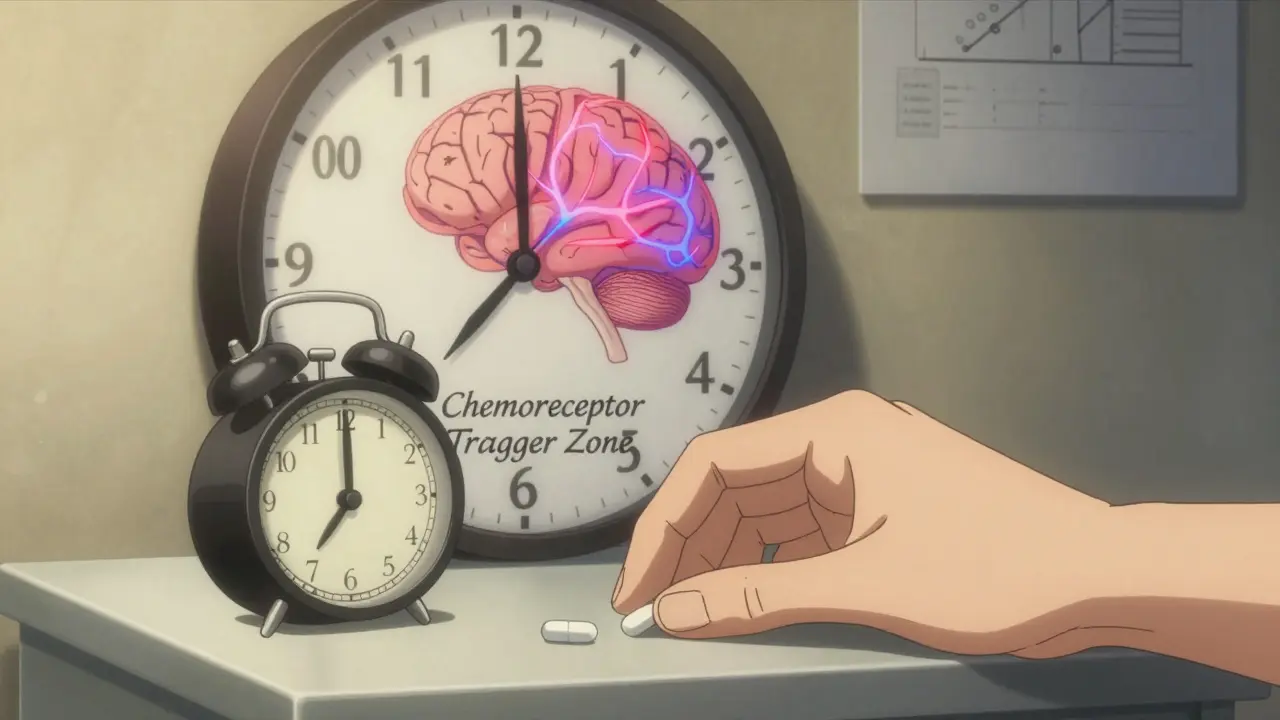
Opioids don’t just block pain-they also hit a spot in your brain called the chemoreceptor trigger zone. This area doesn’t care about your stomach. It reacts to chemicals in the blood, and opioids? They’re a red flag. The moment morphine, oxycodone, or hydrocodone enters your system, this zone sends out an alarm: “Something’s wrong-vomit now.”
It’s not your gut. It’s your brain. That’s why eating less or skipping meals doesn’t always help. And it’s why some antiemetics work better than others. This isn’t food poisoning. It’s a neurological response.
Which Antiemetics Actually Work?
Not all nausea pills are created equal. Here’s what the data shows:
- Haloperidol (0.5-2 mg daily): A low-cost antipsychotic that blocks dopamine. Works in 70-75% of cases. But if you’re over 65, it can cause shaking or stiffness-so use it carefully.
- Prochlorperazine (5-10 mg every 6-8 hours): A phenothiazine that’s gentler than haloperidol. Often the first pick for older adults. Costs less than $1 per dose as a generic.
- Metoclopramide (5-10 mg every 6-8 hours): Only one prokinetic drug available in the U.S. It speeds up your stomach emptying, which helps if nausea comes after eating. But it can cause muscle spasms in 10-15% of users at higher doses.
- Ondansetron (4-8 mg every 8 hours): Blocks serotonin. Good for chemo nausea, but only about 50% effective for opioid-induced vomiting. Expensive-up to $3.50 per tablet.
- Dexamethasone (4-8 mg IV or oral): A steroid. Works for about half of patients. Why? No one’s sure. But it’s cheap and often used in hospitals.
Here’s the catch: prophylactic antiemetics-taking them before nausea starts-don’t work well. A 2019 review of 619 patients showed dopamine blockers like haloperidol failed to prevent nausea when given before opioids. But when given after nausea hits? They help. So don’t waste money on preemptive pills unless your doctor says otherwise.
Timing Matters More Than You Think
Most people take their antiemetic at the same time as their opioid. That’s wrong.
Opioids peak in your blood about 60-90 minutes after you swallow them. Antiemetics need to be at their strongest when that peak hits. So take your antiemetic 30-60 minutes before your opioid dose. That way, it’s already working when the opioid arrives.
Example: You take oxycodone at 8 a.m., 2 p.m., and 8 p.m. Take your prochlorperazine at 7:15 a.m., 1:15 p.m., and 7:15 p.m. That’s not a suggestion-it’s a protocol backed by the Annals of Palliative Medicine.
Can Diet Help?
Yes. But not in the way you’d expect.
There’s no magic “anti-nausea diet.” But here’s what works:
- Eat small, dry meals. Bland foods like crackers, toast, or rice are easier to keep down than greasy or spicy stuff.
- Avoid large meals. A full stomach slows emptying, which makes nausea worse-especially if you’re on metoclopramide.
- Stay upright after eating. Don’t lie down for at least 30 minutes. Gravity helps your stomach stay clear.
- Hydrate slowly. Sip water, ginger tea, or electrolyte drinks. Chugging makes it worse.
- Try ginger. A 2018 study in cancer patients showed 1 gram of ginger powder daily reduced opioid nausea by 38% compared to placebo. It’s not a replacement, but it’s a low-risk helper.
And here’s something most doctors don’t mention: constipation from opioids can cause nausea too. If your bowels are backed up, your stomach feels full even if you haven’t eaten. That’s why metoclopramide helps-it clears the gut. But if you’re constipated, you need a stool softener or laxative too. Laxatives aren’t optional-they’re part of the nausea plan.
What If the Nausea Doesn’t Go Away?
Most people build tolerance in 3-7 days. But if it’s still bad after a week? Don’t just push through.
Try opioid rotation. Switching from morphine to oxycodone or hydromorphone can cut nausea by 40-50%. Methadone is another option, but switching to it requires expert dosing-it’s not a simple swap.
And here’s the secret many miss: you don’t need the same dose to control pain. If you’re nauseous but your pain is manageable, lowering your opioid dose by 25-33% often keeps pain under control while making nausea disappear. In 60% of cases, this works. You don’t have to suffer to get relief.

What About New Treatments?
There’s exciting research on 6β-naltrexol-a compound that blocks opioid nausea without affecting pain relief. In early trials, it cut nausea from morphine by 80%. But it’s still experimental. No FDA approval yet.
Meanwhile, the National Comprehensive Cancer Network updated its guidelines in March 2023 to recommend hydromorphone over morphine for patients with persistent nausea. And the European Association for Palliative Care is finalizing new guidelines in late 2024, based on over 1,500 patient studies.
Who’s Most at Risk?
Older adults, women, and people with a history of motion sickness or migraines are more likely to get opioid nausea. If you’re over 65, avoid haloperidol unless absolutely necessary. If you’ve ever felt dizzy on a boat, you’re probably more sensitive to opioids’ brain effects.
And here’s a hard truth: 42% of cancer patients quit opioids because of nausea, even when they’re on antiemetics. That’s not weakness. It’s a system failure. Pain management isn’t just about the drug-it’s about how you manage the side effects.
What to Do Today
If you’re starting opioids:
- Ask your doctor for a low starting dose-25-50% of the usual amount.
- Request a prescription for prochlorperazine or metoclopramide at the same time as your opioid.
- Take the antiemetic 30-60 minutes before each opioid dose.
- Stick to small, dry meals. Avoid heavy, greasy, or sweet foods.
- Keep ginger tea or capsules on hand. Try 1 gram daily.
- Use a stool softener daily-even if you’re not constipated yet.
- Track your nausea on a scale of 1-10 each day. If it doesn’t improve by day 5, call your doctor about switching opioids.
Don’t wait until you’re vomiting to act. Nausea from opioids is predictable. And with the right plan, it’s manageable.
How long does opioid nausea last?
For most people, opioid-induced nausea lasts 3 to 7 days after starting the medication. Tolerance builds as your brain adjusts to the drug. If nausea continues beyond a week, it’s not normal tolerance-it’s a sign you need a different approach, like switching opioids or adjusting your antiemetic.
Can I take ondansetron for opioid nausea?
You can, but it’s not the best choice. Ondansetron works well for chemo or post-surgery nausea because it targets serotonin, which plays a big role there. But opioid nausea is mostly driven by dopamine in the brainstem. Dopamine blockers like prochlorperazine or haloperidol are more effective. Ondansetron may help a little, but don’t expect it to be your main solution.
Is it safe to take antiemetics long-term?
Most antiemetics are meant for short-term use-just until tolerance develops. Long-term use of haloperidol or metoclopramide carries risks: tremors, muscle stiffness, or even tardive dyskinesia. Prochlorperazine is safer for longer use but still needs monitoring. If you’re on opioids for months, your doctor should reassess whether you still need the antiemetic every day.
Why does my nausea get worse after eating?
Opioids slow your stomach from emptying, and eating makes it worse. A full stomach combined with delayed digestion creates pressure and bloating that triggers nausea. That’s why metoclopramide helps-it speeds up stomach emptying. But you also need to eat small, frequent meals and avoid lying down after eating. Constipation from opioids can make this even worse, so bowel care is essential.
Can I use natural remedies like peppermint or acupuncture?
Peppermint oil or acupuncture might help with general nausea, but there’s no strong evidence they work for opioid-induced nausea specifically. Ginger, however, has been studied in cancer patients on opioids and reduced nausea by nearly 40%. It’s safe, cheap, and worth trying alongside your prescribed treatment. Don’t rely on it alone, but don’t dismiss it either.
What if I’m scared to take opioids because of nausea?
Your fear is valid-but it’s not a reason to avoid pain relief. Opioid nausea is common, predictable, and manageable. Start with a low dose, take your antiemetic before each opioid, eat lightly, and track your symptoms. Most people feel better within a week. If you’re still struggling, your doctor can switch you to a different opioid. Pain control matters. Nausea doesn’t have to stop you.