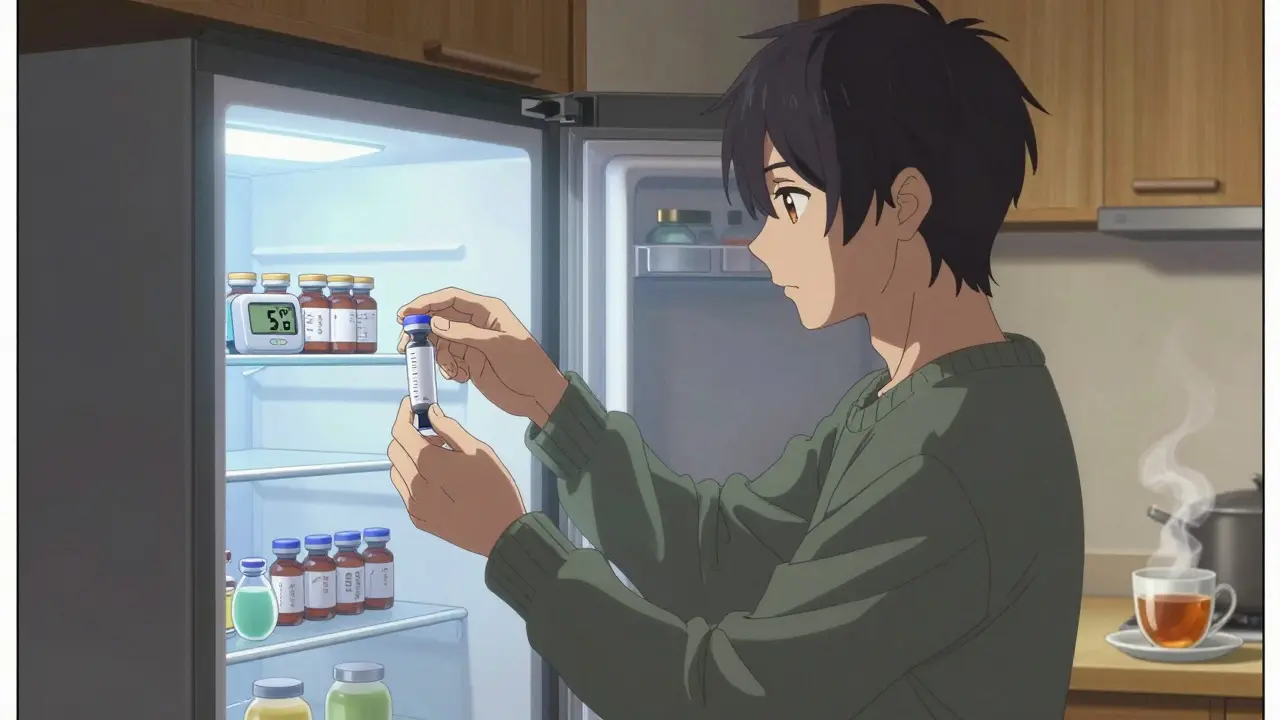
When you pick up a prescription like insulin, a biologic for rheumatoid arthritis, or a vaccine, the pharmacist hands you a small cooler bag and says, "Keep this cold."" But what does that really mean? And what happens if you forget it on the counter for a few hours? For millions of people managing chronic conditions, getting this wrong isn’t just inconvenient-it can be dangerous.
Why Some Medications Need the Fridge
Not all pills and liquids are created equal. Medications that need refrigeration are mostly biologics, insulin, certain vaccines, and some antibiotics. These are made from living cells or proteins, which break down quickly when exposed to heat or freezing. Unlike your daily blood pressure pill, which stays stable for years on a shelf, these drugs can lose potency in just hours if left out. The science is clear: the safe range is 2°C to 8°C (36°F to 46°F). This isn’t a suggestion-it’s a requirement backed by the U.S. Pharmacopeia, the FDA, and the World Health Organization. Staying within this range keeps the molecules intact. Go above 8°C, and chemical reactions speed up, degrading the drug. Go below 0°C, and ice crystals form, tearing apart protein structures. Once frozen, insulin, for example, is permanently damaged. Thawing it won’t bring it back.Which Medications Need Refrigeration?
Here’s what you’re likely to encounter:- Insulin: All types (Lantus, Humalog, NovoRapid, etc.) must be refrigerated until opened. After that, most can be kept at room temperature (up to 30°C) for 28-30 days. Check the label-some newer formulations now last up to 7 days at 37°C.
- Vaccines: MMR, flu shots, COVID-19 boosters, shingles vaccine-all require strict 2°C-8°C storage. Even a few hours above 8°C can make them ineffective.
- Biologics: Drugs like Remicade®, Enbrel®, and Humira® are injected for autoimmune diseases. They can often be stored at room temperature for up to 6 months, but never beyond the expiration date.
- Some antibiotics: Certain liquid forms, like Augmentin suspension, must be refrigerated after mixing and used within 14 days.
Always read the label. Manufacturers list storage instructions for a reason. If it says "Do not freeze," that’s not a warning-it’s a rule.
Why Your Kitchen Fridge Isn’t Good Enough
Most people store these meds in the main compartment of their kitchen fridge. That’s a mistake. Household refrigerators aren’t built for precision. A 2022 study found that door shelves average 11.3°C-way too warm. Even the back of the fridge can swing between 1.5°C and 10.2°C. That’s a 8.7°C difference in one appliance. Temperature spikes happen every time you open the door. Ice buildup near the freezer vent can freeze meds accidentally. A 2023 GoodRx survey of 1,247 patients on insulin showed that 58% had experienced temperature issues from using their regular fridge. One user reported her insulin turned cloudy after being stored on the door. Her blood sugar spiked uncontrollably for days.How to Store Medications Safely at Home
Follow these steps to protect your meds:- Use the middle shelf. Avoid the door and the back wall. The center is most stable.
- Don’t pack tightly. Air needs to circulate. Crowding creates hot spots.
- Use a dedicated fridge. If you’re on multiple refrigerated meds, consider a small, standalone unit. Basic models like the Whynter FM-50G cost under $200. They’re quieter, more stable, and designed for medical use.
- Get a digital thermometer. A $30 device with a data logger (like the ThermoWorks DOT) lets you track temps over time. Set an alarm for 2°C and 8°C. Check it weekly.
- Label your meds. Use masking tape and a marker. Write the date you opened the vial. Discard after the safe window (usually 28 days for insulin).
Don’t rely on memory. Write it down. Or set a phone reminder: "Check fridge temp today."
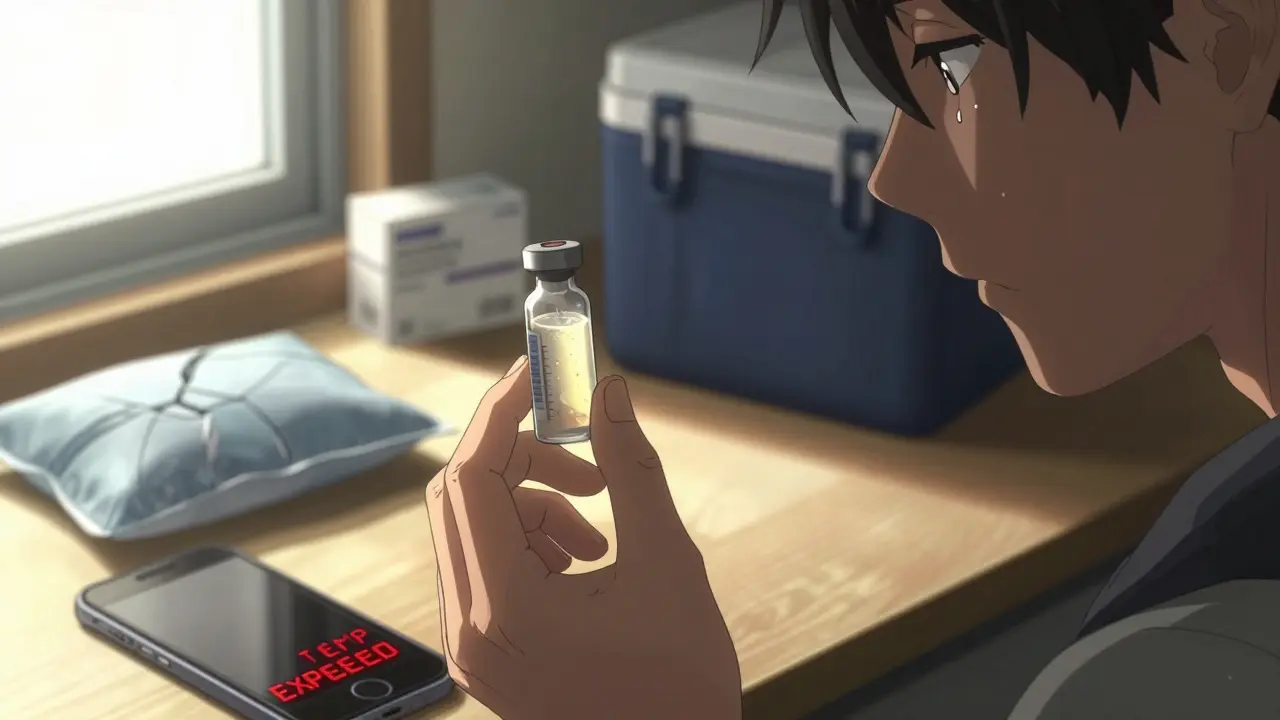
What Happens If You Leave It Out?
If you accidentally leave insulin or a biologic out for a few hours, don’t panic-but don’t ignore it either. - Up to 4 hours at room temperature (25°C): Usually safe for most insulins and biologics. - Over 4 hours at 30°C or higher: Potency drops fast. Some biologics lose 50% effectiveness in 24 hours. - Any exposure to freezing: Throw it out. No exceptions.The FDA warns that using degraded medication is an unapproved use. That means if something goes wrong, your insurance might not cover it-and you could be at risk for serious complications. One 2021 case documented in the FDA’s database involved a patient who developed diabetic ketoacidosis after using insulin stored in a hot car. She ended up in the ER.
Traveling With Refrigerated Medications
Traveling? You need a plan.- Insulated travel cooler: Use one with phase-change gel packs (like TempAid MediCool). These maintain 2°C-8°C for up to 48 hours.
- Never check luggage. Checked bags can sit in uncontrolled cargo holds. Carry it on.
- Ask for a letter: Get a doctor’s note explaining your meds. Airlines and security may ask.
- Know your destination: If you’re going somewhere hot (like Durban in summer), plan ahead. Hotels may have fridges-but don’t assume they’re cold enough.
Pro tip: Keep your meds in your carry-on with your ID and prescription. Don’t let them sit in a hotel room while you’re out.
Power Outages and Emergencies
If the power goes out, your fridge warms up fast. - Keep the door shut. A full fridge stays cold for up to 24 hours. - Use a portable cooler with frozen gel packs if you have one. - If the outage lasts longer than 24 hours and your meds are above 8°C for more than 4 hours, contact your pharmacist. They can tell you if it’s still safe.Some pharmacies offer emergency cold storage. Ask your provider if they have a backup plan. Nonprofits like NeedyMeds also distribute free digital thermometers to patients who need them.
What’s Changing in 2026?
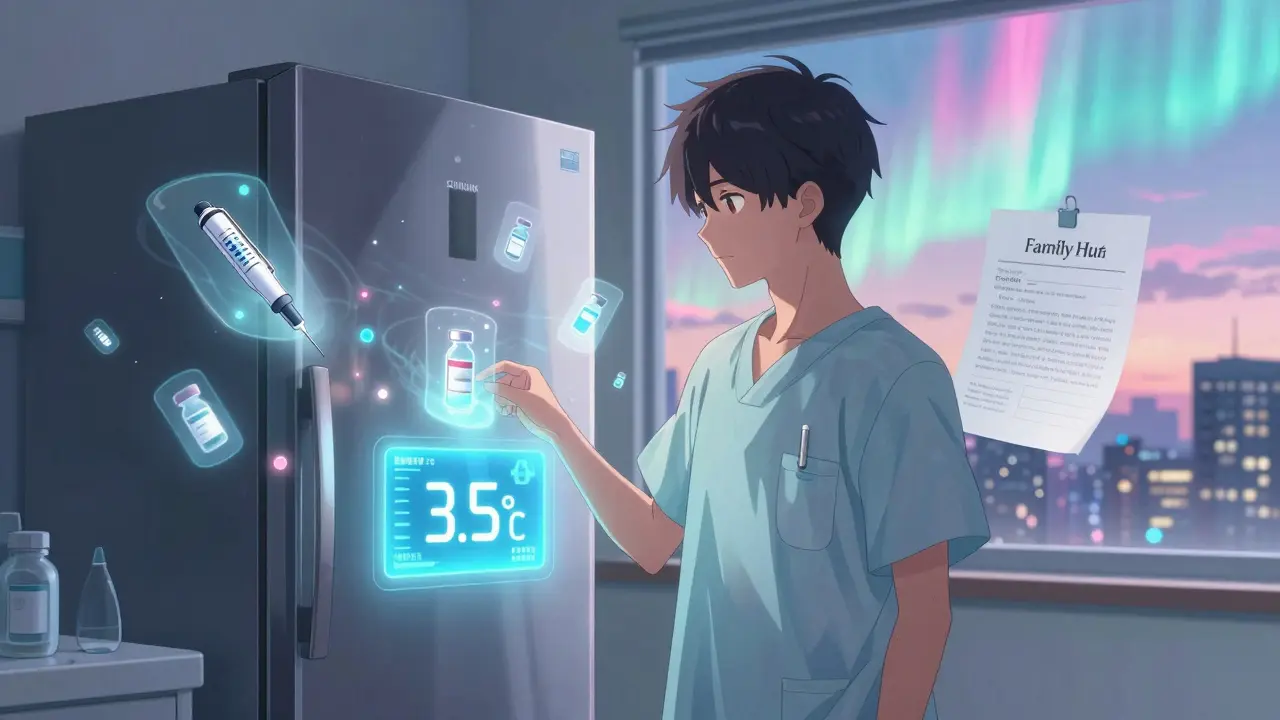
Medication science is evolving. Newer insulin formulations now tolerate higher temperatures for longer. Novo Nordisk’s latest versions can stay stable at 37°C for up to 7 days. That’s a big shift from the old 28-day rule. Smart fridges are starting to enter homes too. Samsung’s 2023 Family Hub model includes a dedicated medication zone that maintains 3°C-5°C with real-time alerts. It’s not cheap-but for someone on daily injectables, it’s worth considering. The trend is clear: more drugs will need refrigeration. By 2030, the American Society of Health-System Pharmacists predicts 30% of all prescriptions will require cold storage. That’s up from 15-20% today.When in Doubt, Call Your Pharmacist
You don’t have to guess. Pharmacists are trained in medication stability. If you’re unsure whether your drug is still good, call them. They can tell you: - How long it’s safe at room temperature - What signs mean it’s degraded (cloudiness, clumping, discoloration) - Where to get a replacement if neededDon’t wait for a crisis. Ask now. Keep the number handy.
Final Thought: It’s Not About Perfection
You don’t need a $2,500 pharmaceutical fridge to be safe. You just need awareness. Store your meds in the center of the fridge. Check the temperature once a week. Know the expiration window. When in doubt, throw it out.Medications aren’t like milk-they don’t smell bad when they go bad. You won’t know they’ve lost potency until your blood sugar spikes, your rash returns, or your immune system fights back. That’s why consistency matters. Not because it’s trendy. Because your life depends on it.
Can I store insulin in the freezer if I want it to last longer?
No. Freezing insulin destroys its structure permanently. Even brief exposure below 0°C can cause irreversible damage. Once frozen, insulin should be discarded-even if it thaws and looks normal. The molecules are broken. Using it can lead to dangerous spikes in blood sugar.
How do I know if my insulin has gone bad?
Look for changes: cloudy appearance (for clear insulins), clumps, particles, or discoloration. If it looks different than when you opened it, don’t use it. Also, if your blood sugar becomes harder to control without a clear reason, degraded insulin could be the cause. Always check the expiration date and the 28- or 30-day window after opening.
Is it okay to keep vaccines in the fridge door?
No. The fridge door is the warmest part, often reaching 11°C or higher. Vaccines are extremely sensitive to temperature changes. Always store them on the middle shelf, away from the door and freezer vent. Use a digital thermometer to confirm the temperature stays between 2°C and 8°C.
Can I use a regular cooler with ice packs for long-term storage?
Not for long-term. Ice packs melt and can cause freezing if they’re in direct contact with the vials. Use a dedicated insulated medical cooler with phase-change gel packs designed to maintain 2°C-8°C without freezing. These are tested and validated for pharmaceutical use. Regular coolers are risky and unreliable.
What should I do if I accidentally left my biologic medication in a hot car for 6 hours?
If the temperature in the car reached above 30°C for more than 4 hours, the medication is likely degraded. Do not use it. Contact your pharmacist or doctor immediately. They can advise whether you need a replacement and how to proceed safely. Never risk using a medication that’s been exposed to extreme heat-it could lead to treatment failure or serious health consequences.


