MH Dantrolene Dose Calculator
Malignant hyperthermia (MH) is a life-threatening reaction triggered by certain anesthetics. Dantrolene is the only treatment and must be administered immediately. This calculator determines the proper dose based on patient weight.
Dose Calculation
Initial dose: 0 mg
Total needed (up to 10 mg/kg): 0 mg
Vials required (20 mg/vial): 0
Note: Dantrolene must be administered immediately. Treatment time is critical - survival rates drop sharply after 40 minutes without dantrolene.
Important Safety Note
This is an educational tool only. For actual medical emergencies, immediately:
- Stop all triggering anesthetics
- Administer dantrolene immediately
- Call MHAUS hotline at 1-800-644-9737
- Initiate cooling measures
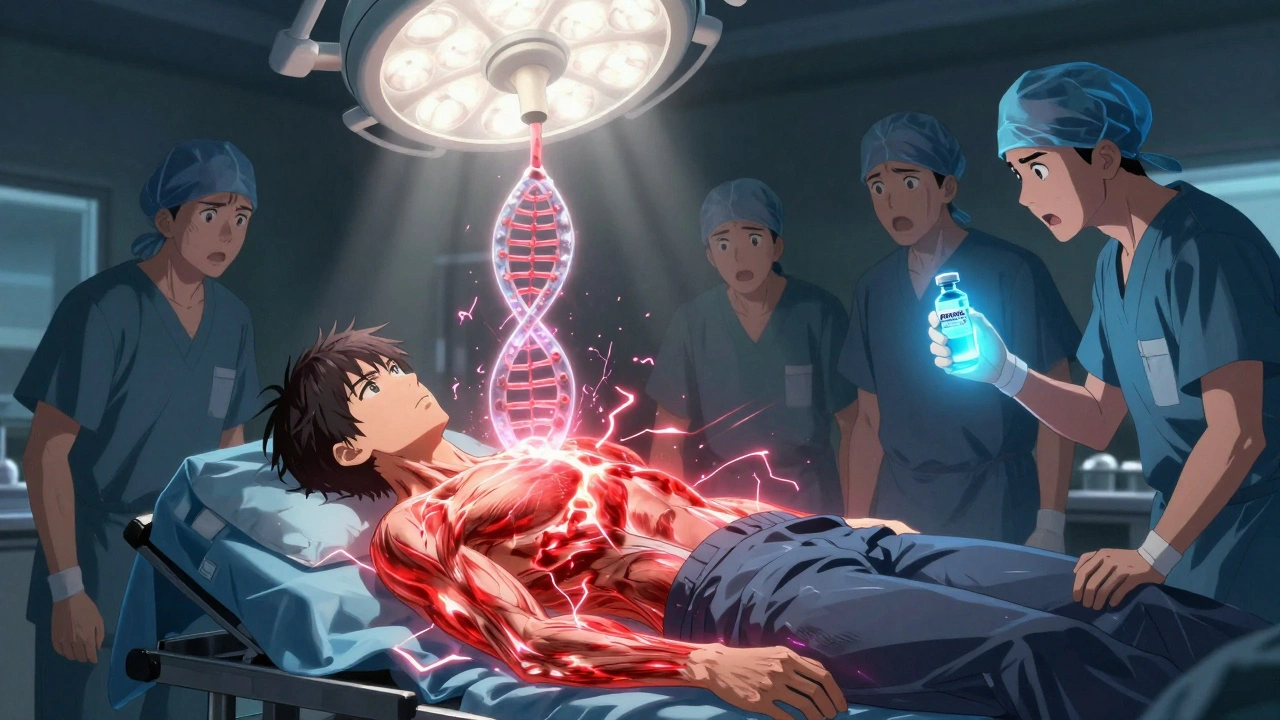
When you walk into a hospital for surgery, you expect to be safe. You trust the team to handle the anesthesia, monitor your body, and keep you stable. But for a tiny fraction of people - about 1 in 5,000 to 1 in 100,000 - something terrifying can happen without warning. A rare genetic condition called malignant hyperthermia can turn a routine procedure into a deadly crisis within minutes. And it’s triggered by common anesthesia drugs you’ve probably never heard of.
What Exactly Is Malignant Hyperthermia?
Malignant hyperthermia (MH) isn’t a fever or infection. It’s a genetic muscle disorder that flips a switch inside your skeletal muscles when exposed to certain anesthetics. The result? Your muscles lock up, your body overheats, and your metabolism goes into overdrive - burning oxygen, producing carbon dioxide, and spiking body temperature faster than your body can cool down. This reaction happens because of a flaw in the ryanodine receptor 1 gene, or RYR1. About 70% of MH cases are linked to mutations in this gene, which controls how calcium is released in muscle cells. Normally, calcium flows in and out to help muscles contract and relax. In MH-susceptible people, the trigger drugs - like sevoflurane, desflurane, isoflurane, or succinylcholine - cause calcium to flood out and stay out. Muscles don’t relax. They stay clenched. And that constant contraction generates massive heat. The first signs are subtle but unmistakable to trained eyes. A sudden spike in heart rate - over 120 beats per minute - without any obvious reason. A rise in carbon dioxide levels in exhaled breath (end-tidal CO2 above 55 mmHg). Then, muscle rigidity, especially in the jaw. That’s often the first red flag. In kids having tonsillectomies, masseter muscle spasm after succinylcholine is a classic warning. Within minutes, body temperature can climb past 104°F. If unchecked, it can hit 109°F. That’s hotter than a boiling pot of water.Why This Isn’t Just a Bad Reaction - It’s a Medical Emergency
Left untreated, malignant hyperthermia kills. In the 1960s, before dantrolene was discovered, up to 80% of patients died. Today, thanks to better protocols, mortality has dropped to about 5%. But that’s only if treatment starts fast. The real danger isn’t just the heat. It’s the cascade of damage that follows. As muscles break down, they release potassium into the blood - dangerous levels above 5.5 mEq/L can trigger cardiac arrest. They also dump myoglobin, a muscle protein, into the bloodstream. That stuff clogs the kidneys. Acute kidney failure is common in severe cases. Blood becomes acidic. Oxygen levels crash. The body starts shutting down. And here’s the scary part: you might not know you’re at risk. About 29% of MH cases happen in people with no family history. No one in your family ever had a bad reaction to anesthesia? That doesn’t mean you’re safe. The gene mutation can skip generations or appear as a new mutation. Most people find out the hard way - during surgery.The Only Drug That Works: Dantrolene
There’s only one drug that directly stops malignant hyperthermia: dantrolene. It works by blocking calcium release in muscle cells. It doesn’t sedate you. It doesn’t lower your heart rate. It stops the root cause - the uncontrolled muscle contraction. The standard dose is 2.5 mg per kilogram of body weight, given intravenously. If symptoms don’t improve in 5 to 10 minutes, you give more - up to 10 mg/kg total. That’s a lot of drug. A 70kg adult might need 175 to 700 mg. Each vial of dantrolene contains 20 mg. So you might need 9 to 35 vials. That’s why hospitals are required to keep at least 36 vials on hand - enough for an average adult - and ready to use within seconds. There are two versions: Dantrium and Ryanodex. Dantrium requires mixing with sterile water, a process that takes 22 minutes. Ryanodex, approved by the FDA in 2014, is a ready-to-use powder that reconstitutes in just one minute. It’s now the gold standard. But it costs about $4,000 per vial. A full emergency kit can run over $144,000. That’s why many rural hospitals struggle to keep stock.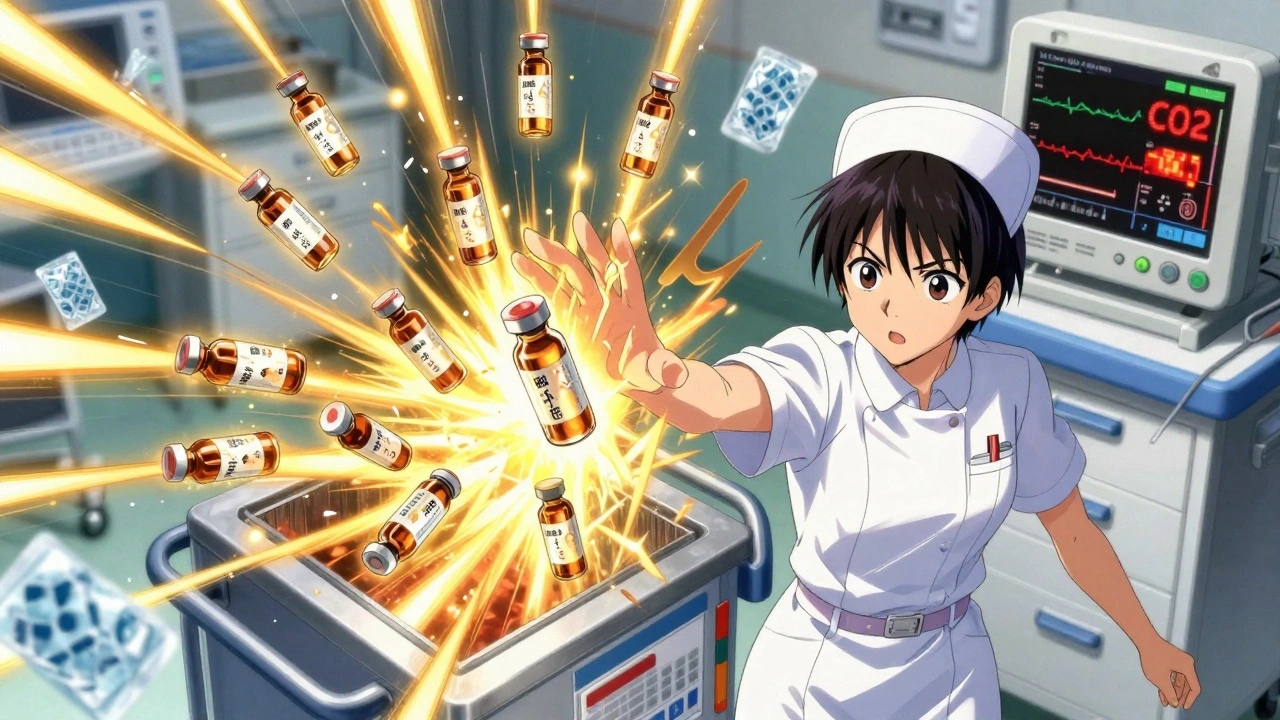
What Happens After Dantrolene?
Giving dantrolene isn’t enough. You have to stop the triggers. Immediately turn off the volatile anesthetics. Switch to 100% oxygen at 10 liters per minute. Hyperventilate the patient to blow off excess CO2. Stop the surgery. Get the patient out of the operating room as soon as possible. Then comes cooling. Ice packs on the neck, armpits, and groin. Cold IV fluids. Sometimes, even extracorporeal membrane oxygenation (ECMO) if the body won’t cool down. You treat the side effects too: sodium bicarbonate to fix acidosis, insulin and glucose to drive potassium back into cells, mannitol and furosemide to protect the kidneys from myoglobin damage. And you keep monitoring. For hours. For days. MH can relapse. Symptoms can return 24 to 72 hours after the initial crisis. That’s why patients are often admitted to the ICU for at least 24 hours after the event, even if they seem stable.How Hospitals Are Preparing - and Where They’re Falling Short
The American Society of Anesthesiologists (ASA) requires all facilities that use general anesthesia to have an MH emergency cart ready at all times. That cart must contain dantrolene, sterile water, syringes, needles, cooling supplies, and blood gas analysis tools. It must be checked quarterly. But compliance isn’t universal. Academic hospitals? Nearly 100% compliant. Rural surgical centers? Only 63%. Many don’t have the budget for $144,000 in dantrolene. Some don’t train staff regularly. A 2022 survey found 42% of MH cases occurred in facilities that skipped mandatory preoperative MH risk assessments. The best-run places have done more than just stock the drug. Mayo Clinic installed “MH carts” within 30 seconds of every OR door. Treatment time dropped from 22 minutes to under 5 minutes. Survival rates jumped. Other hospitals now use real-time monitoring systems - like Epic’s 2024 update - that alert staff automatically when three MH signs appear together: rising CO2, fast heart rate, and high temperature.
What Patients Should Do
If you’ve had a bad reaction to anesthesia - or if a close relative did - tell your anesthesiologist. Ask if you should get genetic testing for RYR1 or CACNA1S mutations. The test costs $1,200 to $2,500 and is 95% accurate for known mutations. It’s not perfect - not all mutations are known - but it can prevent future crises. If you’re scheduled for surgery and have no known history, ask if your facility has an MH protocol. Do they have dantrolene on-site? Do they run drills? Most patients don’t ask. That’s a mistake. You’re the only one who can advocate for your safety. And if you’ve survived MH, wear a medical alert bracelet. Register with the North American Malignant Hyperthermia Registry. Share your story. Over 68% of survivors said they’d never heard of MH before their own episode. You could save someone else’s life just by speaking up.The Future: What’s Coming Next
The next big leap might be faster, easier treatments. The FDA approved an intranasal form of dantrolene in 2023 - expected to hit hospitals in mid-2024. It could be used by paramedics before the patient even reaches the OR. Researchers are also testing new drugs like S107, which stabilizes the ryanodine receptor and might prevent MH before it starts. Long-term, gene editing with CRISPR could fix the RYR1 mutation at the source. Phase I trials are projected for 2027. For now, the best defense is awareness, preparation, and speed. Malignant hyperthermia is rare. But when it hits, there’s no second chance. The difference between life and death often comes down to one thing: whether dantrolene is ready - and whether someone knows to use it.Can malignant hyperthermia happen without anesthesia?
No, malignant hyperthermia is triggered only by specific anesthetic drugs - mainly volatile gases like sevoflurane or the muscle relaxant succinylcholine. It does not occur spontaneously or from heat, exercise, or stress alone. However, in rare cases, extreme physical exertion or heat exposure may trigger a similar reaction in people with RYR1 mutations, but this is considered a separate condition called exertional heat stroke with MH susceptibility.
Is malignant hyperthermia inherited?
Yes, it’s an autosomal dominant genetic disorder. If one parent carries a mutation in the RYR1 or CACNA1S gene, each child has a 50% chance of inheriting it. But not everyone with the mutation will react - the trigger must be present. That’s why some people live their whole lives without knowing they’re at risk until they undergo anesthesia.
How do I know if I’m at risk for malignant hyperthermia?
If you or a close family member had a bad reaction to anesthesia - especially unexplained fever, muscle rigidity, or cardiac arrest during surgery - you should be tested. Genetic testing for RYR1 mutations is available through certified labs. Even without family history, if you’ve had unexplained muscle cramps, heat intolerance, or elevated CK levels after exercise, talk to your doctor. You may be a candidate for testing.
Are there safe anesthesia options for people with MH?
Yes. Many anesthetics are completely safe. These include intravenous drugs like propofol, ketamine, etomidate, and barbiturates. Local anesthetics, nerve blocks, and regional anesthesia (like epidurals) are also safe. The key is avoiding volatile gases (sevoflurane, desflurane, isoflurane) and succinylcholine. Always inform your anesthesiologist of your MH risk so they can plan accordingly.
What should I do if I suspect someone is having an MH reaction?
Call for help immediately. Stop all triggering anesthetics. Give 100% oxygen. Start cooling with ice packs and cold IV fluids. If dantrolene is available, administer it right away - don’t wait for confirmation. Call the MHAUS hotline at 1-800-644-9737. Every minute counts. Survival rates drop sharply after 40 minutes without dantrolene.


