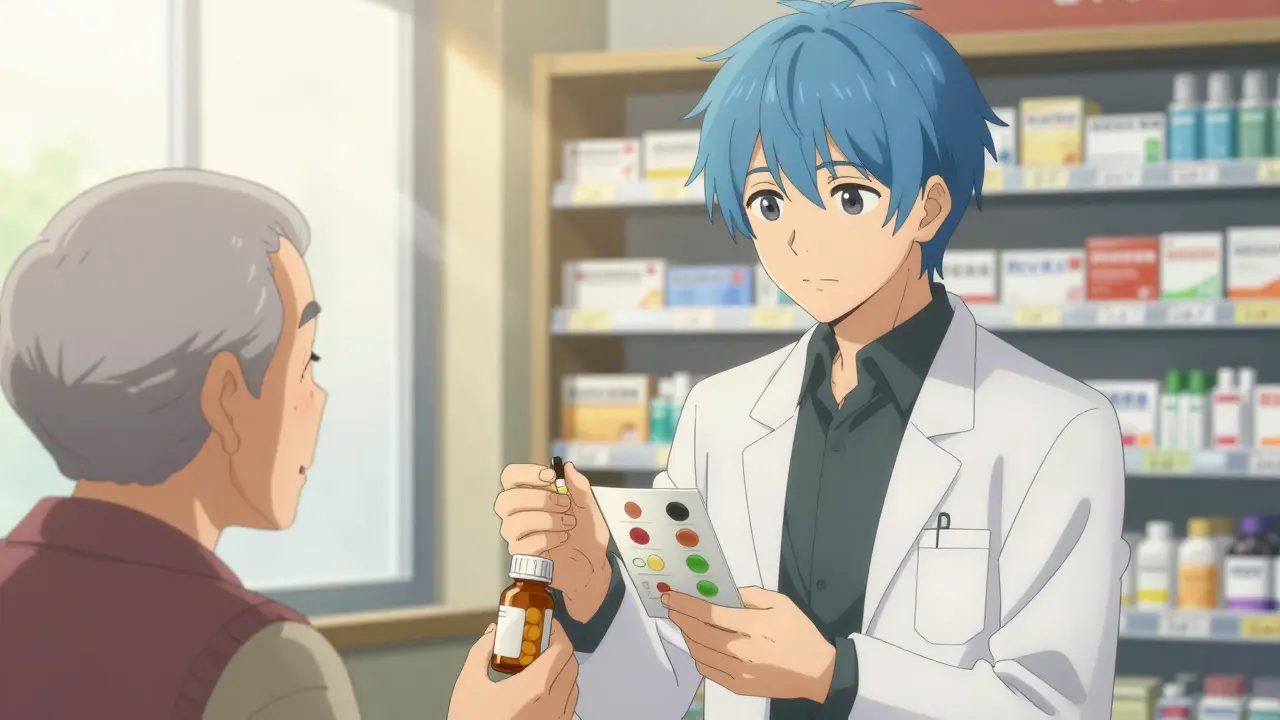
When you’re sick, the last thing you need is to misunderstand your medicine. But for millions of people who don’t speak English well, that’s exactly what happens. A parent gives their child the wrong dose of antibiotics because the label said "every eight hours" but they thought it meant "every day." An elderly man skips his blood pressure pills because the instructions were only in English, and no one explained them. These aren’t rare mistakes - they’re common, dangerous, and entirely preventable.
Why Language Barriers Put Medications at Risk
Medication errors tied to language barriers aren’t just about misreading labels. They’re about broken communication at every step: when a doctor writes the prescription, when a pharmacist fills it, when a nurse explains how to take it. A 2022 study from the Children’s Hospital of Philadelphia found that children in families with limited English proficiency had almost double the rate of medication errors compared to English-speaking families - 17.7% versus 9.6%. That’s not a small gap. That’s life or death.
One of the biggest problems? Relying on family members to interpret. A mother translating for her child. A teenager helping their grandparent. These people aren’t trained. They don’t know medical terms like "sublingual" or "intramuscular." They might say "take two" when the prescription says "take one every six hours." Studies show that up to 25% of interpretation done by untrained people is wrong. And in pharmacies, nearly 1 in 9 use family members instead of professionals - even though 34.7% of non-English-speaking patients say they still don’t understand how to take their meds.
What Actually Works: Professional Help
The solution isn’t complicated. It’s professional interpreters - in person, over the phone, or via video. These aren’t just translators. They’re trained in medical vocabulary, cultural context, and patient safety. Research shows using them can cut medication errors by up to 50%. That’s not a guess. That’s from analyzing over 7,000 cases.
One hospital in California reduced medication errors among LEP patients by 40% in just one year after hiring certified interpreters. Another in Milwaukee started using video interpreters for every prescription counseling session. The result? Fewer phone calls to the pharmacy asking for clarification. Fewer emergency room visits. More confidence from patients.
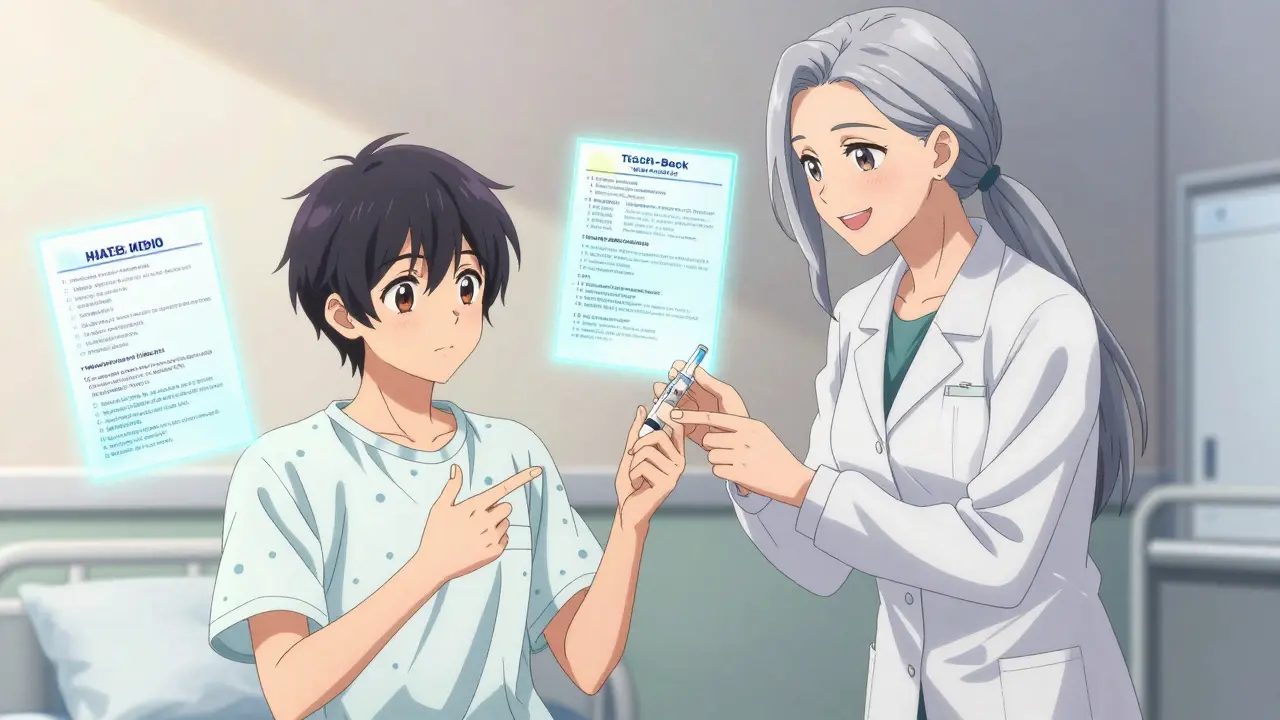
Even better? Directly observed dosing. This means a nurse or pharmacist watches the patient take the medicine right there - using hand gestures, pictures, or simple demonstrations. It doesn’t matter if the patient speaks English. If they show they can open the bottle, pour the right amount, and swallow it correctly, you know they understand. A 2017 study in the Journal of General Internal Medicine proved this method works even when language is a total barrier.
Where Things Fall Apart
But here’s the hard truth: most places still don’t do this consistently.
Take pharmacies. In the Bronx, 31% of pharmacies couldn’t print prescription labels in Spanish - even though over half the neighborhood speaks it. In Milwaukee, half of pharmacies said they "never or only sometimes" give non-English instructions. Why? Because their systems can’t handle it. Some pharmacy software can’t translate "dropperful" or "for thirty days." It just doesn’t have the vocabulary.
And then there’s the human side. Staff don’t always know how to ask if a patient needs help. A 2023 study found 68% of hospitals don’t even identify language needs before the patient walks in. Nurses are rushed. Pharmacists are overwhelmed. They assume the patient understands - or worse, they don’t want to slow things down.
One Reddit user shared how their Spanish-speaking mother was given insulin instructions through Google Translate. The app said "take 5 units." The real label said "take 5 units after meals." The mother took it on an empty stomach. She ended up in the hospital. That’s not an accident. That’s a system failure.
What You Can Do - Even If You’re Not a Doctor
You don’t need to be a hospital administrator to fix this. Here’s how you can help:
- Ask for an interpreter. If you or someone you care for struggles with English, say it out loud: "I need an interpreter." You have a legal right to one under Title VI of the Civil Rights Act.
- Use the teach-back method. After the provider explains the medicine, ask them to watch you explain it back. "Can you show me how you’ll take this?" If they can’t, they don’t understand.
- Request translated materials. Ask for pill bottles, instructions, or appointment reminders in your language. Many clinics now offer them in Spanish, Mandarin, Vietnamese, Arabic, and more.
- Bring someone who speaks both languages. Not a child. Not a cousin. Someone who’s calm, clear, and willing to speak up.
- Check the label yourself. If the instructions look different from what you were told - ask again. Don’t assume it’s a mistake.
The Bigger Picture: Why This Isn’t Just a Language Problem
This isn’t about translation. It’s about equity. When someone can’t understand their medicine, they’re not just confused - they’re at risk. Studies show language barriers lead to detectable physical harm in nearly half of affected patients. Moderate harm - like missed doses, wrong timing, or dangerous side effects - affects almost half again.
And it’s getting worse. The U.S. Census projects that by 2030, one in four Americans will speak a language other than English at home. Hospitals and pharmacies that don’t adapt now will be left behind. The good news? The tools exist. Professional interpreters. Video systems. Multilingual labels. Patient safety programs.
What’s missing is consistency. A hospital in Chicago might have interpreters on call 24/7. The one down the street might not have any. A pharmacy in Miami might print labels in Spanish. The one in Kansas might not even have a Spanish-speaking staff member.
The fix? Demand it. Ask your clinic: "Do you have interpreters?" Ask your pharmacy: "Can you print my prescription in my language?" If they say no - ask why. And if they still say no - go somewhere else. Your safety matters more than convenience.
What’s Changing Now
Change is happening - slowly. In 2022, Medicare started reimbursing hospitals for telehealth interpretation. In 2023, the FDA announced it will release new guidelines for multilingual prescription labels in 2024. Epic and Cerner, the two biggest electronic health record systems, are rolling out better language preference tools in 2024. The National Institutes of Health is even testing AI tools that can translate medication instructions with medical accuracy - not just word-for-word, but meaning-for-meaning.
But none of this helps if staff don’t use it. If a nurse doesn’t know how to pull up the interpreter button on the computer, or a pharmacist doesn’t know how to print a translated label, the technology is useless.
The real breakthrough will come when every patient - no matter their language - walks into a clinic and knows, without asking: "They’ll understand me. They’ll make sure I get this right."
Can I get medication instructions in my language by law?
Yes. Under Title VI of the Civil Rights Act of 1964, any healthcare provider that receives federal funding - which includes most hospitals, clinics, and pharmacies - is legally required to provide language assistance services. This includes professional interpreters and translated materials. You have the right to ask for them at any point in your care.
What if the pharmacy says they can’t print my prescription in my language?
Ask to speak with the pharmacist-in-charge. If they still say no, request a printed copy in English and ask for a staff member to explain it using a phone interpreter. Most pharmacies have access to services like LanguageLine or Video Interpreting. If they don’t, ask them to call a local health department - many offer free interpretation services for pharmacies. You can also ask for a second copy of the prescription to take to another pharmacy that does offer translation.
Is it safe to use Google Translate or apps like DeepL for medicine instructions?
No. Medical terms are not like regular sentences. "Take daily" might be translated as "take every day," but "take as needed" could become "take when you feel like it" - which is dangerously vague. Apps don’t understand context, dosage timing, or drug interactions. One user’s mother was hospitalized because Google Translate changed "10 mL every 6 hours" to "10 drops every hour." Always verify instructions with a trained interpreter or pharmacist.
What should I do if I don’t trust the interpreter?
You have the right to ask for a different interpreter. If you feel uncomfortable, rushed, or confused, say so. You can request a same-gender interpreter, a certified professional, or a video interpreter from a different service. If the facility refuses, contact the patient advocacy office or file a complaint with the Office for Civil Rights at the U.S. Department of Health and Human Services.
Are interpreters expensive? Will I be charged?
No. By law, you cannot be charged for interpreter services. Hospitals and pharmacies are required to cover the cost. Professional interpreters typically cost between $50-$100 per hour, but this is absorbed by the provider - not the patient. If someone asks you to pay for an interpreter, it’s a violation of your rights.


