
When you're living with rheumatoid arthritis, psoriatic arthritis, or another autoimmune condition, finding a treatment that actually works can feel like a breakthrough. JAK inhibitors-drugs like tofacitinib, upadacitinib, and baricitinib-have delivered real relief for many. But beneath the promise of reduced joint pain and clearer skin lies a quiet, serious risk: serious infections and life-threatening blood clots. These aren’t rare side effects. They’re well-documented, FDA-mandated warnings that every patient and doctor must take seriously.
Why JAK Inhibitors Increase Infection Risk
JAK inhibitors work by blocking signaling pathways that drive inflammation. That’s good for your joints and skin. But those same pathways help your immune system fight off viruses, bacteria, and fungi. When you suppress them, your body becomes less able to defend itself. The most common serious infection seen with these drugs is herpes zoster-also known as shingles. Studies show it occurs in about 14% of people on JAK inhibitors who report infections. Even if you’ve been vaccinated, the vaccine doesn’t always hold up. One patient on Reddit shared how she developed shingles within three months of starting tofacitinib, despite having had the vaccine. She ended up hospitalized for five days. Other infections include tuberculosis, pneumonia, and fungal infections like candidiasis. The risk goes up if you’re over 65, have diabetes, smoke, or have had prior infections. The CDC and Infectious Diseases Society of America (IDSA) recommend you get all necessary vaccines-especially shingles, pneumococcal, and flu-at least four weeks before starting treatment. Live vaccines, like the nasal flu spray or MMR, are absolutely off-limits once you’re on a JAK inhibitor.Thrombosis: The Silent Danger
While infections are more common, thrombosis is more dangerous. Venous thromboembolism (VTE), which includes deep vein thrombosis (DVT) and pulmonary embolism (PE), has been linked to JAK inhibitors in multiple large studies. A 2022 analysis of over 126,000 patients found JAK inhibitors increased the odds of a blood clot by 2.37 times compared to other drugs. The risk isn’t the same for everyone. People over 65 have nearly four times the risk. Those with a prior clot history? Their risk jumps to more than five times higher. Obesity (BMI ≥30), immobility, recent surgery, or taking estrogen-based hormones all add to the danger. One patient on upadacitinib described a DVT after a long flight. Her leg swelled up, she felt sharp pain, and her doctor confirmed a clot. The medication was stopped immediately. That’s not an isolated case. In the ORAL Surveillance trial, patients on tofacitinib had more than double the rate of pulmonary embolism compared to those on TNF inhibitors.Not All JAK Inhibitors Are the Same
You might think all JAK inhibitors carry the same risks. They don’t. The level of risk depends on how selective the drug is. - Tofacitinib blocks JAK1 and JAK3 strongly, and JAK2 moderately. That JAK2 inhibition is linked to lower platelet production and higher clot risk. - Upadacitinib is much more selective for JAK1, with minimal effect on JAK2. Early data from the JAKARTA2 trial showed only 0.2 VTE events per 100 patient-years-far lower than tofacitinib’s 0.9. - Baricitinib inhibits JAK1 and JAK2, putting it in the middle. This matters. If you’re 70, have high blood pressure, and a history of smoking, your doctor might choose upadacitinib over tofacitinib-not because one is “safe,” but because one is less risky.
What Your Doctor Must Check Before Prescribing
The FDA and EMA don’t just warn-they require action. Before you start any JAK inhibitor, your doctor should:- Review your full medical history: Have you ever had a blood clot? A heart attack? Cancer?
- Check your BMI. If it’s 30 or higher, that’s a red flag.
- Ask about smoking. Even if you quit 10 years ago, the risk lingers.
- Confirm you’ve had all recommended vaccines.
- Consider a baseline D-dimer test and leg ultrasound if you’re high-risk.
Monitoring After You Start
Starting the drug isn’t the end of the conversation. It’s the beginning of ongoing vigilance. - Blood counts: Every 4 to 8 weeks to catch low white cells, red cells, or platelets. - Lipid panel: At 4 and 12 weeks. JAK inhibitors raise cholesterol-sometimes by 15-20% in just a month. That’s not just a lab number; it’s another stroke risk. - Watch for symptoms: Fever, chills, cough, shortness of breath, swelling or pain in one leg, sudden chest pain. Don’t wait. Call your doctor immediately. If you develop a serious infection or confirmed blood clot, the drug must be stopped. No exceptions. The American College of Rheumatology is clear: pause treatment until the infection clears, and never restart after a VTE.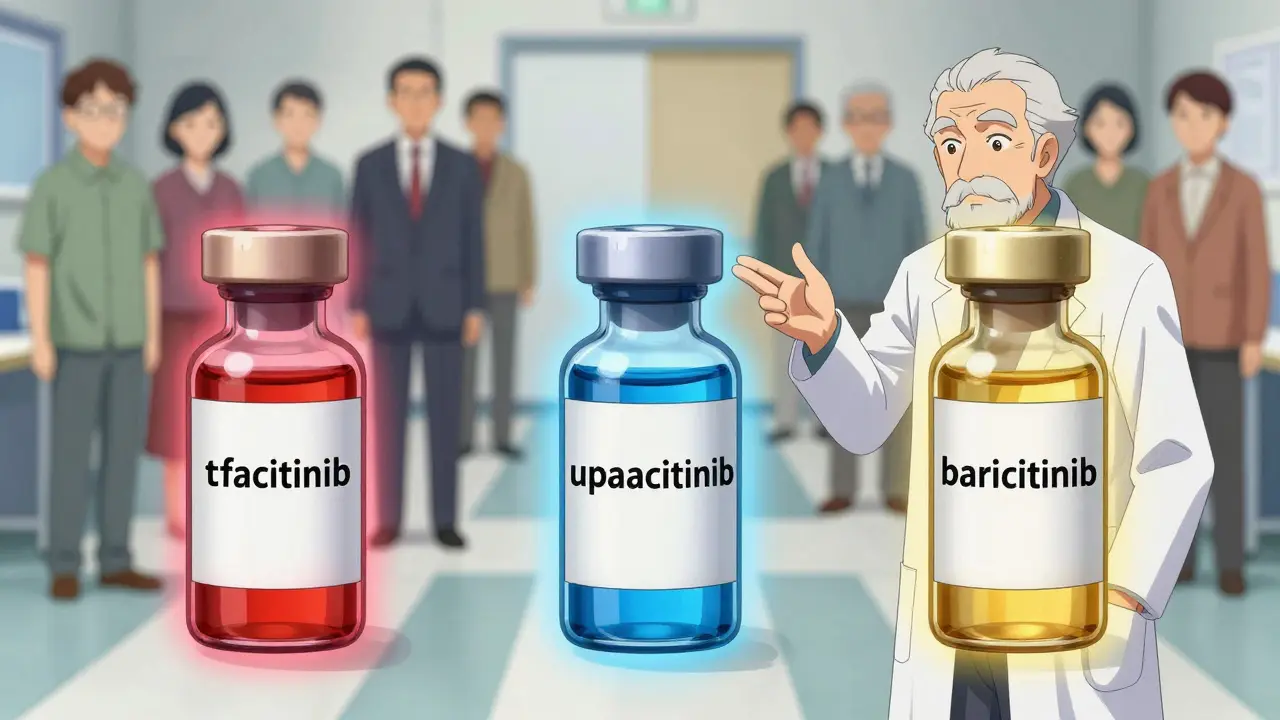
Real Patients, Real Choices
Patient satisfaction scores for JAK inhibitors hover around 6.2 out of 10. Why so low? Nearly half of negative reviews cite infection fears. Almost a third mention blood clots. But here’s the twist: 82% of patients who didn’t have complications say the drugs changed their lives. It’s not about avoiding JAK inhibitors entirely. It’s about using them wisely. A 42-year-old with severe psoriasis and no other health issues might benefit greatly. A 72-year-old with a history of heart disease, high cholesterol, and a past DVT? The risk likely outweighs the reward. The market reflects this. JAK inhibitors made up 35% of new biologic prescriptions in 2020. By 2023, that dropped to 28%. TNF inhibitors are creeping back. Why? Because doctors are learning to weigh risk better.The Bottom Line
JAK inhibitors are powerful tools. But they’re not magic bullets. They come with serious, documented dangers: infections that can land you in the hospital, and blood clots that can kill. These aren’t theoretical risks. They’re real, measurable, and preventable-if you’re careful. If you’re considering one:- Ask your doctor: What’s my personal risk for infection and clotting?
- Make sure you’re fully vaccinated before starting.
- Know the warning signs: swelling, pain, fever, trouble breathing.
- Stick to the monitoring schedule-blood tests aren’t optional.
- Don’t assume all JAK inhibitors are equal. Ask which one you’re getting and why.


