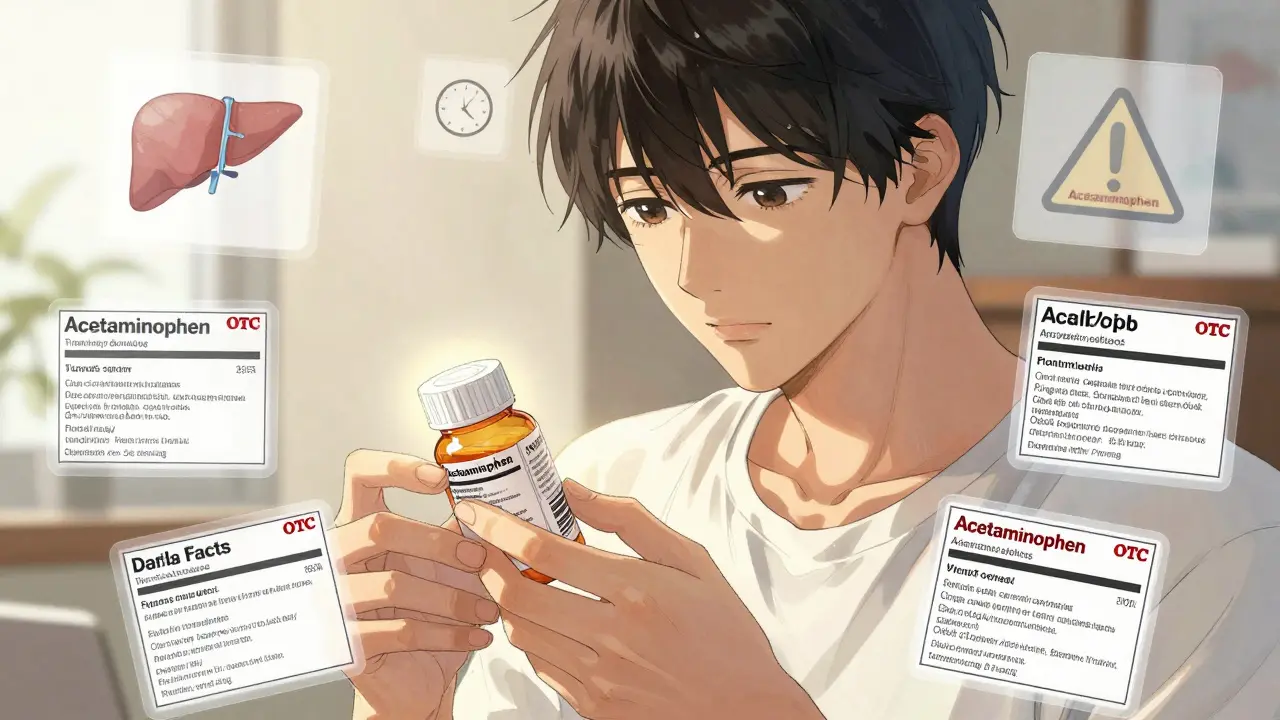
Every year, millions of people in the U.S. reach for an over-the-counter (OTC) medicine to treat a headache, cold, or upset stomach. It’s quick. It’s easy. And if you don’t read the label, it could be dangerous.
Why the Drug Facts Label Matters
You’ve seen it before - that small, standardized panel on the back of every OTC medicine bottle or box. It’s not just packaging. It’s your safety guide. The FDA made this format mandatory in 2017 to fix a big problem: people were mixing medicines, overdosing, or taking drugs they shouldn’t because labels looked different from brand to brand. Before the standardization, one product might say "pain reliever," another "analgesic," and you had no way to know they were the same thing. Now, every OTC medicine - whether it’s Tylenol, Advil, or a store brand - uses the exact same layout. That’s not coincidence. It’s by design to stop mistakes. The label isn’t there to impress you. It’s there to save you.The Seven Sections You Must Know
The Drug Facts Label has seven sections, always in the same order. Skip any one, and you might miss something critical. Here’s what each one means - and how to use it.1. Active Ingredients
This is the most important part. It tells you exactly what medicine is in the product - not the brand name, but the chemical name. For example: Acetaminophen 325 mg. That’s the active ingredient in Tylenol. If you see that same name on another bottle - say, a cold medicine - you’re taking two products with the same drug. Many people don’t realize that "acetaminophen" and "paracetamol" are the same thing. In the U.S., it’s always called acetaminophen. And it’s in more than 600 OTC products. Taking too much can cause severe liver damage. The FDA says the max safe dose is 4,000 mg in 24 hours. But if you’re taking Tylenol for a headache and NyQuil for a cold, you could hit that limit without even knowing it.2. Purpose
This tells you what the active ingredient does. For acetaminophen, it’s "pain reliever/fever reducer." For diphenhydramine, it’s "antihistamine" (used for allergies or sleep). This helps you understand why you’re taking it. If your symptom isn’t listed here, the medicine won’t help - and you’re wasting your money.3. Uses
This section says exactly what symptoms the product is approved to treat. It’s not marketing fluff. It’s FDA-approved language. For example: "temporarily relieves minor aches and pains due to cold, flu, headache, sore throat, and toothache." If your symptom isn’t listed, don’t use it. That’s not a suggestion - it’s a rule.4. Warnings
This is where people get hurt. Skip this, and you risk serious harm. Warnings tell you:- When NOT to use the product (e.g., "Do not use if you have liver disease").
- When to talk to a doctor first (e.g., "Ask a doctor before use if you are taking blood thinners").
- What side effects to watch for (e.g., "May cause drowsiness").
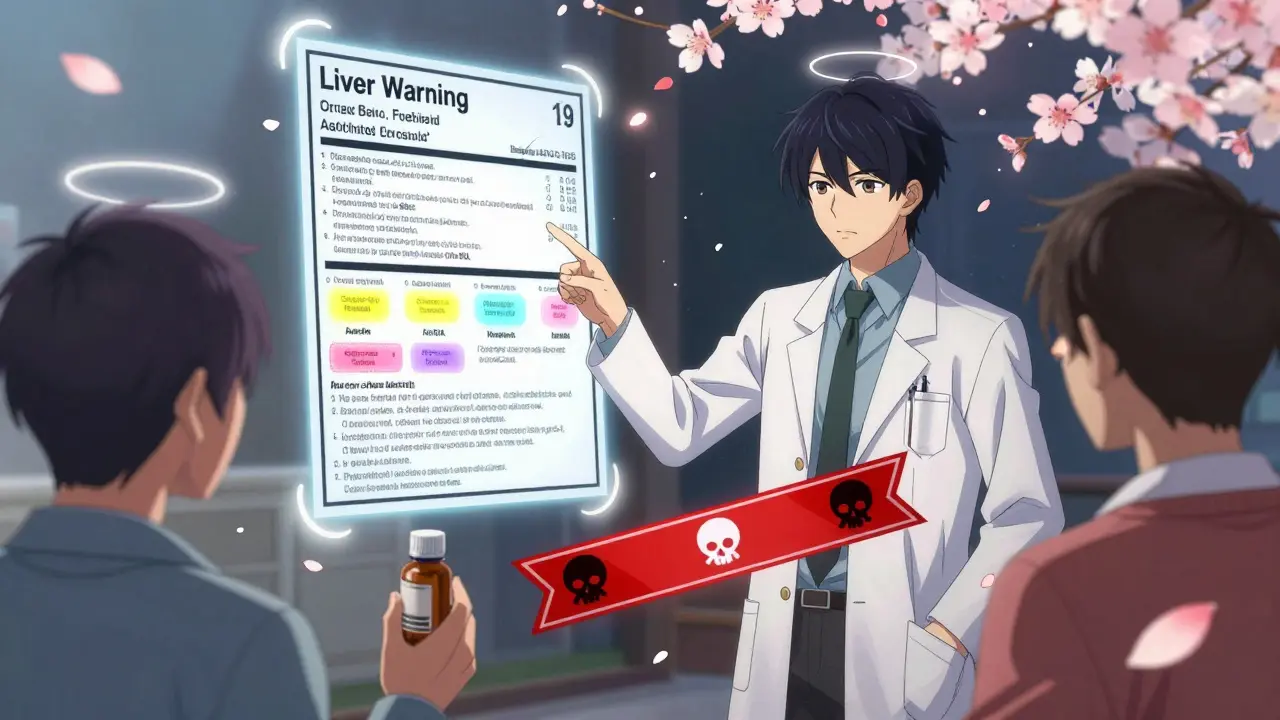
- Specific risks (e.g., "Liver warning: This product contains acetaminophen. Severe liver damage may occur if you take more than directed.").
5. Directions
This tells you how much to take, how often, and for how long. It’s not a suggestion. It’s a prescription for safety. Look for:- Exact dose: "Adults: 2 caplets every 4 to 6 hours"
- Max per day: "Do not take more than 8 caplets in 24 hours"
- Age limits: "Children under 12: Ask a doctor"
- Duration: "Do not use for more than 10 days unless directed by a doctor"
6. Other Information
This includes storage instructions (e.g., "Store between 68°F and 77°F") and sometimes nutritional info like sodium content. If you’re on a low-sodium diet, this matters. A single Alka-Seltzer tablet can have 300 mg of sodium. That’s 15% of your daily limit.7. Inactive Ingredients
These are the fillers, dyes, and preservatives. They don’t treat your symptoms - but they can cause reactions. If you’re allergic to sulfa, red dye #40, or lactose, this section tells you if the product contains them. For example: "Contains soybean oil" or "Contains aspartame." People with food allergies or sensitivities often overlook this. But it’s just as important as the active ingredient.The 5-Point Check for Safe OTC Use
Pharmacists at CVS Health developed a simple five-step method that cuts medication errors by 68%. It takes less than a minute. Use it every time.- Identify the active ingredient. Write it down. Is it acetaminophen? Ibuprofen? Diphenhydramine? Know what you’re taking.
- Match the uses to your symptoms. If the label doesn’t list your symptom, don’t take it.
- Read every warning. Especially the "Do not use" and "Liver warning" sections.
- Check the directions for your age and weight. Kids and seniors need different doses.
- Scan the inactive ingredients. Look for allergens you know you react to.
Common Mistakes and How to Avoid Them
Here’s what trips people up - and how to dodge it.- "I didn’t know Tylenol and acetaminophen were the same." They are. Always look for the generic name, not the brand.
- "I took one pill, then another because I didn’t feel better." You can’t speed up relief. Stick to the time window. Taking more too soon can overdose you.
- "I used the kitchen spoon to measure the liquid." Kitchen spoons are inaccurate. Use the measuring cup or syringe that comes with the medicine. One teaspoon = 5 mL. One tablespoon = 15 mL. Don’t guess.
- "I took the nighttime cold medicine because I thought it was stronger." Nighttime formulas often contain diphenhydramine (Benadryl) to make you sleepy. Taking it during the day can leave you drowsy, dizzy, or even fall.
- "I didn’t check the expiration date." Expired medicine doesn’t work as well - and some can break down into harmful substances.
What’s Changing in 2025?
The FDA isn’t done. Starting December 31, 2025, all new OTC labels must include:- Color-coded sections (red for warnings, green for directions)
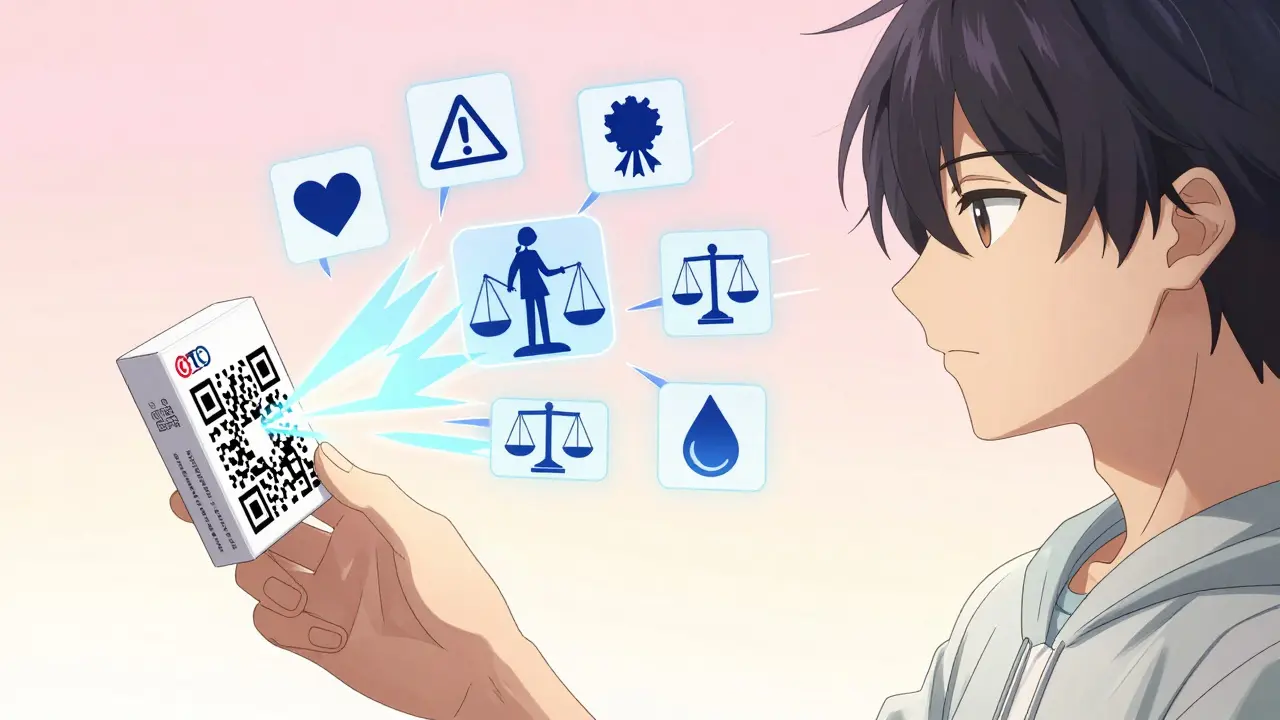
- Standardized icons (like a skull for toxic, a heart for heart risk)
- Larger font for active ingredient concentrations
Tools That Help
You don’t have to memorize every label. Use these free tools:- FDA Drug Label Decoder app - Scan a barcode or type in the product name. It breaks down the label for you. Over 1.2 million downloads.
- Ask your pharmacist. Walgreens reported a 40% increase in OTC consultations after launching their "Label Literacy" program. Pharmacists are trained to spot dangerous combinations.
- QR codes - Many brands now include QR codes on the box. Scan it to watch a short video explaining the label.
When in Doubt, Stop
If you’re unsure - don’t take it. Don’t guess. Don’t rely on memory. Don’t ask a friend. Ask a pharmacist. Call your doctor. Wait until you know for sure. OTC medicines are safe - when used correctly. But they’re not harmless. Every year, over 100,000 people end up in the ER because of OTC mistakes. Most of them could’ve been avoided. The Drug Facts Label is your best tool. Learn it. Use it. Every time.What should I do if I accidentally take too much of an OTC medicine?
If you suspect an overdose - even if you feel fine - call Poison Control immediately at 1-800-222-1222. Do not wait for symptoms to appear. Acetaminophen overdose, for example, can cause liver damage without immediate signs. Keep the medicine bottle with you when you call so you can tell them the exact ingredients and amounts taken.
Can I give my child an adult OTC medicine if I cut the dose in half?
No. Children’s bodies process medicine differently. Adult formulations often contain inactive ingredients that aren’t safe for kids. Always use a product labeled specifically for children. The dosing is based on weight and age, not just a scaled-down adult dose. Giving a child adult medicine - even half - can lead to serious side effects or overdose.
Why do some OTC medicines have "PM" in the name?
"PM" means the product contains an antihistamine - usually diphenhydramine (38 mg per dose) - to help you sleep. These are not meant for daytime use. They cause drowsiness, dry mouth, and can impair coordination. Taking them during the day can be dangerous, especially if you drive or operate machinery. Only use PM versions at night.
Is it safe to take OTC pain relievers every day for chronic pain?
No. OTC pain relievers like ibuprofen and naproxen are not meant for long-term daily use. Taking them for more than 10 days without a doctor’s advice increases your risk of stomach bleeding, kidney damage, and high blood pressure. If you need daily pain relief, see a doctor. There are safer, targeted treatments for chronic pain.
How do I know if a product is really an OTC medicine and not a supplement?
Look for the "Drug Facts" label. If it says "Supplement Facts," it’s not regulated as a medicine. Supplements don’t have to prove they work or list exact doses of active ingredients. OTC medicines must meet FDA safety and effectiveness standards. Only trust products with the Drug Facts panel for treating symptoms.


