Every day, thousands of prescriptions are filled at pharmacies across the country. Most of the time, everything goes smoothly. But sometimes, a mistake happens - and it’s not a small one. A patient walks up to the counter, picks up a bag of pills, and walks out. But those pills aren’t theirs. They’re meant for someone else. This isn’t rare. It’s not a fluke. It’s a wrong-patient error - and it can kill.
Why Wrong-Patient Errors Are So Dangerous
A wrong-patient error isn’t just a mix-up. It’s a medical emergency waiting to happen. Imagine someone with a severe peanut allergy gets a drug that contains peanut oil. Or a diabetic gets a high-dose insulin prescription meant for another patient. Or worse - someone who needs their blood pressure medication doesn’t get it because it was given to the wrong person. These aren’t hypotheticals. They’ve happened. And according to the Institute for Safe Medication Practices, these errors are among the top causes of preventable harm in pharmacies. The Joint Commission has tracked these incidents since 2003. In 2023 alone, wrong-patient dispensing errors were listed as a root cause in over 150 sentinel events reported to the organization. These aren’t just paperwork entries - they’re real people who ended up in the ER, the ICU, or worse.The Two-Step Verification Rule That Saves Lives
The simplest, most effective tool in any pharmacy’s safety toolkit is the two-identifier rule. Before handing over any prescription, staff must verify two things: the patient’s full name and their date of birth. Not just one. Not just the name on the bag. Both. This isn’t optional. It’s mandatory in most states now. The National Association of Boards of Pharmacy updated its Model State Pharmacy Act in 2024 to require this for every single pickup. CVS, Walgreens, and Walmart have enforced this since 2015-2018. And it works. A 2022 analysis of 15,000 community pharmacies found that pharmacies using this method reduced wrong-patient errors by 45%. That’s huge. But here’s the catch: if the staff are rushed, distracted, or just tired, they might skip it. Or worse - they might ask for the name, get it right, and assume the rest is fine. That’s how mistakes slip through.Barcode Scanning: The Tech That Cuts Errors in Half
If two identifiers are step one, barcode scanning is step two. Many pharmacies now use systems where the patient’s ID card - or even their pharmacy loyalty card - has a unique barcode. When they check out, the pharmacist scans it. The system checks: Is this person’s name and date of birth in the system? Is the prescription matched to them? If not, the transaction won’t complete. Walgreens rolled this out across 9,000 locations in 2021. Within 18 months, wrong-patient errors dropped by 63%. That’s not luck. That’s technology doing what humans can’t do consistently under pressure. The cost? Around $15,000 to $50,000 per location for hardware and software. That’s steep for small independent pharmacies. But consider this: a single wrong-patient error can cost a pharmacy over $12,500 in legal fees, fines, and lost trust, according to the National Community Pharmacists Association. The tech pays for itself.RFID and Biometrics: What’s Next?
Some pharmacies are already testing the next level. RFID wristbands - like those used in hospitals - are being piloted in outpatient settings. A 2023 study showed a 78% drop in errors when patients wore these bands and their prescriptions were scanned against them. Even more advanced? Biometrics. Walgreens started a fingerprint verification pilot in 500 stores in January 2025. Early results show 92% accuracy in matching patients to their prescriptions. But privacy concerns are real. Patients don’t want their fingerprints stored in a pharmacy database. So while the tech works, acceptance is still a hurdle.
Why Patient Counseling Is the Final Safety Net
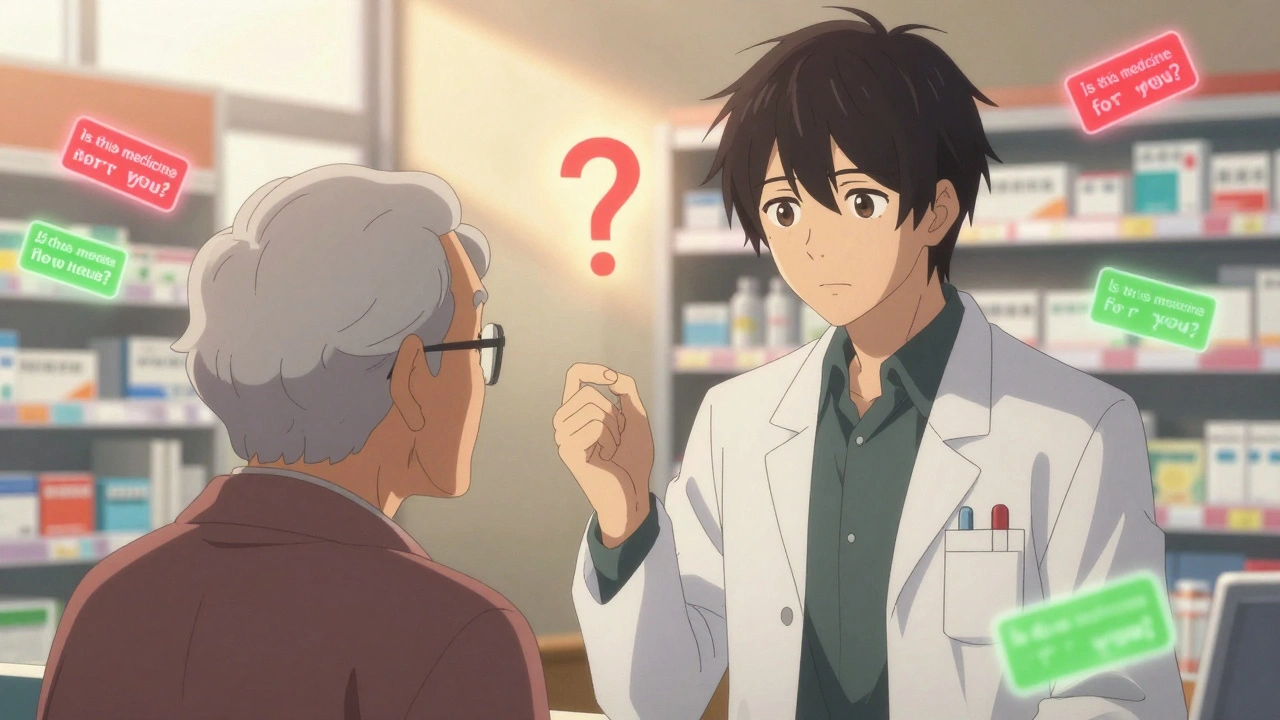
Here’s something most people don’t realize: the pharmacist asking, “Do you know what this pill is for?” isn’t just being nice. It’s critical. A Pharmacy Times survey found that 83% of dispensing errors are caught during counseling - right before the patient leaves. Someone picks up their wife’s blood thinner, thinking it’s their own cholesterol med. The pharmacist says, “This is warfarin. You’re not on that. Let me check.” And the error is stopped. That’s why every pickup should include a quick, clear conversation. Not a lecture. Just a moment. “Is this for you? What’s this medicine for? Do you take anything else for your heart?” It’s not about being suspicious. It’s about being smart.What Works Best? The 89% Solution
No single method is perfect. But when you combine them? That’s when the magic happens. A 2023 study in the Journal of the American Pharmacists Association looked at pharmacies using three things:- Dual-identifier verification (name + DOB)
- Barcode scanning
- Final patient counseling
Barriers - and How to Overcome Them
It’s not all smooth sailing. Staff say they get pressured during busy hours. Patients get annoyed being asked the same questions every time. Elderly patients forget their birthdate. Parents pick up kids’ meds. Teenagers pick up their parents’ prescriptions. Here’s what works:- Train staff to explain why they’re asking. Say: “This is to make sure you get the right medicine - it’s the law, and it’s for your safety.”
- Put up simple signs at the counter: “We ask for your name and birthdate to protect your health.”
- Don’t do verification at the same time as payment. Separate the steps. Do ID check first, then process payment.
- Use tech that doesn’t slow things down. Newer systems auto-populate patient info once the barcode is scanned.
What Independent Pharmacies Can Do Without Big Tech
Not every pharmacy can afford a $50,000 barcode system. But that doesn’t mean they can’t be safe. Start here:- Enforce the two-identifier rule - every time, no exceptions.
- Train everyone - techs, cashiers, managers - to speak up if something feels off.
- Use the pharmacy software you already have. Most systems let you lock the dispensing screen until both name and DOB are entered.
- Ask patients to bring their ID. Not always required, but helpful.
- Log every near-miss. If someone almost got the wrong pill, write it down. Patterns show where you need to improve.
The Bigger Picture: Safety Is a Culture, Not a Checklist
The best pharmacies don’t just follow rules. They build a culture where safety comes first. Dr. Beth Kollisch from ECRI Institute says the top three traits of pharmacies with zero wrong-patient errors are:- Standardized identification protocols - no variations, no shortcuts.
- Technology that makes errors impossible, not just unlikely.
- A culture where any staff member - even a new tech - can stop the process if something feels wrong.
What’s Coming Next
By 2027, experts predict AI-assisted identification - like voice recognition or facial matching - will be standard in 70% of pharmacies. That’s not sci-fi. It’s already being tested. The Pharmacy Quality Alliance has set a goal: zero wrong-patient errors by 2030. It’s ambitious. But it’s possible. It won’t happen because of one new gadget. It’ll happen because pharmacies choose to make safety non-negotiable - every shift, every patient, every time.What Patients Can Do Too
You’re not just a customer. You’re part of the safety team.- Always bring your ID when picking up prescriptions.
- Answer questions honestly - even if you think it’s repetitive.
- Check the label before you leave. Does the name match yours? Does the drug look right?
- If something feels off - say something. Ask, “Is this really for me?”
What are the most common causes of wrong-patient errors at pharmacies?
The top causes are similar names (like “John Smith” vs. “Jon Smith”), rushed staff during peak hours, failure to verify two patient identifiers, and patients picking up prescriptions for others without clear communication. Sound-alike or look-alike names account for about 22% of these errors, according to ECRI Institute.
Is it legal for a pharmacy to ask for my date of birth every time?
Yes. Since 2024, the National Association of Boards of Pharmacy (NABP) requires all pharmacies to use at least two patient identifiers - full name and date of birth - before dispensing any prescription. This is now a legal standard in most states to prevent medication errors.
Can I refuse to give my date of birth at the pharmacy?
You can refuse, but the pharmacy is legally required to verify your identity before dispensing medication. If you won’t provide the required information, they may not be able to fill your prescription. This isn’t about being suspicious - it’s about keeping you safe.
How effective are barcode scanning systems at preventing wrong-patient errors?
Barcode scanning systems have reduced wrong-patient errors by 63% to 78% in multiple studies. Walgreens reported a 63% drop after rolling out the system across 9,000 stores. When combined with dual-identifier verification and counseling, error rates drop by 89%.
Why do pharmacists ask so many questions when I pick up my meds?
They’re not being rude - they’re protecting you. About 83% of dispensing errors are caught during the final counseling check. Questions like “Is this for you?” or “Do you take this for high blood pressure?” help catch mistakes before you walk out the door.
Do small, independent pharmacies have to use expensive tech to be safe?
No. While barcode systems help, the most important step is consistent use of two patient identifiers (name and DOB) and training staff to speak up if something seems off. Many independent pharmacies use free or low-cost software features to lock dispensing until verification is complete. Safety doesn’t require big budgets - it requires discipline.


