Living with diabetes doesn’t mean you’re destined to lose your kidneys, feel numb in your feet, or go blind. The truth is, diabetic complications like kidney disease, nerve damage, and eye problems aren’t inevitable-they’re preventable. Many people think it’s just about taking insulin or pills, but that’s only part of the story. The real key is a daily, consistent approach that tackles blood sugar, blood pressure, cholesterol, and lifestyle all at once. And it works. Over the last 20 years, rates of heart attacks and strokes in people with diabetes have dropped sharply. The same can be true for kidney failure, foot ulcers, and vision loss-if you know what to do and do it regularly.
Diabetic Kidney Disease: Protecting Your Filters
Your kidneys are like sophisticated filters. They clean your blood, remove waste, and help control blood pressure. But when blood sugar stays high for too long, those filters get damaged. This is diabetic nephropathy. Left unchecked, it can lead to kidney failure, dialysis, or transplant. The good news? You can slow or stop it. First, keep your A1C below 7%. That’s the average blood sugar over three months. But blood pressure matters even more for your kidneys. Aim for under 140/90 mm Hg. Studies show that hitting this target reduces kidney damage risk by up to 30%. Newer diabetes medications have changed the game. SGLT2 inhibitors (like empagliflozin) and GLP-1 receptor agonists (like semaglutide) don’t just lower blood sugar-they protect your kidneys directly. Clinical trials show they cut the risk of kidney disease worsening by 30-40%. These aren’t just sugar-lowering drugs; they’re kidney shields. Get tested every year. Two simple tests tell you how your kidneys are doing: the urine albumin-to-creatinine ratio (UACR) and the estimated glomerular filtration rate (eGFR). If your urine has protein (albumin) or your eGFR drops, it’s an early warning. Don’t wait for symptoms-by then, it’s often too late.Neuropathy: Saving Your Nerves and Your Feet
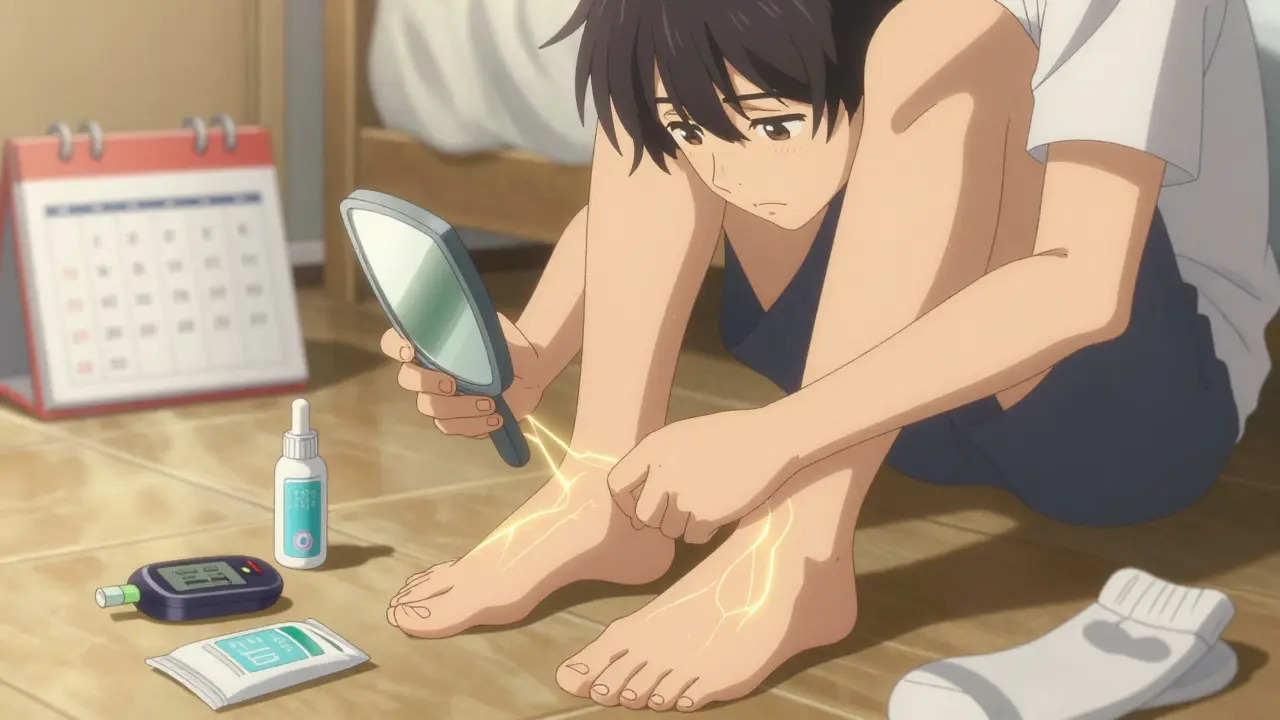
Nerve damage from diabetes, called neuropathy, often starts in your feet. You might not feel a blister, a cut, or a hot floor. That’s dangerous. One in seven people with diabetes will develop a foot ulcer. And ulcers can lead to amputation. Prevention starts with daily foot checks. Look at the tops, bottoms, and between your toes. Look for redness, swelling, cuts, calluses, or blisters. Use a mirror if you can’t see the bottom of your feet. Wash them daily in lukewarm water. Dry them gently-especially between the toes. Moisturize to prevent cracks, but don’t put lotion between your toes. That’s a recipe for infection. Wear shoes that fit. No barefoot walking, even indoors. Check your shoes for pebbles or rough spots before putting them on. See a podiatrist at least once a year, even if nothing hurts. If you notice a sore that doesn’t heal in a few days, don’t wait. Go to your doctor immediately. Controlling your blood sugar helps, but it’s not enough. Blood pressure and cholesterol matter too. Smoking is a major risk. If you smoke, quitting is the single best thing you can do for your nerves. Studies show smokers with diabetes are twice as likely to develop foot ulcers.Eye Damage: Don’t Wait Until You Can’t See
Diabetic retinopathy happens when high blood sugar damages the tiny blood vessels in your retina. It often has no symptoms at first. By the time you notice blurry vision or dark spots, damage may already be advanced. The fix? Annual dilated eye exams. That’s non-negotiable. Even if your vision feels fine. During the exam, your eye doctor puts drops in your eyes to widen your pupils. That lets them see the back of your eye clearly. If they spot early changes, treatment can stop progression. In fact, catching it early cuts your risk of blindness by 95%. Your A1C, blood pressure, and cholesterol all affect your eyes. Keeping them in target range is your best defense. SGLT2 inhibitors and GLP-1 agonists also help here. Research shows they reduce the risk of retinopathy worsening by 14-26%. If you’re pregnant or planning to be, get an eye exam right away. Pregnancy can speed up eye damage. And if you already have retinopathy, your doctor may recommend exams every few months instead of yearly.
The ABCs of Prevention: Your Daily Checklist
You don’t need to memorize a long list. Just remember the ABCs:- A for A1C: Keep it under 7% (or your doctor’s personal target).
- B for Blood pressure: Stay under 140/90 mm Hg.
- C for Cholesterol: Ask your doctor what your LDL (bad cholesterol) target is. Most people with diabetes need it under 100 mg/dL.
- Diet: Eat more vegetables, beans, whole grains, and lean protein. Cut back on sugary drinks, white bread, and fried foods.
- Exercise: Walk, swim, or cycle for 150 minutes a week. That’s 30 minutes, five days a week. Even short walks after meals help lower blood sugar.
- Drug adherence: Take your meds as prescribed-even if you feel fine. Don’t skip them because your numbers look good today.
- Doctor visits: See your primary care provider two to four times a year. See your eye doctor once a year. See your podiatrist once a year. Don’t skip them.
What’s New? The Game-Changing Medications
In the past, doctors focused mostly on lowering blood sugar with metformin or insulin. Now, we know that’s not enough. The newer drugs-SGLT2 inhibitors and GLP-1 agonists-do more than just lower glucose. They help you lose weight. They lower blood pressure. They reduce inflammation. They protect your heart, kidneys, and eyes. And they’re now recommended as first-line options for many people with type 2 diabetes, especially if they already have heart or kidney disease. If you’re on older meds and still having complications, talk to your doctor. These newer drugs aren’t magic, but they’re powerful tools. And they work best when paired with diet, movement, and regular checkups.
Why Some People Still Have Complications
Even with perfect care, some people still develop problems. Why? Genetics play a role. Some bodies are just more sensitive to high sugar. Stress, sleep, and even your environment matter too. But that doesn’t mean effort is wasted. People with diabetes today live longer and with fewer complications than ever before. The decline in heart attacks and strokes proves it. The goal isn’t perfection-it’s progress. Every step you take lowers your risk. Even small changes add up. If you’ve been told you’re “doing everything right” but still have issues, don’t blame yourself. Work with your care team to find new tools, adjust your plan, or get referrals to specialists. You’re not alone. And you’re not failing. You’re managing a complex disease-and that’s hard work.Can diabetic complications be reversed?
Early-stage damage can sometimes be slowed or partially reversed with strict blood sugar control, weight loss, and blood pressure management. For example, mild diabetic retinopathy or early kidney changes may improve if A1C drops below 6.5% and stays there. But once nerves are severely damaged or kidney function is significantly lost, the damage is usually permanent. That’s why early action is critical.
Do I need to check my blood sugar every day if I’m on new medications?
Yes, especially when starting new drugs like SGLT2 inhibitors or GLP-1 agonists. These medications can cause low blood sugar when combined with insulin or sulfonylureas. Even if you feel fine, checking your levels helps you understand how food, activity, and stress affect you. Your doctor will tell you how often to check based on your treatment plan.
Is it safe to exercise if I have neuropathy in my feet?
Absolutely-but choose low-impact activities. Swimming, cycling, rowing, and seated exercises are safer than running or jumping, which can stress injured feet. Always wear proper footwear, check your feet before and after, and avoid walking barefoot. If you have open sores or severe numbness, talk to a physical therapist who specializes in diabetes.
Can I stop my diabetes meds if I lose weight?
Some people who lose 10% or more of their body weight and keep it off can reduce or even stop some diabetes medications. But never stop meds on your own. Work with your doctor to monitor your blood sugar closely as you lose weight. Even if you don’t need pills anymore, you still need to eat well, move regularly, and get checkups. Diabetes doesn’t disappear-it just becomes easier to manage.
Why do I need an eye exam if I can see fine?
Diabetic eye damage often has no symptoms until it’s advanced. By the time you notice blurry vision, the blood vessels in your retina may already be leaking or growing abnormally. A dilated eye exam lets your doctor see these changes early-before they affect your sight. Waiting until you have vision problems means you’ve already lost the chance to prevent blindness.


