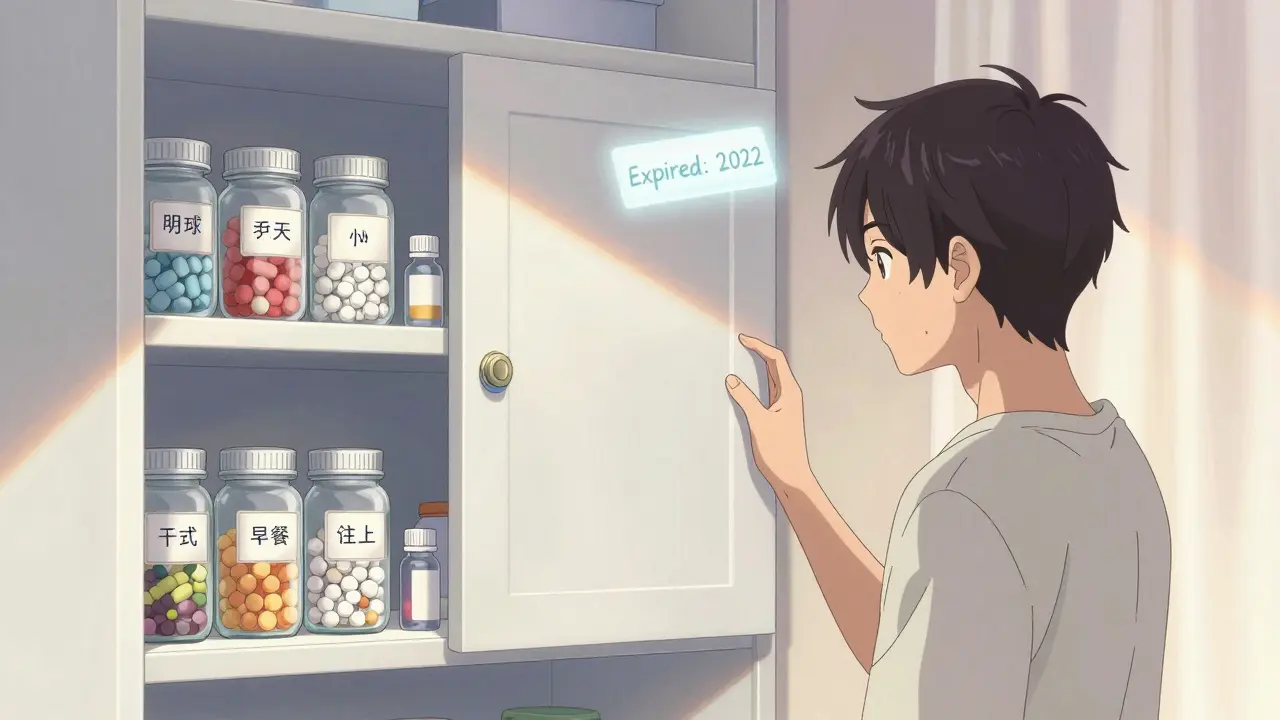
Every family needs a medicine cabinet. But most cabinets aren’t really cabinets at all-they’re cluttered drawers full of old pills, half-used bottles, and mystery containers with peeling labels. If you’ve ever found a forgotten bottle of children’s ibuprofen behind the toothpaste, or noticed your teen glancing too long at the painkillers, you know: a messy medicine cabinet isn’t just inconvenient. It’s dangerous.
The good news? Building a safe home OTC medicine cabinet isn’t about buying expensive gear or becoming a pharmacist. It’s about making three simple changes: where you store it, what’s inside, and how you keep it locked. Done right, it protects kids, prevents teen misuse, and ensures you’re never guessing whether that bottle is still good.
Stop Storing Medicine in the Bathroom
The bathroom is the most common place families keep their medicines. But it’s also the worst. Humidity from showers and baths doesn’t just make your towels soggy-it ruins pills. According to Melonie Crews-Foye, PharmD, a pharmacy supervisor at Cone Health, moisture can cause medications to crumble, lose potency, or even turn toxic. The same goes for heat. If your bathroom cabinet gets warm when the heater runs or the sun hits the window, you’re not storing medicine-you’re cooking it.
Instead, move your cabinet to a dry, cool spot. A high shelf in the linen closet works perfectly. Or a bedroom closet that kids don’t normally open. The key is: no steam, no sunlight, and no easy access. The American Academy of Pediatrics recommends keeping medications at least 4 feet off the ground. That’s not just a suggestion-it’s a barrier. Kids under five can climb, open doors, and twist caps. They won’t climb a shelf they can’t reach.
Empty It All Out-Then Sort
Before you rebuild, take everything out. Yes, everything. Even that bottle of children’s Tylenol from 2022. Even the vitamins you started taking last January and forgot about.
Sort everything into three piles: Keep, Discard, and Questionable.
- Discard: Anything past its expiration date. The FDA says expired medications can break down into harmful substances. Antibiotics? They can become toxic. Pain relievers? They lose effectiveness. Vitamins? They stop working. If it’s more than 12 months past its date, throw it out.
- Keep: Only what you use regularly and is still within date. That includes pain relievers (ibuprofen, acetaminophen), antihistamines (for allergies), antacids, and basic first-aid items like bandages and hydrocortisone cream.
- Questionable: Anything you’re not sure about. A bottle with no label? A pill you can’t identify? A half-used tube of eye drops from last flu season? If you can’t say for sure what it is or why you have it, don’t keep it.
Once sorted, wipe down the shelf. No dust. No crumbs. No old labels sticking to the back.
Lock It Down-No Exceptions
Childproof caps? They’re not childproof. A 2021 Johns Hopkins study found that 42% of kids aged 4 to 5 can open standard safety caps in under 10 minutes. That’s not a flaw in the cap-it’s a flaw in relying on it.
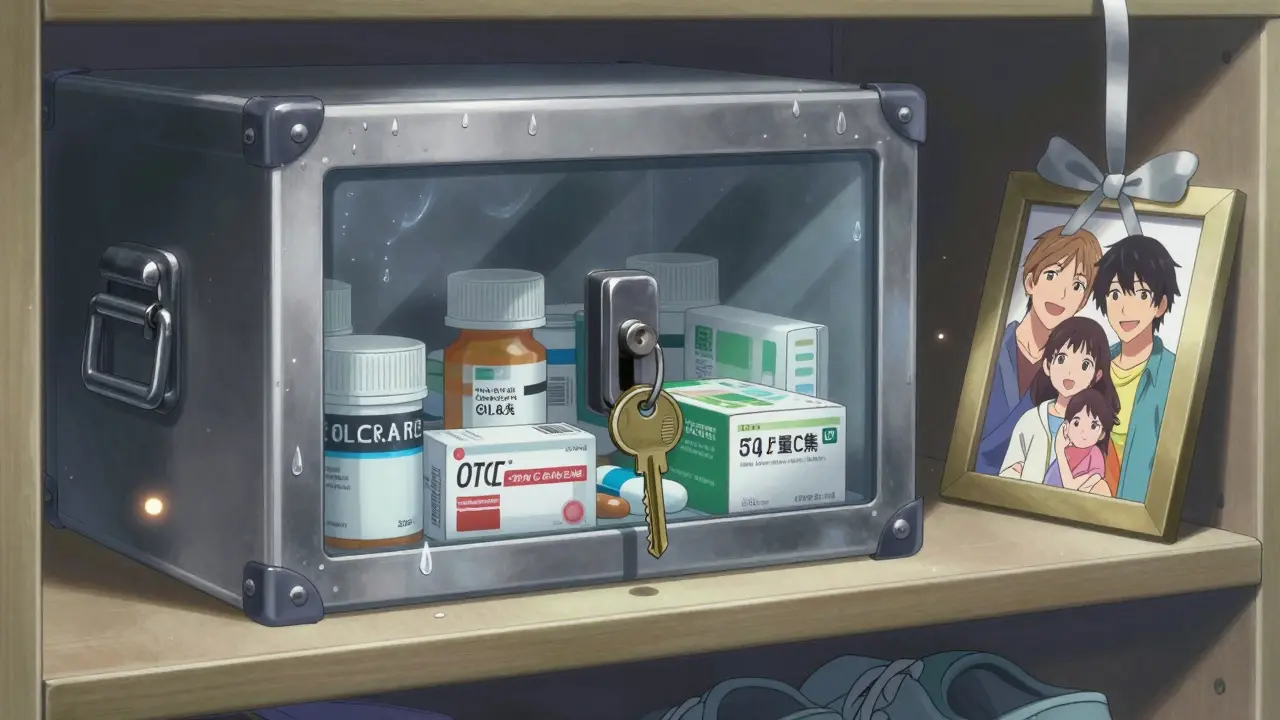
You need physical locks. If your cabinet has a door, install a childproof latch. If it’s just a shelf, use a small lockbox or locked drawer. ADT and Northwestern Medicine both recommend locking drawers for extra safety. You don’t need a safe. You need a barrier.
And don’t forget teens. The Hanley Foundation reports that 54% of teens who misuse prescription drugs get them from home cabinets. That means if you keep painkillers, sleep aids, or ADHD meds in an unlocked cabinet, you’re not storing medicine-you’re storing temptation. Store those separately, in a locked box, even if your teen has never shown interest. Prevention beats reaction every time.
Organize by Use, Not by Chance
A safe cabinet isn’t just locked-it’s organized. Group items by how you use them:
- Morning: Allergy pills, daily vitamins, blood pressure meds (if any)
- Evening: Pain relievers, sleep aids, cough syrup
- First Aid: Bandages, antiseptic wipes, thermometers, tweezers
- Emergency: Epinephrine auto-injectors (if prescribed), activated charcoal (only if recommended by your doctor)
Keep everything in its original container. No dumping pills into Ziploc bags. Labels have dosing info, expiration dates, and warnings. If you lose the label, you lose the safety.
For families with kids on daily meds, consider free adherence packaging from pharmacies like Cone Health. They’ll sort your pills into daily blister packs-no more guessing if yesterday’s dose was taken.
Dispose of Expired Meds the Right Way
Don’t flush pills. Don’t throw them in the trash. Don’t bury them in the yard. Those are old habits-and they’re dangerous.
The safest way to dispose of expired or unwanted meds is through a drug take-back program. CVS and Walgreens have disposal kiosks in over 87% of U.S. pharmacies. Just drop in your old bottles. No questions asked. No charge.
If there’s no kiosk nearby, use DisposeRX powder. It’s free at many pharmacies (especially when you fill an opioid prescription). You pour it into the bottle with the pills, add water, shake, and toss the whole thing in the trash. The powder turns the drugs into a gel that can’t be pulled out or misused.
And if you have old opioids-oxycodone, hydrocodone, fentanyl patches-don’t wait. These are the most dangerous if they fall into the wrong hands. Use a kiosk. Use DisposeRX. Or contact your local DEA take-back day. In October 2023 alone, the DEA collected over a million pounds of medication through these events.
Keep a Medication List-And Share It
When an emergency happens, paramedics need to know what your family is taking. Not what you think you’re taking. What you’re actually taking.
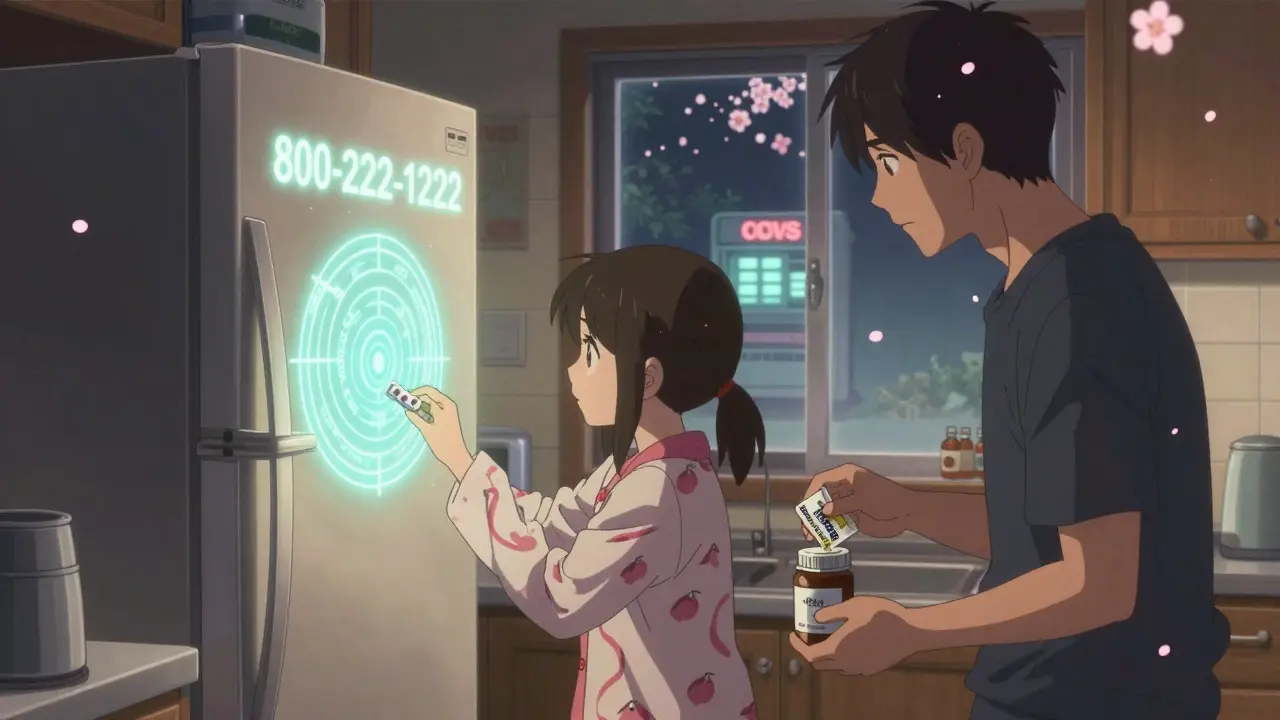
Write down every medication: prescription, OTC, supplement, herb. Include the name, dose, and why you take it. Keep a copy in your wallet. Save one on your phone. Leave one taped to the fridge.
Update it every time you start or stop something. If your child takes a daily inhaler and a daily vitamin, write it down. If you take fish oil and melatonin, write it down. Why? Because in an emergency, every second counts. And if you can’t remember what’s in the cabinet, someone else can’t help.
Know the Emergency Number-And Post It
Every home with kids needs Poison Help: 800-222-1222. That’s the national poison control hotline. It’s free. It’s confidential. And it’s staffed 24/7 by nurses and pharmacists who know exactly what to do when a child swallows something they shouldn’t.
Post it on the fridge. Save it in your phone. Tell your babysitter. Your grandparents. Your partner. Make sure everyone who watches your kids knows that number. In 2023, poison centers handled over 60,000 emergency calls from children under five. Many of those calls were prevented because someone knew to call before rushing to the ER.
Check It Twice a Year
Set a reminder: April 1 and October 1. Every six months, do a full cabinet check. Pull everything out. Check expiration dates. Toss the old stuff. Wipe the shelf. Reorganize if needed.
Why twice a year? Because medicine doesn’t last forever. Kids grow. Prescriptions change. Vitamins expire. And that bottle you forgot about? It’s probably expired by now.
This isn’t a chore. It’s a habit. Like checking smoke alarms. Like changing the HVAC filter. It’s part of keeping your home safe.
And if you’re ever unsure? Call poison control. They’ll tell you if that pill is still safe. They’ll tell you how to dispose of it. And they won’t judge you for having too many old bottles. They’ve seen it all.


