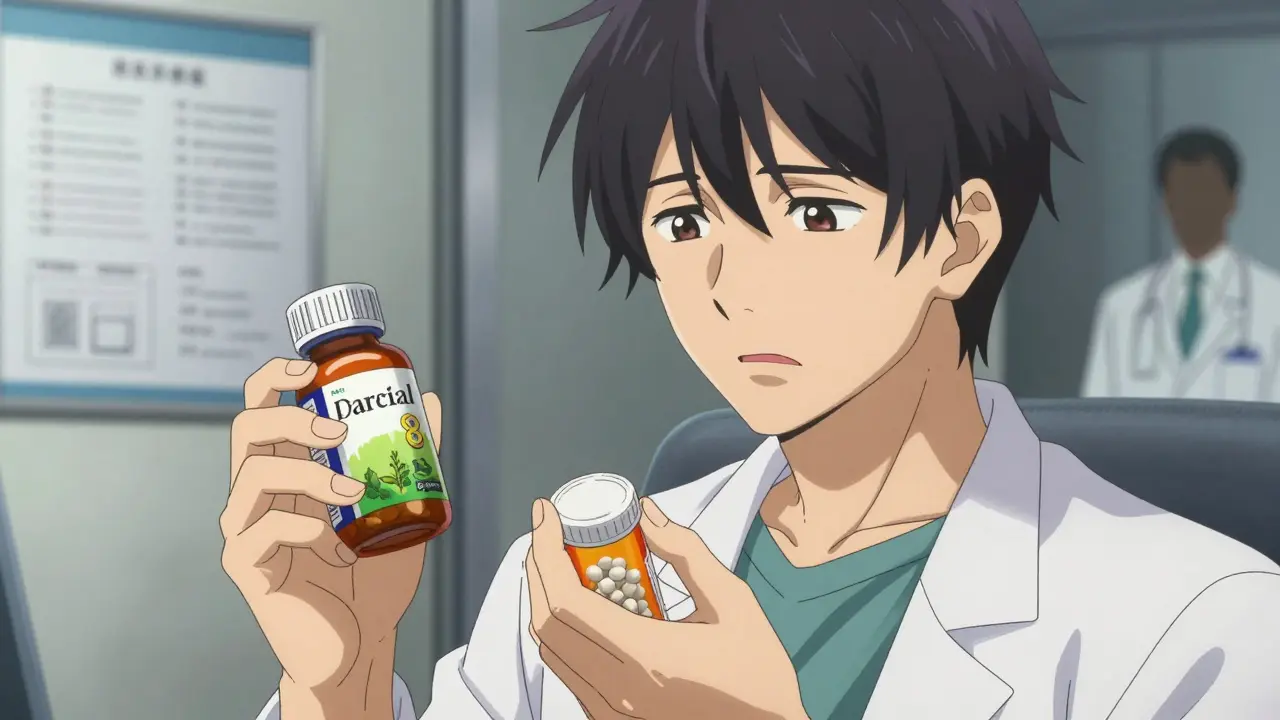
You might think that because a product comes from a plant, it’s harmless. It’s “natural,” right? So it must be safe. But here is the hard truth: herbal supplements can be just as potent-and sometimes more dangerous-than prescription medications. When you mix certain herbs with common drugs, you aren’t just adding benefits; you’re risking severe side effects, reduced drug efficacy, or even life-threatening complications.
About half of all adults in the United States take at least one dietary supplement. Among adults over 65, that number jumps to nearly 70%. Yet, only about 25% of these users tell their doctors what they are taking. This silence creates a dangerous gap in care. Every year, an estimated 1.3 million people in the U.S. healthcare system suffer from medication errors, and herb-drug interactions are a major, often overlooked culprit.
Why Herbs Aren't Just "Weak" Medicine
The problem isn't that herbs are fake medicine. The problem is that they are real medicine, but unregulated. Under the Dietary Supplement Health and Education Act (DSHEA) of 1994, herbal products don’t need to prove they are safe or effective before hitting the shelves. The FDA can only step in after harm occurs. This means you could be buying a bottle of "immune support" that contains active compounds capable of altering how your liver processes life-saving drugs.
Herbs interact with drugs through two main mechanisms: pharmacokinetics and pharmacodynamics. In simple terms, some herbs change how your body absorbs, distributes, metabolizes, or excretes a drug (pharmacokinetics). Others change how the drug affects your body’s receptors or systems (pharmacodynamics). For example, an herb might speed up your liver enzymes, causing a drug to break down too quickly and become useless. Or it might slow those enzymes down, causing toxic levels of the drug to build up in your blood.
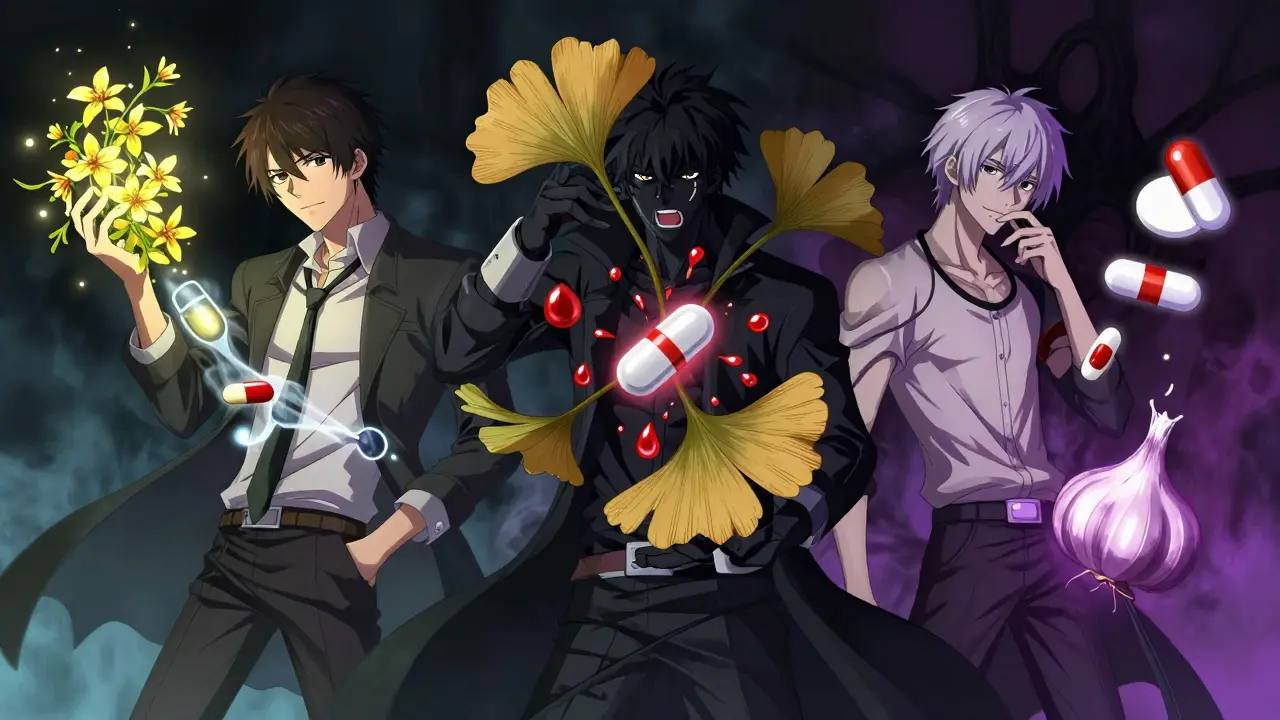
The High-Risk Trio: St. John’s Wort, Ginkgo, and Garlic
Not all herbs carry the same risk. Based on data from the National Center for Complementary and Integrative Health (NCCIH) and the American Academy of Family Physicians (AAFP), three herbs stand out as particularly problematic when mixed with common prescriptions.
| Herb | Common Use | Drug Interaction Risk | Potential Consequence |
|---|---|---|---|
| St. John’s Wort | Mood support, mild depression | Reduces plasma concentrations of 60+ drugs by inducing CYP3A4 enzymes | Organ transplant rejection, contraceptive failure, reduced HIV medication efficacy |
| Ginkgo Biloba | Memory, circulation | Inhibits platelet aggregation; increases bleeding risk | Major hemorrhage when combined with warfarin or aspirin |
| Garlic Supplements | Heart health, immune support | Decreases area under the curve (AUC) of saquinavir; antiplatelet effects | Reduced HIV drug effectiveness; increased bleeding risk with anticoagulants |
St. John’s Wort is arguably the most notorious offender. It affects nearly 57% of prescription drugs. If you are taking birth control pills, this herb can reduce their effectiveness by 15-30%, leading to unintended pregnancies. For transplant patients, it can slash cyclosporine levels by 50-60% within just two weeks, potentially triggering organ rejection. The AAFP explicitly advises avoiding St. John’s Wort with all antidepressants due to the risk of serotonin syndrome-a condition characterized by high fever, muscle rigidity, and confusion.
Ginkgo Biloba, often marketed for brain health, poses a severe bleeding risk. Between 2010 and 2020, the Mayo Clinic documented 23 cases of major hemorrhage in patients combining ginkgo with warfarin, including three fatalities. If you are on blood thinners like warfarin, apixaban, or even daily aspirin, ginkgo can increase your bleeding risk by 300%. One patient on Reddit reported an INR spike to 8.2 and severe rectal bleeding after mixing ginkgo with apixaban, a warning that underscores the real-world danger.
Garlic, while healthy in food, becomes risky in concentrated supplement form. A 2019 University of Washington trial showed garlic supplements decreased the absorption of saquinavir (an HIV protease inhibitor) by 51%. Like ginkgo, garlic also has antiplatelet properties, meaning it thins the blood. Combining garlic supplements with anticoagulants can lead to dangerous bleeding events.
Hidden Risks in "Safe" Herbs
Some herbs are considered lower risk, but "lower" doesn't mean "none." Cranberry, for instance, is controversial. While some studies show no interaction with warfarin, a 2020 JAMA Internal Medicine meta-analysis found inconsistent INR elevations in patients consuming large amounts of cranberry juice. If you are monitoring your INR closely, even small changes matter.
Goldenseal, often used for digestive issues, inhibits CYP3A4 enzymes. A 2018 study from the University of Toronto found it reduced midazolam clearance by 40%. Midazolam is a sedative, so this interaction could lead to excessive drowsiness or respiratory depression. Similarly, licorice root can deplete potassium levels. If you are already taking diuretics (water pills), adding licorice can exacerbate potassium depletion, leading to heart rhythm abnormalities.
Even Coenzyme Q10 (CoQ10), widely taken for heart health and energy, may interfere with warfarin. Mayo Clinic’s 2022 analysis suggests CoQ10 can reduce warfarin’s anticoagulant effect by 25-30%. This means your blood might clot more easily than intended, increasing stroke risk. Patients on warfarin should have their INR checked weekly if they start or stop taking CoQ10.
Why Doctors Don't Always Know
You might wonder why your doctor hasn't warned you about these interactions. The issue is disclosure. A 2019 survey by the University of Michigan found that 76% of supplement users believe "natural means safe," and 63% were unaware that supplements could interact with medications. Because patients rarely mention their herbal intake, doctors are flying blind.
Furthermore, many supplements contain multiple ingredients. ConsumerLab testing in 2022 found that 73% of "brain health" supplements contained ginkgo, and 89% of "mood support" products contained St. John’s Wort. You might buy a pill labeled "Sleep Aid" without realizing it contains goldenseal or valerian, both of which can interact with sedatives or anxiety medications.

How to Stay Safe: A Practical Checklist
Protecting yourself requires proactive steps. Here is how to manage your supplement regimen safely:
- Disclose Everything: Bring every bottle to your next doctor’s appointment. Include vitamins, minerals, teas, and topical creams. Be honest about what you take, even if you started it recently.
- Use Reputable Checkers: Before starting any new herb, use the NCCIH Herb-Drug Interaction Checker. It classifies interactions as "Life-threatening," "Significant," or "Moderate." If it flags a significant interaction, consult your pharmacist.
- Monitor Warning Signs:
- If on warfarin: Watch for unusual bruising, bleeding gums, or dark stools. Get INR checked within 72 hours of starting a new herb.
- If on antidepressants: Watch for symptoms of serotonin syndrome, such as high fever (>103°F), muscle rigidity, tremors, or agitation.
- If on blood pressure meds: Monitor for hypotension (blood pressure <90/60 mmHg), especially with hawthorn or ginseng.
- Space Out Doses: Sometimes, timing matters. Taking certain herbs several hours apart from your medication can reduce interactions, though this does not eliminate risk for strong inducers like St. John’s Wort.
- Choose Quality Brands: Look for third-party testing seals (USP, NSF, ConsumerLab). These organizations verify that the product contains what the label says and is free from contaminants, though they do not assess drug interactions.
The Bottom Line
Herbal supplements are powerful biological agents. They are not inert fillers. With the global dietary supplement market reaching $165.3 billion in 2023, the temptation to self-medicate is strong. But the cost of ignorance can be high. By understanding which herbs interact with which drugs, and by communicating openly with your healthcare providers, you can harness the benefits of botanicals without compromising your safety.
Remember: Natural does not equal safe. Always check, always ask, and never assume.
Can I take Ginkgo Biloba if I am on blood thinners?
Generally, no. Ginkgo Biloba inhibits platelet aggregation, which means it thins the blood. When combined with anticoagulants like warfarin, apixaban, or antiplatelets like aspirin, it significantly increases the risk of major hemorrhage. The Mayo Clinic has documented fatal bleeding events from this combination. Consult your doctor immediately if you are considering this mix.
Does St. John's Wort interact with birth control pills?
Yes, it does. St. John's Wort induces liver enzymes that break down estrogen and progestin faster than normal. This can reduce the effectiveness of oral contraceptives by 15-30%, leading to unintended pregnancy. Many women report contraceptive failure after starting this herb. Use a backup method of contraception if you must take it, or avoid it entirely.
Is it safe to drink cranberry juice while on Warfarin?
The evidence is mixed, but caution is advised. Some studies show no interaction, while others, including a 2020 JAMA meta-analysis, note inconsistent INR elevations. If you consume large amounts of cranberry juice regularly, monitor your INR closely. Small, occasional servings are likely fine, but consistency in consumption is key to stable INR levels.
What are the signs of serotonin syndrome?
Serotonin syndrome is a potentially life-threatening reaction caused by excess serotonin. Symptoms include high fever (hyperthermia >103°F), muscle rigidity, tremors, rapid heart rate, dilated pupils, confusion, and agitation. It commonly occurs when combining St. John's Wort with SSRIs, SNRIs, or MAOIs. Seek emergency medical attention if you experience these symptoms.
Do all herbal supplements interact with medications?
No, not all herbs interact dangerously. Herbs like milk thistle, saw palmetto, and black cohosh are generally considered low-risk based on current pharmacokinetic data. However, individual responses vary, and multi-ingredient products can hide risky components. Always verify each ingredient against your specific medication list using a reliable database like the NCCIH checker.


