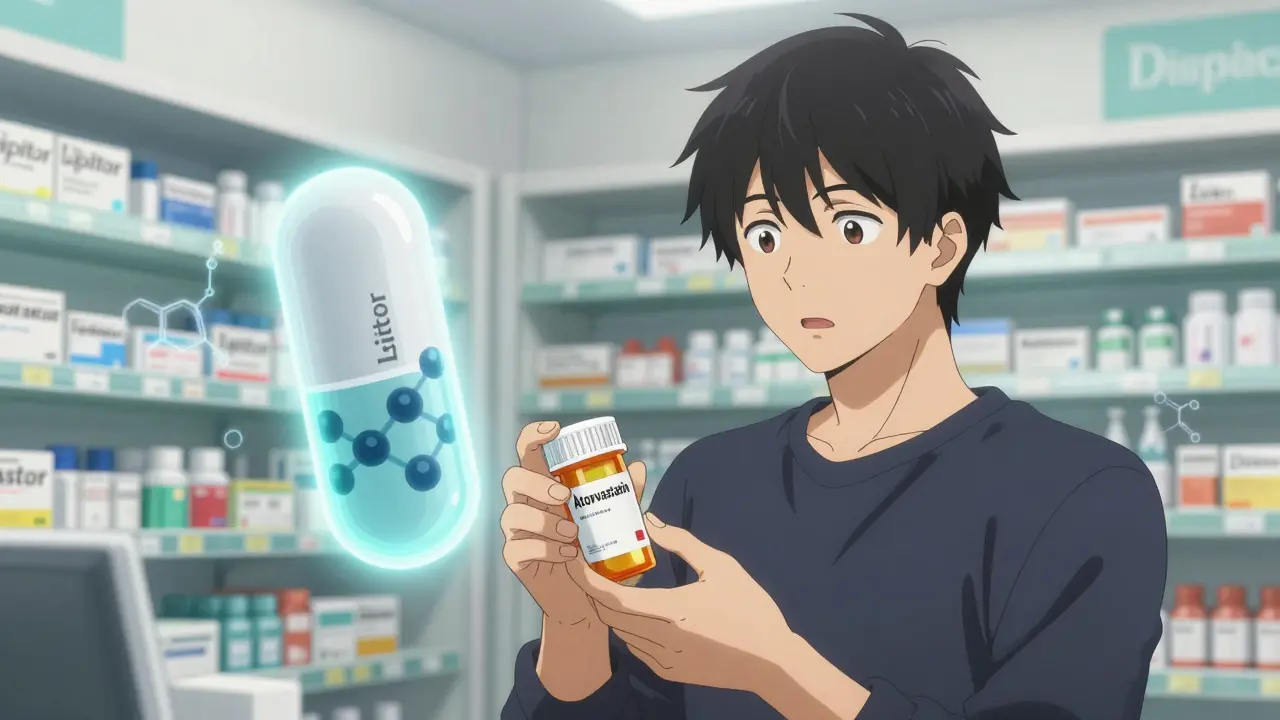
When you pick up a prescription, you might see two names on the bottle: one you recognize, like Lipitor, and another you’ve never heard of, like atorvastatin. They look different, cost way less, and yet your doctor says they’re the same. So what’s really going on? Are you getting a cheaper version-or a worse one?
The truth is simpler than you think. Generic drugs aren’t knockoffs. They’re not second-rate. In fact, they’re held to the exact same standards as the brand-name versions by the U.S. Food and Drug Administration (FDA). The only real difference? Price. And that price gap isn’t small-it’s massive.
What Makes a Drug "Generic"?
A generic drug has the same active ingredient, strength, dosage form, and route of administration as the brand-name drug. That means if you take 10 mg of lisinopril (generic) or 10 mg of Zestril (brand), your body gets the same molecule, in the same amount, at the same speed. The FDA requires generics to prove they deliver 80-125% of the active ingredient into your bloodstream within the same timeframe as the brand. That’s called bioequivalence. No wiggle room. No shortcuts.
But here’s what changes: color, shape, size, flavor, and inactive ingredients like fillers or dyes. That’s because U.S. trademark laws say generics can’t look exactly like the brand. So a blue oval pill might become a white capsule. The inactive stuff doesn’t affect how the drug works-it just helps hold it together or makes it easier to swallow. For most people, it’s completely invisible.
Why Are Generics So Much Cheaper?
Brand-name drugs cost a fortune because the company that invented them spent years and hundreds of millions on research, clinical trials, and marketing. They get a 20-year patent to recoup that investment. But once that patent expires, other companies can step in and make the same drug without repeating all those expensive studies.
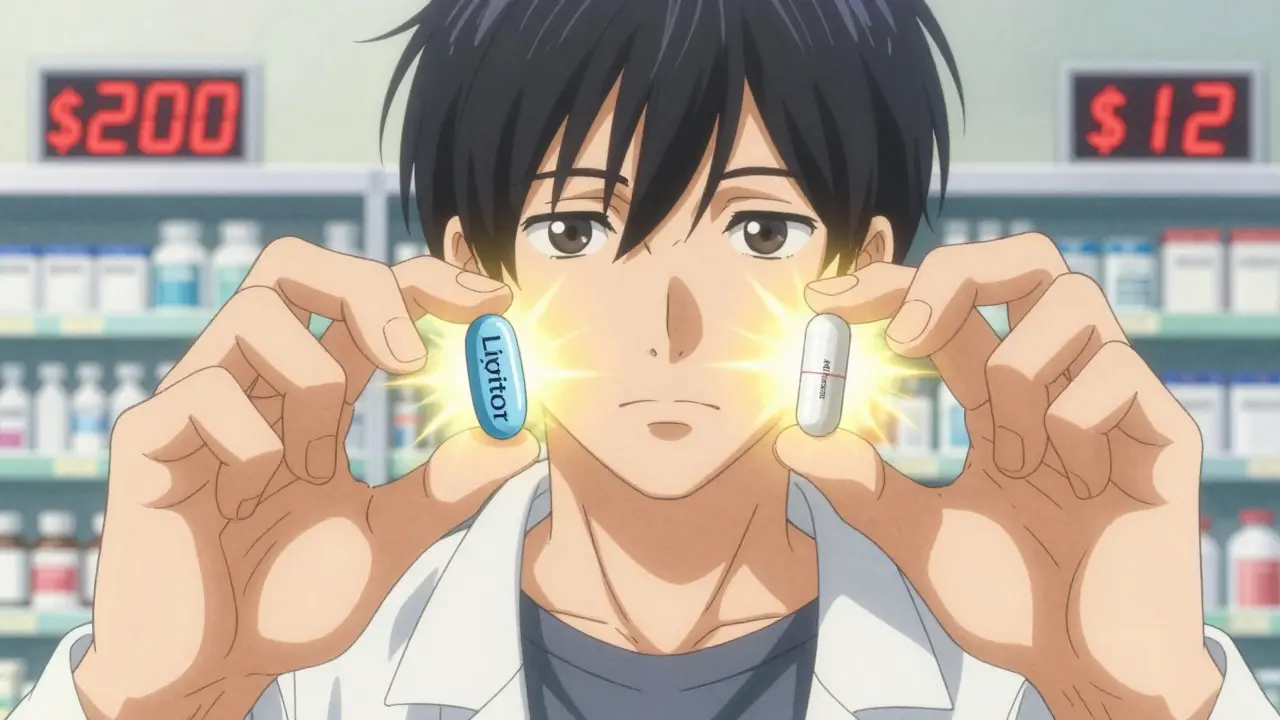
Generic manufacturers only need to prove their version works the same way-not prove it’s safe from scratch. That cuts development costs by 90%. And because multiple companies can compete to make the same generic, prices drop fast. On average, generics cost 80-85% less than brand-name drugs. A 30-day supply of brand-name Lipitor might run $200. The generic? $12.
That’s not a guess. According to University Hospitals’ 2022 analysis, the average savings per prescription when switching to generic is $313. In 2022, generics made up 90% of all prescriptions filled in the U.S.-but only 25% of total drug spending. That means brand-name drugs, which make up just 10% of prescriptions, are responsible for nearly three-quarters of what we spend on meds.
When Generics Are the Clear Winner
Generics shine brightest with long-term medications. Think blood pressure pills, diabetes drugs, cholesterol-lowering statins, thyroid hormones, or antidepressants. If you’re taking something every day for years, even a $50-a-month savings adds up to $600 a year. Multiply that by 10 years? That’s $6,000-money you can use for groceries, rent, or a vacation.
Reddit’s r/Pharmacy community had over 140 comments from people who switched from brand to generic. Eighty-six percent said they noticed zero difference in how the drug worked. One person saved $400 a month switching from brand Advair to generic fluticasone/salmeterol-without losing asthma control. Another switched from brand Metformin to generic and saw no change in blood sugar levels. These aren’t outliers. They’re the norm.
Pharmacists across the country see this daily. In 2023, Pharmacy Times found that 92% of patients preferred generics when available, mainly because of cost. Out-of-pocket costs for generics averaged $12.50. For brand-name drugs? $68.30. That’s more than five times more.
When You Might Need to Stick With Brand
There are exceptions. Some drugs have a narrow therapeutic index-meaning the difference between a helpful dose and a dangerous one is tiny. Warfarin (a blood thinner), levothyroxine (for thyroid), and seizure meds like phenytoin or lamotrigine fall into this category.
For these, even small changes in how your body absorbs the drug can matter. The FDA requires tighter bioequivalence standards for these drugs-89-111% instead of 80-125%. Still, some doctors and patients prefer to stick with one version to avoid any risk of fluctuation.
There are real stories here. One Reddit user wrote that their mom’s seizures returned after switching from brand Lamictal to generic lamotrigine. She had to go back to the brand. Another person said their cholesterol spiked after switching statins. These cases are rare-about 14% of users in Reddit’s thread reported issues-but they’re real.
That’s why your doctor might write "dispense as written" on your prescription. If you’ve been stable on a brand-name drug for years, switching might not be worth the risk. But if you’re new to the medication, starting with the generic is usually safe-and smart.
What the Experts Say
The FDA is blunt: "All drugs, including brand-name and generic, must work well and are safe." They monitor both types equally after approval. If a generic drug causes problems, it gets pulled-just like a brand-name drug.
The American Medical Association says doctors should prescribe generics when appropriate to cut costs without hurting outcomes. Pharmacist Tattika Soreta from Cedars-Sinai says generics go through the same rigorous approval and ongoing safety checks as brand-name drugs.
Harvard Health acknowledged that while most people see no difference, a small number report issues. But they also pointed out: "Most prior research has found little difference between generics and name-brand medicines."
Bottom line? The science supports generics. The data supports generics. The savings support generics. The only real question is: are you willing to try?
What You Can Do Right Now
If you’re on a brand-name drug, ask your pharmacist: "Is there a generic version?" They’ll know instantly. If there is, ask your doctor if switching is okay. Most of the time, it is.
Keep a list of your meds-both brand and generic names. That way, if your pharmacy switches your prescription without telling you, you’ll know. GoodRx and other tools let you compare prices between brands and generics in real time.
For chronic conditions, ask about mail-order pharmacies. Many offer generics for $5-$10 a month with insurance. Some even have free generic programs through manufacturers.
And if you’re worried about switching? Start with one drug. Try the generic for your blood pressure or cholesterol. Monitor how you feel. Keep a journal. Talk to your doctor after a month. Most people find no change at all.
What’s Next for Generics?
The FDA is working to speed up approval of complex generics-like inhalers, creams, and injectables-that have been harder to copy. Over 450 brand-name drugs are set to lose patent protection by 2028. That means even more savings on high-cost meds.
But challenges remain. About 30% of brand-name drugs still have no generic option because they’re too complex to replicate or patents are being stretched through minor tweaks-called "evergreening." The 2022 CREATES Act was passed to fight drug shortages caused by reliance on foreign manufacturers (80% of active ingredients come from India and China).
Still, the trend is clear: generics are here to stay. And they’re saving billions every year. In fact, from 2007 to 2016, generics saved the U.S. healthcare system $1.67 trillion. That’s more than the GDP of most countries.
So if you’re paying full price for a brand-name drug, you’re not just paying for medicine. You’re paying for history-research, marketing, and patents. With generics, you’re paying for science-and your wallet will thank you.
Are generic drugs as safe as brand-name drugs?
Yes. The FDA requires generic drugs to meet the same strict standards for safety, strength, quality, purity, and performance as brand-name drugs. They’re tested in labs and monitored after they hit the market. If a generic drug causes problems, it’s pulled-just like a brand-name drug.
Why do generic drugs look different?
U.S. trademark laws prevent generics from looking exactly like brand-name drugs. So manufacturers change the color, shape, or size. But the active ingredient-the part that treats your condition-is identical. The differences are only cosmetic or in inactive ingredients like fillers, which don’t affect how the drug works.
Can I switch from a brand-name drug to a generic without asking my doctor?
In 49 states, pharmacists are required to substitute a generic if one is available, unless your doctor wrote "dispense as written" on the prescription. But it’s still smart to talk to your doctor first-especially if you’re on a medication with a narrow therapeutic index, like warfarin or levothyroxine. They can help you decide if switching is safe for your situation.
Do generics take longer to work?
No. The FDA requires generics to be bioequivalent, meaning they deliver the same amount of active ingredient into your bloodstream at the same rate as the brand-name drug. Studies show no meaningful difference in how quickly they start working. If you feel a delay, it’s likely psychological-not chemical.
Why do some people say generics don’t work for them?
A small number of people report differences, especially with drugs like seizure medications or thyroid hormones. These are rare, and often tied to sensitivity to inactive ingredients or psychological expectations. But research shows most people see no difference. If you notice a change after switching, talk to your doctor. You may need to go back to the brand-or try a different generic manufacturer-since not all generics are made the same way.
Are there any drugs that don’t have generics?
Yes. About 30% of brand-name drugs still don’t have generic versions. This is usually because the patent hasn’t expired yet, or the drug is too complex to copy-like biologics (insulin, certain cancer drugs) or inhalers. But over 450 brand-name drugs are expected to lose patent protection by 2028, which will open up many new generic options.


