Every pill you take should work exactly as it should. But what if it doesn’t? What if it’s fake? Counterfeit drugs are not just a problem in faraway countries-they’re a real threat even in regulated markets. And the only thing standing between you and a dangerous fake is something most people never think about: generic manufacturing standards.
Why Quality Can’t Be Tested After the Fact
You can’t tell if a drug is real by looking at it. A counterfeit pill might look identical to the real thing-same color, same logo, same packaging. But inside? It could have no active ingredient. Or too much. Or a toxic chemical. That’s why the FDA says it plainly: “Quality cannot be tested into a finished product; it must be built into the design and manufacturing process at every single step.” This isn’t just a slogan. It’s the core of Current Good Manufacturing Practices, or cGMP. These rules, written in 21 CFR Part 211, force manufacturers to control every variable-from the air in the room to the purity of raw materials. Testing the final product isn’t enough. A fake drug can pass a simple chemical test if it’s made to mimic the active ingredient. But if the crystal structure is wrong, or the binding agents are off, it won’t dissolve properly in your body. And that’s invisible to a lab test unless you’re looking for it.The SQUIPP Framework: What Makes a Generic Drug Real
Generic drugs don’t get a pass. They’re held to the same exacting standards as brand-name drugs. The industry calls this the SQUIPP framework: Safety, Quality, Identity, Potency, and Purity. Each letter represents a non-negotiable checkpoint.- Identity: Is this the right drug? Techniques like infrared spectroscopy and high-performance liquid chromatography (HPLC) compare the molecular fingerprint of the drug to a certified reference standard. Accuracy must hit 99.9%.
- Potency: Does it contain the right amount of active ingredient? Too little? It won’t work. Too much? It could be dangerous. Batch samples must fall within 90% to 110% of the target concentration.
- Purity: Are there harmful impurities? Even trace amounts of certain chemicals can cause serious side effects. The 2018 valsartan recall happened because a new impurity formed during manufacturing-something standard tests didn’t catch.
- Quality: Does it dissolve correctly? Dissolution testing ensures the drug releases its active ingredient within 30 to 45 minutes, matching the brand-name version.
- Safety: Is the manufacturing environment clean enough? Clean rooms must meet ISO Class 5 standards-no more than 3,520 particles per cubic meter that are 0.5 microns or larger. That’s stricter than most hospital operating rooms.
How Digital Systems Stop Fakes Before They Ship
Physical testing alone isn’t enough. That’s why every package of a generic drug made in the U.S. now has a unique serial number. It’s not just a barcode-it’s a digital fingerprint. The Drug Supply Chain Security Act (DSCSA), fully in effect since 2023, requires every package to carry a 2D barcode that links to a secure digital database. Pharmacists and distributors scan these codes at every handoff. If a package doesn’t match the record, it’s flagged immediately. This system catches counterfeit drugs with 99.99% accuracy. Behind the scenes, manufacturers use Electronic Quality Management Systems (eQMS) to track over 15,000 quality parameters per batch. These cloud-based platforms log everything: temperature during storage, humidity during mixing, vibration levels on the filling line. If a machine starts drifting out of spec, the system alerts engineers before a single bad pill is made. Companies like Veeva QualityOne, used by 78% of top generic manufacturers, can analyze 50+ spectral characteristics of a drug in seconds. That’s how they catch fakes that look real but have subtle chemical differences.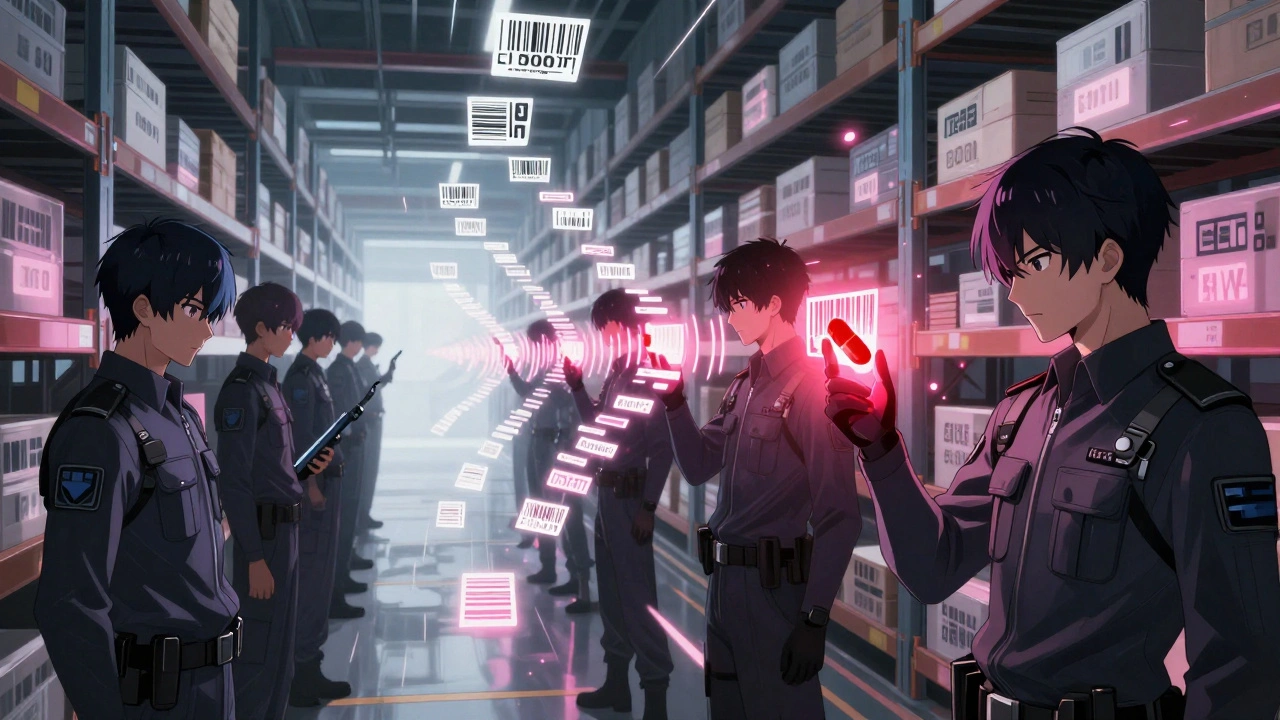
What Happens When Standards Are Weak
In countries with weak regulation, counterfeit drugs are rampant. Interpol’s 2022 Operation Pangea X seized $21 million in fake medicines-78% of them labeled as generics. In some African and Southeast Asian markets, up to 30% of medicines are fake. That’s not a rumor. It’s WHO data. Why? Because they skip the hard parts. No clean rooms. No batch traceability. No electronic records. Some manufacturers don’t even test raw materials. One FDA study found 96% of drugs bought from unregulated online pharmacies failed basic quality tests. Even in the U.S., inspections show trouble spots. FDA data from 2023 found that 78% of generic drug plants in India and 65% in China had compliance issues. Common problems? Inadequate cleaning between batches (29% of warning letters) and failing to investigate why a test result was out of spec (37%). These aren’t minor slips. They’re gaps that counterfeiters can exploit.The Cost of Getting It Right
Building a compliant generic drug plant isn’t cheap. A full eQMS implementation can cost $2-5 million. A single mass spectrometer for identity testing runs $500,000 to $1 million. Training staff takes 200+ hours per year. Document control systems must manage 5,000+ standard operating procedures. Smaller manufacturers struggle. Many can’t afford the latest tech. But the market is pushing them forward. The global generic drug market is projected to hit $721 billion by 2028. Buyers-hospitals, insurers, governments-won’t touch a supplier without full compliance. Quality isn’t optional anymore. It’s the price of entry.
What’s Next: AI, Blockchain, and Molecular Tags
The fight against counterfeits is evolving. The FDA is investing $150 million in new detection tech. IBM and Siemens are pouring $1.2 billion into AI systems that learn what a real drug looks like across thousands of variables-and spot anomalies humans miss. In Africa, the WHO is testing blockchain-based verification for antimalarial generics. Each dose gets a tamper-proof digital record. Patients can scan a code with their phone to confirm authenticity. Even more advanced? Molecular taggants-tiny, invisible markers embedded in the drug itself. These are designed to be undetectable to counterfeiters but readable by handheld scanners. Think of them like a secret watermark only the right tools can see. By 2026, the EU will require quantum-resistant cryptography for drug serialization. That means even future hackers won’t be able to fake the digital codes.Why This Matters to You
You don’t need to understand chromatography or clean room classifications. But you do need to know this: the system works. When it’s followed correctly, generic drugs are just as safe and effective as brand-name ones. The FDA reports a 0.02% adverse event rate for generics-lower than the 0.03% for brand-name drugs. That’s not luck. It’s standards. It’s training. It’s technology. It’s billions of dollars invested in making sure the pill you swallow is the one it’s supposed to be. The next time you pick up a generic prescription, don’t think of it as cheap. Think of it as protected. Protected by rules, machines, and people who refuse to let a fake reach you.What You Can Do
You can’t inspect a pill yourself. But you can protect yourself:- Buy from licensed pharmacies only. Avoid websites that don’t require a prescription.
- Check your pills. If the shape, color, or markings change unexpectedly, ask your pharmacist. It could be a different generic brand-but it could also be a red flag.
- Report suspicious drugs. The FDA has a MedWatch program for reporting counterfeit or faulty products.
Are generic drugs as safe as brand-name drugs?
Yes, when they’re made under proper quality control. The FDA requires generic drugs to meet the same standards as brand-name drugs for identity, strength, purity, and effectiveness. Studies show the adverse event rate for generics is actually slightly lower than for brand-name drugs-0.02% versus 0.03%. The difference isn’t in the drug-it’s in whether the manufacturer follows the rules.
How do regulators catch counterfeit generic drugs?
They use a mix of physical testing and digital tracking. Labs use HPLC and infrared spectroscopy to verify chemical identity. Every package has a unique serial number scanned at every step of the supply chain. If a package doesn’t match the digital record, it’s blocked. The FDA also inspects manufacturing sites-1,242 inspections in 2023 found 94% of U.S. plants were compliant. But only 65% of Chinese plants were.
Can counterfeit drugs look exactly like the real thing?
Yes, and that’s the danger. Counterfeiters can replicate color, shape, and even packaging. But they often get the chemistry wrong-using the wrong crystal form, incorrect binders, or impurities. Standard tests might miss these if they’re not looking for them. That’s why modern systems test for 50+ spectral features and track every batch digitally.
Why are generic drugs cheaper if they’re held to the same standards?
Generic manufacturers don’t have to repeat expensive clinical trials. They prove their drug works the same as the brand-name version through bioequivalence studies. But they still spend millions on quality control-clean rooms, testing equipment, staff training. The savings come from skipping R&D, not cutting corners on safety.
What should I do if I suspect a drug is fake?
Stop taking it. Contact your pharmacist and ask if the product is legitimate. If something looks off-different color, texture, or taste-report it to the FDA’s MedWatch program. You can file a report online or by phone. Your report helps regulators track counterfeit trends and shut down dangerous operations.
Do all countries enforce the same quality standards for generics?
No. The U.S., EU, Canada, and Australia have strict cGMP enforcement. But in many developing countries, regulatory systems are underfunded or corrupt. The WHO estimates counterfeit drugs make up 1% of the supply in developed nations but up to 30% in some low-income regions. That’s why buying from trusted sources matters-no matter where you live.


