You take a pill every morning for blood pressure. You trust it because the bottle says "Generic." But what if that cheap alternative carries a hidden risk? In 2026, we know more about this than ever before. Generic drugs are not just cheaper copies; they are complex chemical products where tiny manufacturing errors can lead to massive health consequences. Recent data shows that while generics save the US healthcare system trillions, they also account for a growing number of safety alerts. If you rely on generic medications, understanding the recent contamination scandals isn't just academic-it's a matter of personal safety.
The Scale of the Problem
Let's look at the numbers. Generics fill about 90% of prescriptions in the United States. That is a staggering volume. Because these drugs are so widely used, even a small percentage error affects millions of people. Between 2018 and 2025, the FDA recorded over 8,000 drug recalls. What is alarming is the trend: contamination-related recalls jumped by 37% year-over-year recently. This isn't random bad luck. It points to systemic issues in how drugs are made, especially overseas.
The core issue often lies in the supply chain. China produces roughly 80% of the Active Pharmaceutical Ingredients (APIs)-the actual active chemicals in your medicine. India manufactures about 40% of the finished pills sold in the US. When quality control slips at one of these distant factories, the ripple effect hits pharmacies in Durban, New York, or London almost instantly.
Notorious Contaminants: NDMA and Benzene
Two names have dominated headlines recently: NDMA and Benzene. These aren't just impurities; they are potential carcinogens.
NDMA (N-Nitrosodimethylamine) became infamous through the Valsartan recall crisis. Valsartan is a common blood pressure medication. In late 2018, regulators discovered that some batches contained NDMA levels up to 200 times higher than the FDA's acceptable limit. The source? A change in the manufacturing process at Zhejiang Huahai Pharmaceutical (ZHP) in China. They introduced sodium nitrite without proper validation. By September 2025, over 1,300 federal lawsuits were pending regarding Valsartan exposure. Medical records from plaintiffs show concerning trends, with some groups showing cancer rates significantly higher than the general population.
Then there is Benzene, a known industrial solvent linked to leukemia. In June 2025, a lawsuit against Walgreens alleged that their store-brand Mucinex contained benzene levels exceeding the FDA's 2 parts per million threshold. Independent testing found concentrations as high as 4.7 ppm in some samples. For patients taking these cough suppressants daily for months, chronic exposure above this level increases leukemia risk by an estimated 40%. It’s a stark reminder that "inactive" ingredients in generics can sometimes carry active risks.
Oncology and Opioid Failures
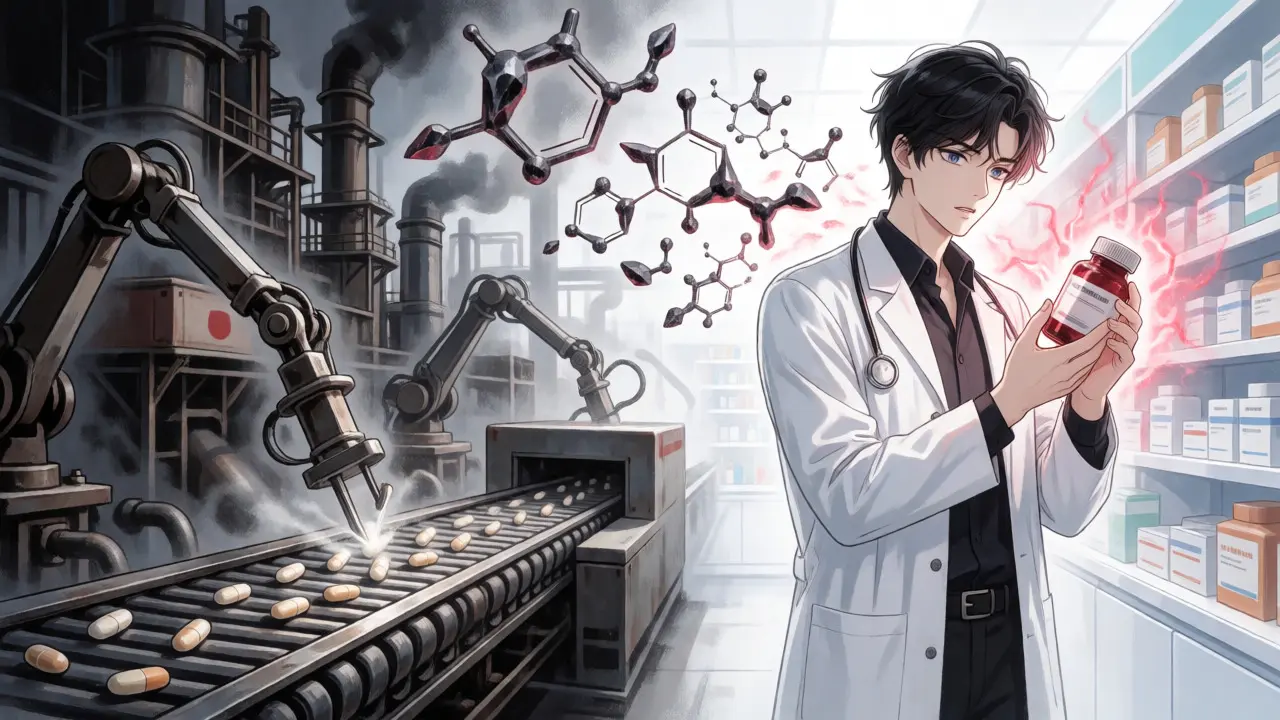
Cancer treatments leave no room for error. A STAT News investigation in mid-2025 revealed that 17 chemotherapy drugs from Indian manufacturers failed basic dissolution tests. Twelve of those samples had less than 80% of the labeled active ingredient. The FDA requires between 85% and 115%. If a patient receives a dose that is effectively half-strength, treatment fails. At Memorial Sloan Kettering, a case study showed complete remission failure in 7 out of 11 patients receiving contaminated cisplatin. This isn't just a potency issue; it's a life-or-death efficacy gap.
Opioids present a different kind of danger: physical defects rather than chemical ones. Fentanyl patches must deliver a precise amount of drug through the skin. Seal failures can cause leaks. Between 2002 and 2025, 52 million fentanyl patches were recalled due to seal issues. In 2023, Sandoz recalled 1.2 million Duragesic patches because 0.8% leaked more than 15% of the intended dose. For a pain management patient, a sudden surge of fentanyl can be fatal. Dr. Julio Nunes, a specialist in addiction services, called these recalls "shocking" given the overdose risk.
| Drug Class | Primary Contaminant/Issue | Key Manufacturer Region | Health Risk | Recall Volume Impact |
|---|---|---|---|---|
| Blood Pressure (ARBs) | NDMA (Carcinogen) | China (ZHP) | Potential Cancer | High (Millions of units) |
| Respiratory (Mucinex) | Benzene (Carcinogen) | Various/US Distribution | Leukemia Risk | Moderate (Store Brand Specific) |
| Oncology (Chemo) | Low Potency/Dissolution Failure | India (Intas, Zee Labs) | Treatment Failure | Critical (Shortages) |
| Pain Management (Fentanyl) | Seal Failure/Leakage | Global Supply Chain | Overdose | High (52 Million Patches) |
Why Do Contaminations Happen?
It usually comes down to cost-cutting and oversight gaps. The FDA inspects foreign facilities, but resources are stretched thin. Only 13% of Indian drug plants get inspected annually, despite India supplying 40% of US generics. Senator Rick Scott highlighted that 83% of top generic medicines contain no American-sourced APIs. This reliance creates a traceability nightmare.
Whistleblowers like Dr. Dinesh Thakur argue that regulatory bodies sometimes prioritize industry protection over strict enforcement. Internal FDA reviews in early 2025 admitted "significant gaps" in overseeing foreign plants. Furthermore, the FDA has historically redacted drug names in inspection reports, making it hard for doctors to know which specific brands had issues. This lack of transparency means patients often don't know if their specific bottle was part of a problematic batch until a major recall hits the news.
Prevention and What Patients Can Do
So, should you stop taking generics? Probably not. The benefits outweigh the risks for most people. But you need to be proactive. Here is how to protect yourself:
- Check the Source: Ask your pharmacist if they can identify the manufacturer of your generic. Some pharmacies will print the label code. If you are on a critical drug like thyroid medication (levothyroxine), consider sticking to a single brand if possible. Pharmacists report seeing variability in generic levothyroxine potency, causing TSH levels to fluctuate.
- Monitor Your Body: If you switch to a new generic and feel "off," document it. Changes in taste, color, or side effects can signal a formulation change or defect.
- Use FDA Alerts: Sign up for FDA MedWatch alerts. Since 2020, pharmacists spend 22% more time verifying sources, but they can't catch everything. Personal vigilance helps.
- Ask About Storage: Heat and humidity degrade pills. In places like Durban, ensure your meds are stored correctly. Degradation can mimic contamination symptoms.
Manufacturers are trying to fix this. The FDA's "Pharmaceutical Quality for the 21st Century" initiative pushes for better process controls. Continuous manufacturing, which reduces human error, is adopted by only 12% of US facilities and 3% of Indian plants. It costs $5-15 million to upgrade, but MIT research suggests it could cut contamination risks by 78%. We are slowly moving toward blockchain-based supply chains, but full electronic tracing under the DSCSA won't be mandatory until 2027.
The Future of Generic Safety
The legal landscape is shifting too. The Valsartan multidistrict litigation scheduled test trials in late 2025. These cases may set precedents for how much companies pay when they hide internal knowledge of risks. Plaintiffs' attorneys claim manufacturers knew about NDMA risks as early as 2012 but didn't act.
Looking ahead to 2026 and beyond, the FDA plans to use AI-powered predictive analytics to spot trouble before it becomes a recall. They aim to reduce contamination recalls by 50% by 2030. However, skeptics remain. Without meaningful penalties for non-compliant factories, the status quo might persist. As consumers, our power lies in demanding transparency. We pay for these drugs; we deserve to know exactly what goes into them.
Are generic drugs less safe than brand-name drugs?
Generally, no. The FDA requires generics to meet the same standards for purity, strength, and stability as brand-name drugs. However, recent data shows that the complexity of global supply chains has led to specific contamination incidents in generics that brand-name manufacturers, who often control their own production more tightly, might avoid. The risk is low but real.
What is NDMA and why was it in my blood pressure medication?
NDMA (N-Nitrosodimethylamine) is a probable human carcinogen. It appeared in some Valsartan batches due to a change in the chemical synthesis process at a Chinese factory. Sodium nitrite was used as a catalyst, reacting with other chemicals to form NDMA as an unintended byproduct. It was not added intentionally but resulted from poor process validation.
How can I tell if my generic drug is recalled?
Check the National Drug Code (NDC) number on your prescription bottle. Compare it against the FDA's recall database online. Also, ask your pharmacist. They track recalls actively and can tell you if your specific lot number was affected. If you experience unusual side effects after switching generics, consult your doctor immediately.
Why are Indian manufacturers frequently cited in contamination reports?
India supplies about 40% of the finished generic drugs sold in the US. Due to this high volume, any widespread quality control issue in the region impacts many US products. Additionally, resource constraints mean the FDA inspects only a small fraction of Indian facilities annually, allowing some substandard practices to go undetected longer than they might in domestic facilities.
Does heat affect generic drugs differently than brand-name ones?
Not necessarily differently, but generically formulated drugs may use different inactive ingredients (binders, coatings) than the brand name. These excipients can react differently to heat and humidity. In hot climates, improper storage can accelerate degradation, potentially leading to potency loss or breakdown products that resemble contamination.


