DRESS Syndrome Symptom Assessment Tool
This tool helps you assess potential signs of DRESS (Drug Reaction with Eosinophilia and Systemic Symptoms), a rare but serious drug reaction. IMPORTANT: This is not a medical diagnosis. If you suspect DRESS, stop taking the medication immediately and seek emergency medical care.
DRESS typically appears 2-8 weeks after starting a medication. The most common drugs include allopurinol, carbamazepine, lamotrigine, and certain antibiotics.
Check Symptoms
Your Assessment Result
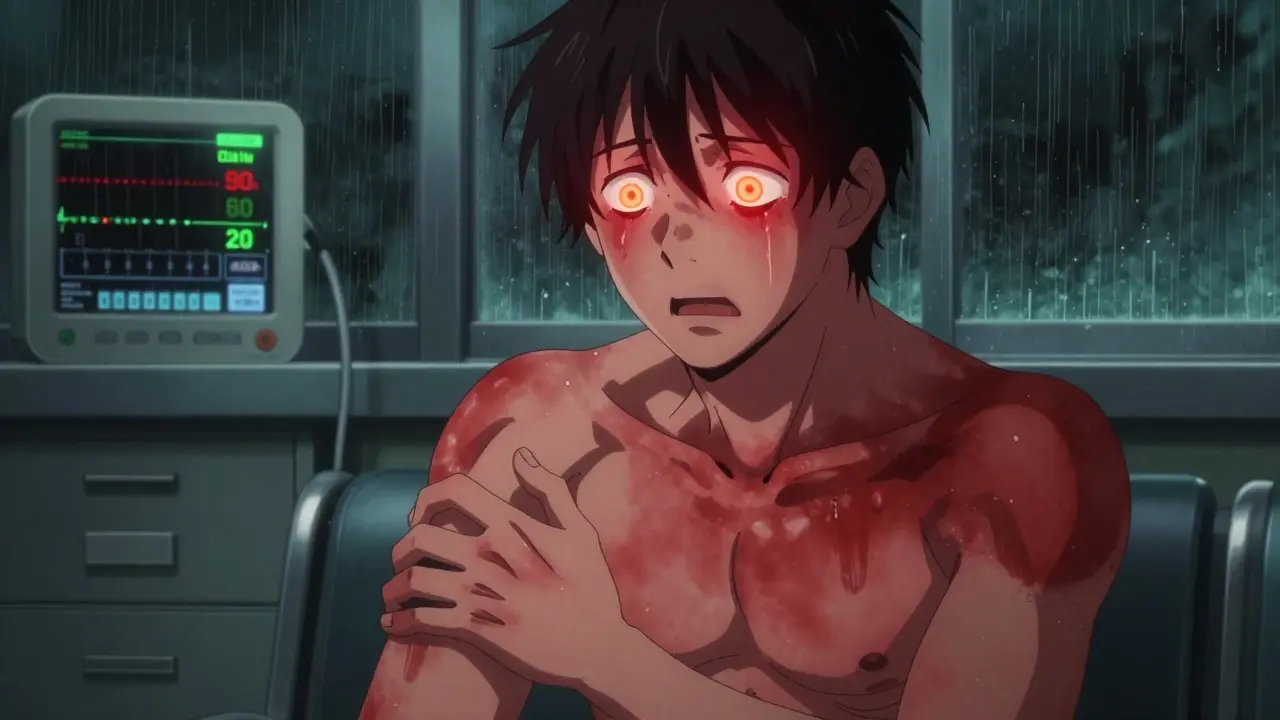
Imagine taking a common medication for gout or epilepsy, feeling fine for weeks, then suddenly breaking out in a full-body rash, running a high fever, and your liver enzymes skyrocketing. You go to the ER three times. Each time, you’re told it’s a virus or allergies. By the time someone finally says DRESS syndrome, it’s already too late. This isn’t a rare nightmare-it’s a real, underdiagnosed medical emergency that kills 1 in 10 people who get it.
What Exactly Is DRESS Syndrome?
DRESS stands for Drug Reaction with Eosinophilia and Systemic Symptoms. It’s not just a skin rash. It’s your immune system going rogue, triggered by a medication you took weeks earlier. First recognized in the 1950s, it was formally named in 1996, but most doctors still don’t recognize it fast enough.
The hallmark is a delayed reaction. Unlike allergic rashes that show up hours after taking a pill, DRESS shows up 2 to 8 weeks later. That delay is why it’s so often missed. By the time symptoms appear, the drug has already done damage-sometimes irreversible.
It’s not rare. About 1 in every 1,000 people who take high-risk drugs like allopurinol or carbamazepine will develop DRESS. In some parts of Asia, where carbamazepine is used more often, the rate is even higher. And while it’s less common than a simple rash, it’s far more dangerous.
The Classic Signs: More Than Just a Rash
If you’re on a medication and start feeling unwell after several weeks, watch for these five signs:
- A widespread red, flat, or slightly raised rash-usually starting on the face and chest, spreading to cover 80% or more of your body
- Fever above 38.5°C (101.3°F), often persistent
- Swollen lymph nodes in the neck, armpits, or groin
- Eosinophils over 1,500 per microliter (normal is under 500)
- Atypical lymphocytes in your blood test
But here’s what most people don’t realize: the rash is just the tip. In 9 out of 10 cases, internal organs are involved. The liver takes the hardest hit-78% of patients show elevated liver enzymes, sometimes over 1,000 IU/L. Kidneys, lungs, heart, and pancreas can all be affected. Some patients develop kidney failure. Others get pneumonia or heart inflammation.
Facial swelling and cracked, dry lips are common. But unlike Stevens-Johnson Syndrome, you won’t usually see blisters or peeling skin. That’s a key difference. DRESS is systemic. It’s not just skin-deep.
What Drugs Cause DRESS?
Not every medication causes this. But certain ones carry a known, documented risk:
- Allopurinol (for gout) - responsible for nearly 3 out of 10 cases
- Carbamazepine, phenytoin, lamotrigine (anti-seizure drugs) - 24% of cases
- Antibiotics like sulfonamides, vancomycin, minocycline - 20% of cases
- Antiretrovirals and some cancer immunotherapies - newer but growing risks
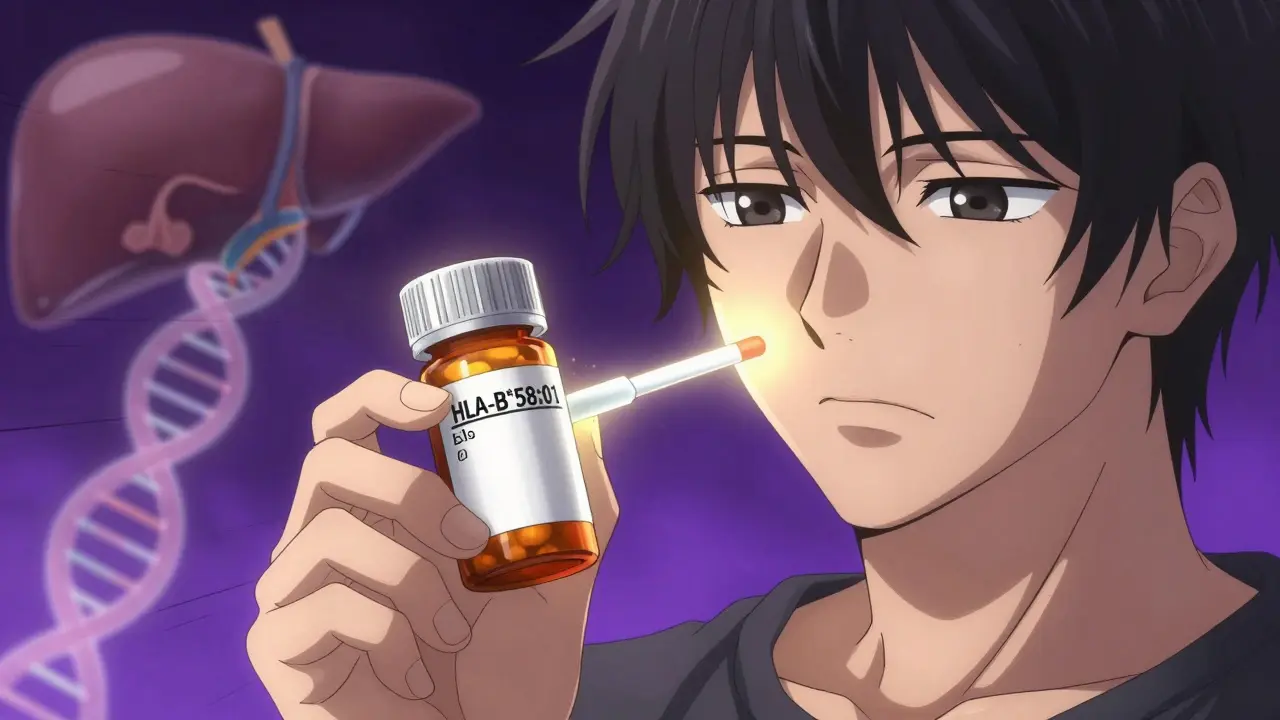
And here’s the scary part: you might not know you’re at higher risk. If you carry the HLA-B*58:01 gene, your chance of developing DRESS from allopurinol jumps 100-fold. If you have HLA-A*31:01, carbamazepine becomes dangerous. These aren’t rare genes-they’re common in certain populations. In Taiwan, where everyone gets screened before allopurinol is prescribed, DRESS cases dropped by 80%.
In the U.S., no national screening exists. You could be walking around with a genetic time bomb and never know it.
Why Is DRESS So Hard to Diagnose?
Because it looks like everything else.
Doctors see a fever and rash. They think: flu. Or mononucleosis. Or a viral exanthem. Or an allergic reaction. Even experienced ER doctors miss it. One study found 42% of early DRESS cases were misdiagnosed as viral infections.
Patient stories tell the same story. On patient forums, 78% of people visited the ER 2 to 5 times before getting the right diagnosis. One Reddit user took lamotrigine for five weeks, developed a rash and fever, went to the ER three times-and was told it was “just a virus” until their liver enzymes hit 1,200.
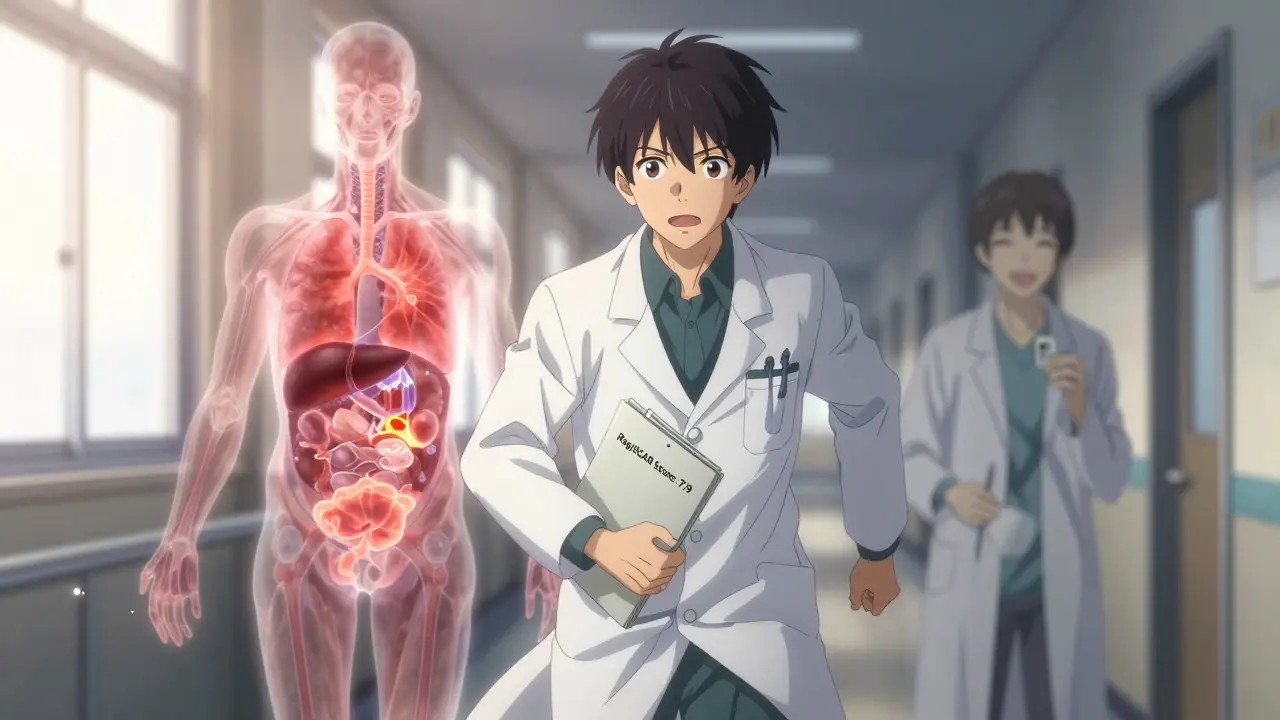
The gold standard for diagnosis is the RegiSCAR scoring system. It’s not a blood test or scan. It’s a checklist: fever, rash, eosinophilia, organ involvement, time since drug start, and exclusion of other causes. When used correctly, it’s 97% accurate. Yet, only 38% of primary care doctors can correctly apply it. Academic dermatologists? 89%.
That gap in knowledge is deadly.
What Happens If You Don’t Act Fast?
Delay kills. The mortality rate for DRESS is about 10%. That’s higher than AGEP (a milder drug reaction) and lower than SJS/TEN-but still unacceptable. Why? Because the longer you wait, the more your organs fail.
One patient in a 2022 medical journal developed permanent kidney damage after 22 days of untreated carbamazepine-induced DRESS. Another patient recovered fully after 8 weeks in the hospital and 6 months of steroid tapering. The difference? Timing.
Early treatment-starting within 72 hours of diagnosis-cuts death risk by more than half. That’s why experts say: if you suspect DRESS, stop the drug immediately. Don’t wait for a specialist. Don’t wait for a second opinion. Stop it now.
How Is It Treated?
There are no randomized trials proving one treatment is best. But here’s what works in practice:
- Stop the drug - Within 24 hours of suspicion. No exceptions.
- Corticosteroids - Prednisone or methylprednisolone. Most patients improve within days. Tapering takes 3 to 6 months. Too fast? The reaction can come back.
- Supportive care - IV fluids, liver support, dialysis if kidneys fail.
- IVIG or mycophenolate - Used in severe cases where steroids aren’t enough. New trials are underway.
Some patients need ICU-level care. If your ALT is over 1,000, your creatinine is above 2.0, or you’re having trouble breathing, you need monitoring you won’t get in a regular hospital ward.
There’s no magic bullet. But the best treatment is early recognition.
The Future: Screening, Registries, and Personalized Medicine
Things are changing. On March 1, 2023, the FDA approved the first point-of-care test for HLA-B*58:01. Now, before you even get allopurinol, your doctor can do a quick cheek swab and know your risk in under an hour.
The DRESS Syndrome Foundation launched a global registry in September 2023 with 47 sites. They’re collecting data to find biomarkers that predict who will develop chronic autoimmune problems after recovery-something we didn’t even know to look for five years ago.
Experts predict that within five years, HLA screening will be standard for all high-risk drugs. That could reduce DRESS incidence by 60 to 70%. But until then, the burden falls on patients and frontline doctors.
What Should You Do?
If you’re taking allopurinol, carbamazepine, lamotrigine, or any antibiotic and you develop:
- A rash after 2+ weeks
- A fever that won’t go away
- Swollen glands or extreme fatigue
Stop the drug. Go to the ER. Ask: “Could this be DRESS?”
Bring a list of all your medications. Ask for a complete blood count with differential, liver enzymes, kidney function, and viral serologies for HHV-6 and EBV. If they don’t know what you’re talking about, ask to speak to an infectious disease doctor or dermatologist.
And if you’ve had a severe reaction before, get genetic testing. It’s not expensive. It could save your life.
DRESS isn’t a myth. It’s a ticking clock. And the only thing that stops it is awareness.
How long after taking a drug does DRESS usually appear?
DRESS typically develops 2 to 8 weeks after starting the medication. This delayed onset is why it’s often mistaken for a viral infection. Unlike immediate allergic reactions, which happen within hours, DRESS gives the immune system time to ramp up and attack multiple organs.
Is DRESS the same as Stevens-Johnson Syndrome?
No. While both are severe drug reactions, they’re different. SJS/TEN causes blistering, skin sloughing, and severe mucosal damage (mouth, eyes, genitals). DRESS causes a widespread rash, fever, organ inflammation, and high eosinophils-but rarely causes skin detachment. DRESS also has a longer delay before symptoms appear and is more likely to involve internal organs like the liver and kidneys.
Can DRESS come back after treatment?
Yes. If steroids are tapered too quickly, the reaction can flare again. About 20% of patients experience relapse during or after treatment. That’s why doctors take months to reduce the dose-sometimes as slowly as 5 to 10 mg of prednisone per week. Never stop steroids abruptly without medical supervision.
Are there any genetic tests for DRESS?
Yes. If you’re prescribed allopurinol, testing for HLA-B*58:01 can prevent DRESS in over 80% of at-risk people. For carbamazepine, HLA-A*31:01 testing is recommended in Asian populations. These tests are simple cheek swabs and are now available as point-of-care tests in many hospitals. Ask your doctor if screening is right for you.
What’s the survival rate for DRESS?
About 90% of people survive DRESS if diagnosed and treated early. But without prompt treatment, mortality rises to nearly 20%. The biggest risk factors for death are delayed diagnosis, liver failure, kidney failure, and delayed steroid use. Early recognition is the single most important factor in survival.
Can you get DRESS from over-the-counter drugs?
Yes. While most cases come from prescription drugs like allopurinol or antibiotics, there are documented cases from NSAIDs like ibuprofen and even herbal supplements. Any drug that triggers an immune response can potentially cause DRESS. Don’t assume OTC means safe.
How long does recovery take?
Recovery varies. Most people feel better within weeks of stopping the drug and starting steroids. But full recovery can take 3 to 6 months-or longer. Some patients develop chronic conditions like autoimmune thyroiditis, diabetes, or kidney disease months after the initial reaction. Long-term follow-up is essential.
Is DRESS contagious?
No. DRESS is not contagious. It’s a personal immune reaction to a drug, not an infection. However, many patients reactivate viruses like HHV-6 during DRESS, which can be shed in bodily fluids-but this doesn’t spread the syndrome to others.


