
Citrus Medication Interaction Checker
Check Your Medications
Enter your prescription or over-the-counter medications to see if they interact with pomelo, Seville orange, or other citrus fruits that contain furanocoumarins.
Most people know grapefruit can mess with their meds. But what about pomelo or Seville orange? If you’re taking a statin, blood pressure pill, or immunosuppressant, these fruits might be just as dangerous - and way less talked about.
Why These Fruits Are Riskier Than You Think
Pomelo and Seville orange aren’t just exotic alternatives to grapefruit. They contain higher levels of the same chemicals that cause dangerous drug interactions: furanocoumarins, especially bergamottin and 6’,7’-dihydroxybergamottin. These compounds shut down an enzyme in your gut called CYP3A4, which normally breaks down a huge number of medications before they enter your bloodstream. When that enzyme is blocked, your body absorbs way more drug than it should - sometimes 3 to 4 times more.
Let’s put numbers to it. A 2018 study in the British Journal of Clinical Pharmacology found that one glass of pomelo juice increased the blood levels of simvastatin (a cholesterol drug) by 350%. Grapefruit? Only 300%. Seville orange? Even worse. In one case, a transplant patient who ate a spoonful of Seville orange marmalade every morning saw their tacrolimus (an organ transplant drug) levels spike by 400%. That’s not a typo. That’s a trip to the ER.
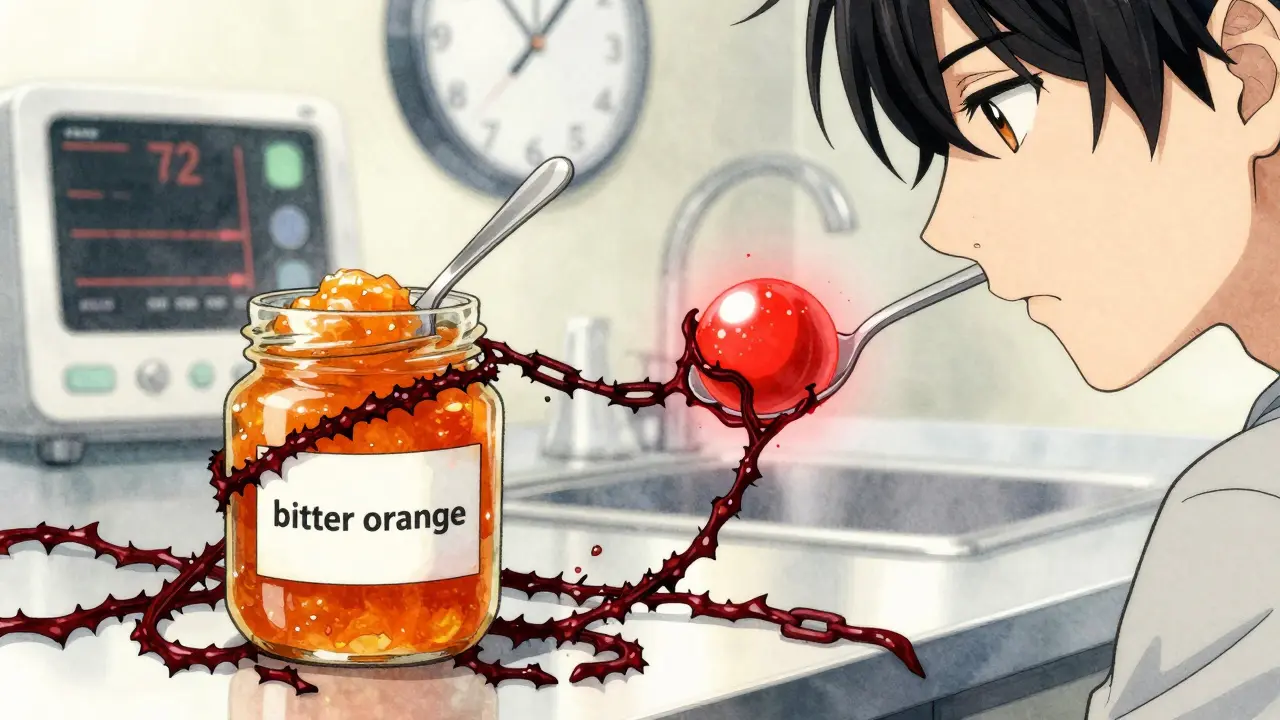
And it’s not just juice. The peel of Seville oranges is packed with furanocoumarins. Marmalade? It’s basically concentrated risk. A single jar can contain enough to interfere with your meds for days.
How Long Does the Danger Last?
Here’s the scary part: this isn’t a ‘drink it, wait a few hours’ situation. Furanocoumarins don’t just block the enzyme temporarily - they destroy it. Your body has to grow new enzymes to replace what’s been wiped out. That takes time. Effects last up to 72 hours after you eat or drink even a small amount.
So if you had pomelo for breakfast on Monday, and you take your blood pressure pill on Wednesday? You’re still at risk. Most people assume the danger is gone by the next day. It’s not. The FDA recommends avoiding these fruits for at least three full days before and during treatment with sensitive drugs.
Which Medications Are at Risk?
Not all drugs are affected. But the ones that are? They’re serious. Here’s the shortlist:
- Statins - especially simvastatin, atorvastatin, and lovastatin. Too much can cause muscle breakdown (rhabdomyolysis), which can lead to kidney failure.
- Calcium channel blockers - used for high blood pressure and heart conditions. Overdosing can drop your blood pressure dangerously low.
- Immunosuppressants - like cyclosporine and tacrolimus. Too much can poison your organs. Too little and your body rejects the transplant.
- Benzodiazepines - such as midazolam and triazolam. Can cause extreme drowsiness or breathing problems.
- Some anti-arrhythmics - like amiodarone. Can trigger dangerous heart rhythms.
And here’s the kicker: if your drug is metabolized by CYP3A4, you’re in the danger zone. That’s over 50% of commonly prescribed medications.
Why Nobody Warns You About Pomelo and Seville Orange
It’s not that the science is new. Researchers have known since the 1990s. But grapefruit got all the headlines. Pomelo? Often sold as "Chinese grapefruit" in markets. Seville orange? Hidden in jars of marmalade labeled "bitter orange" - no warning in sight.
A 2022 FDA review found only 37% of pomelo and Seville orange products carry any interaction warning. Compare that to 78% for grapefruit. Pharmacies? Only 42% of community pharmacists routinely ask about these fruits. Most patients? They’ve never heard of the risk.
One Reddit user, u/PharmTech2021, shared a case: a patient on simvastatin developed rhabdomyolysis after eating pomelo daily for two weeks. No one warned them. No label. No conversation. Just a hospital bed.
What You Need to Do Right Now
If you take any of the medications listed above - or even if you’re not sure - here’s what to do:
- Check your meds. Look up your prescription on the University of Florida Center for Pharmacogenomics list. They track 107 drugs with confirmed interactions.
- Ask your pharmacist. Don’t assume they know. Say: "Do I need to avoid pomelo or Seville orange with this medication?"
- Read labels. If you see "bitter orange," "citrus aurantium," or "pomelo" on a juice, supplement, or marmalade - stop. It’s not safe.
- Switch to safe citrus. Sweet oranges (Valencia, Navel) and tangerines have almost no furanocoumarins. They’re your safe bet.
And if you’re a caregiver or helping an older relative? Don’t assume they know. A 2023 Mayo Clinic survey found 68% of patients weren’t warned by their doctors. That’s not negligence - it’s ignorance. But it’s preventable.

The Bigger Picture
Pomelo production has jumped 50% since 2015. More people are eating it. More marmalade is being sold. And the FDA has received 217 adverse event reports linked to these fruits between 2018 and 2022 - up 43% from the previous five years.
By 2025, the FDA plans to expand warning labels to include all furanocoumarin-rich citrus fruits. But until then? You’re on your own.
And here’s something else to think about: climate change might make this worse. A 2022 study in Nature Food found that rising temperatures and drought could increase furanocoumarin levels in citrus by up to 25% by 2040. The fruit might get more dangerous just as we start eating more of it.
Bottom Line
Grapefruit isn’t the only citrus fruit that can wreck your meds. Pomelo and Seville orange are just as risky - and often more so. They’re not exotic treats. They’re pharmacological wild cards.
If you’re on a statin, blood pressure pill, transplant drug, or anything else that might be affected, don’t wait for a label. Don’t wait for your doctor to mention it. Assume it’s dangerous. Avoid it. And if you’re unsure - ask. Your body doesn’t care if it’s called "pomelo" or "grapefruit." It only cares about the chemicals inside.
Can I eat sweet oranges if I’m on medication?
Yes. Sweet oranges like Valencia, Navel, or blood oranges have negligible levels of furanocoumarins and do not interact with medications. They’re safe to eat even if you’re on statins, blood pressure drugs, or immunosuppressants. Just avoid anything labeled "bitter orange," "Seville orange," or "pomelo."
How much pomelo or Seville orange is dangerous?
As little as 200 mL (about 7 ounces) of juice - or one small slice of pomelo - can trigger an interaction. For Seville orange marmalade, even one teaspoon can be enough. The effect is cumulative, and the enzyme inhibition lasts up to 72 hours. There’s no safe threshold. If you’re on a high-risk medication, avoid it completely.
I ate pomelo and took my pill. What should I do?
If it happened once and you’re feeling fine, monitor for side effects like muscle pain (especially with statins), dizziness, extreme drowsiness, or irregular heartbeat. If you’re on a transplant drug or blood pressure medication, contact your doctor immediately. Don’t wait for symptoms. The damage can be silent until it’s serious.
Are supplements with bitter orange safe?
No. Many weight-loss, energy, or "fat-burning" supplements contain bitter orange (Seville orange extract). These are high-risk. The FDA has received multiple reports of heart attacks and strokes linked to these products in people taking other medications. Avoid them entirely if you’re on any prescription drug.
Why isn’t this better known?
Because grapefruit got all the attention. Pomelo and Seville orange are less common in Western markets, so research and labeling lagged. But as global consumption rises - especially in immigrant communities - the risk is growing. The science is clear. The warnings just haven’t caught up.


