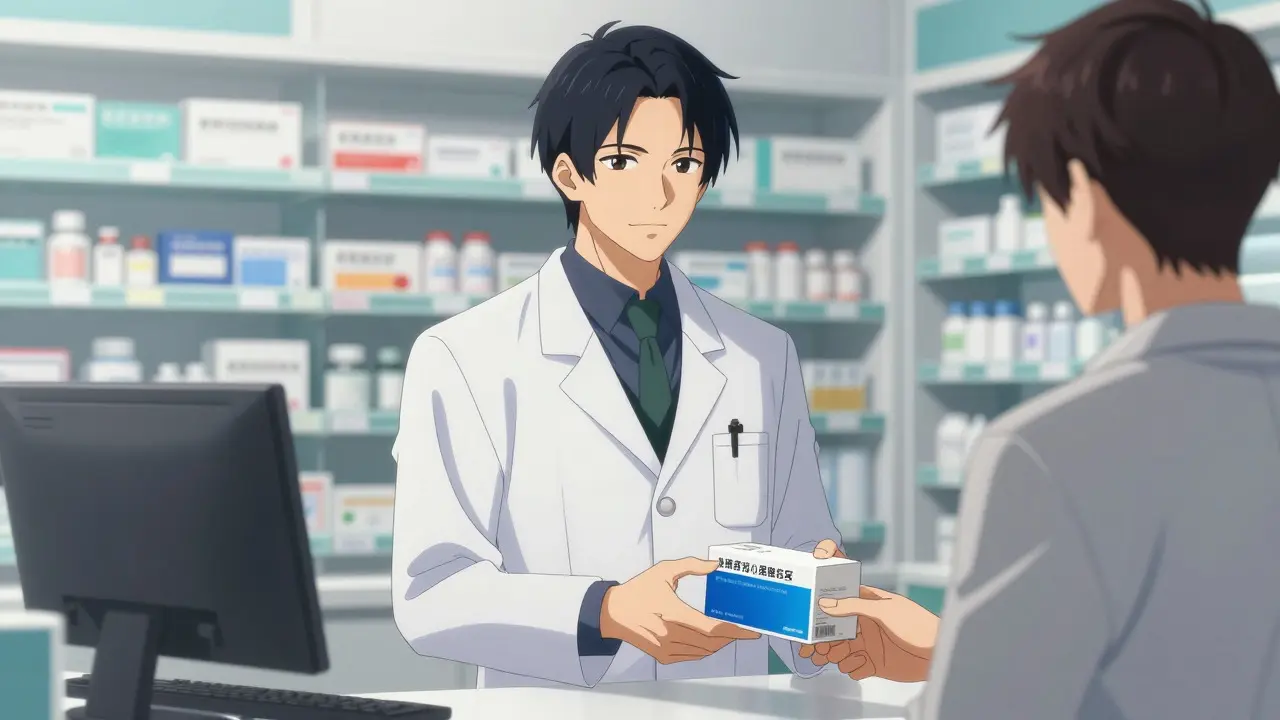
You walk into your local pharmacy to pick up a prescription for a biologic medication you’ve been taking for years. The pharmacist hands you the box, but something looks different. It’s not the brand you asked for. It’s a biosimilar with an interchangeability designation. Did they make a mistake? Do you need to call your doctor? Or is this normal?
If you live in certain parts of the United States, this isn’t a mistake-it’s the law. But if you live elsewhere, that same swap might require a phone call to your prescriber first. This confusion exists because biosimilar interchangeability is a unique regulatory status in the U.S. that allows pharmacists to substitute a biosimilar for its reference biologic without prior approval from the prescribing physician. It is one of the most complex topics in modern healthcare, sitting at the intersection of science, law, and patient safety.
The Difference Between Generics and Biosimilars
To understand why interchangeability matters, we first have to look at what these drugs actually are. You are likely familiar with generic drugs. If you take ibuprofen or metformin, you probably get the generic version. These are small-molecule drugs. They are chemically identical to the original brand-name drug. Because their structure is simple and easy to copy perfectly, the FDA considers them bioequivalent. You can swap them automatically, almost everywhere, without any extra tests.
Biosimilars are different. They are large, complex molecules made inside living cells-like bacteria or yeast. Think of them like baking two cakes using the exact same recipe. Even with the same ingredients and oven temperature, the texture and taste might vary slightly between batches. Because these biological products are so complex, no two batches are exactly identical down to the atomic level.
This complexity means regulators cannot just check if a biosimilar is "identical" to the original. Instead, they must prove it is "similar." A standard biosimilar is a biological product highly similar to an approved reference biologic, with no clinically meaningful differences in safety, purity, or potency. This is enough for doctors to prescribe them. But it is not enough for a pharmacist to swap them on their own.
What Is Interchangeability?
Interchangeability is an extra step. It is a specific label given by the U.S. Food and Drug Administration (FDA) which regulates drugs and biologics in the United States. Only the United States has this specific legal category for automatic substitution at the pharmacy counter. Other countries, like those in the European Union, generally leave the decision to swap drugs up to the doctor, not the pharmacist.
When a biosimilar gets the "interchangeable" stamp, it means the manufacturer has done extra work. They haven’t just shown the drug is similar; they have proven that switching back and forth between the original drug and the biosimilar does not hurt the patient. This involves rigorous switching studies that clinical trials where patients alternate between the reference product and the biosimilar to ensure safety and efficacy remain consistent. These studies usually involve at least two switches: from the original drug to the biosimilar, and then back to the original drug again.
As of late 2023, the FDA had approved 41 biosimilars, but only 10 were designated as interchangeable. This includes Semglee, which is the first interchangeable biosimilar approved by the FDA, a version of insulin glargine. and Cyltezo, which is the first monoclonal antibody biosimilar with interchangeability designation, used to treat autoimmune diseases.. The low number shows how difficult-and expensive-it is to meet these standards.

Why Does This Matter for Your Wallet?
You might wonder why all this regulatory red tape is necessary. The short answer is money. Biologics are some of the most expensive drugs on the market, treating serious conditions like rheumatoid arthritis, Crohn’s disease, and diabetes. The total market for biologics in the U.S. is worth hundreds of billions of dollars.
When a new drug loses its patent protection, generics or biosimilars enter the market. Competition drives prices down. Studies show that biosimilars are typically priced 15% to 30% lower than the original reference products. However, simply having a cheaper option available doesn’t always mean patients will use it. Doctors often stick with what they know. Patients fear change.
Automatic substitution solves this inertia. If a pharmacist can legally hand you the cheaper, interchangeable biosimilar without calling the doctor, usage rates go up. Data from a 2023 study in JAMA Health Forum showed that states allowing automatic substitution saw an 18.7% higher utilization rate for biosimilar insulins compared to states that didn’t. For a patient paying out-of-pocket, this could mean saving hundreds of dollars a month. For the healthcare system, it reduces the overall cost burden.
The Patchwork of State Laws
Here is where it gets tricky. Even if the FDA says a drug is interchangeable, your state might say otherwise. Healthcare regulation in the U.S. is a mix of federal rules and state laws. As of 2023, the landscape looked like this:
- Automatic Substitution Allowed: About 40 states allow pharmacists to swap interchangeable biosimilars without asking the doctor. Arizona was one of the earlier adopters, effective December 2016.
- Cost-Based Substitution: Six states (including Arkansas and Ohio) and Washington D.C. allow substitution only if it saves the patient money.
- Prescriber Approval Required: Four states (Alabama, Indiana, South Carolina, Washington) plus Puerto Rico require the doctor to approve the swap first, even if the drug is FDA-designated as interchangeable.
This creates a headache for national pharmacy chains. A pharmacist in California follows different rules than one in Arizona, even if they work for the same company. A 2022 survey found that 67% of independent pharmacists felt confused by these varying state requirements. This confusion can lead to errors or missed opportunities for savings.
| Region / Entity | Substitution Authority | Key Requirement |
|---|---|---|
| United States (Federal) | FDA Designation | Must pass switching studies to be labeled "interchangeable" |
| European Union | Healthcare Professional | No formal interchangeability status; doctor decides |
| USA (40 States) | Pharmacist | Automatic substitution allowed for interchangeable products |
| USA (4 States + PR) | Prescriber | Doctor must approve before substitution occurs |

Safety and Patient Concerns
Is it safe to switch? The FDA insists that yes, it is. Dr. Sarah Yim, a top official at the FDA, has stated clearly that interchangeable biosimilars are not a "higher level" of quality-they are just as safe and effective as the reference product, but with the added proof that switching is safe.
However, patient experiences tell a more nuanced story. On forums for psoriasis and arthritis patients, you see mixed reviews. Some patients report saving $800 a month with no issues after being switched to an interchangeable biosimilar like Hyrimoz. Others report anxiety or adverse reactions. In one case, a patient discovered they were allergic to an inactive ingredient (excipient) in the biosimilar that wasn’t present in the original drug.
This highlights a critical point: interchangeability applies to the active drug molecule, but excipients can differ. While rare, allergies to fillers or preservatives are real. A 2022 survey by the National Psoriasis Foundation found that while 63% of switched patients were satisfied, 28% worried about not being notified of the change. Transparency matters. Many states, like Arizona, require pharmacists to notify patients when a substitution happens and record the specific manufacturer name.
The Future of Biosimilar Access
The debate over interchangeability is far from over. There is ongoing political pressure to simplify the process. Legislation like the Biosimilar Red Tape Elimination Act proposes removing the requirement for switching studies entirely, arguing that if a biosimilar is approved, it should be substitutable. Industry groups representing big pharma oppose this, citing safety risks, while biosimilar manufacturers support it to boost competition.
Regardless of the politics, the trend is clear. By 2026, experts predict that nearly half of the biologics market share will come from biosimilars. As more patents expire, more interchangeable options will hit the shelves. For patients, this means lower costs and better access. For pharmacists, it means staying educated on a constantly changing set of rules.
If you receive a biosimilar instead of your usual drug, don’t panic. Check the label. Ask your pharmacist if it is interchangeable. Know your rights based on your state’s laws. And remember, whether it’s the original brand or a biosimilar, the goal is the same: keeping you healthy at a price you can afford.
What is the difference between a biosimilar and a generic drug?
Generic drugs are chemically identical copies of small-molecule drugs, making them easy to substitute. Biosimilars are highly similar to complex biological drugs made in living cells. Because they are complex, they are not identical, requiring more rigorous testing to prove safety and effectiveness. Generics are automatically substitutable; biosimilars require an additional "interchangeability" designation for automatic substitution in the U.S.
Can my pharmacist substitute my biologic drug without asking my doctor?
It depends on two things: whether the drug has FDA "interchangeability" designation and the laws in your state. In about 40 U.S. states, pharmacists can automatically substitute an interchangeable biosimilar for the reference product. In other states, they may need your doctor's approval or proof that the switch saves money. Always check your state's specific regulations.
Are interchangeable biosimils safer than non-interchangeable ones?
Not necessarily "safer," but they have undergone more testing regarding switching. All FDA-approved biosimilars must meet strict standards for safety, purity, and potency. The "interchangeable" label specifically proves that switching back and forth between the reference product and the biosimilar does not increase health risks. Both types are considered safe and effective treatments.
How much can I save by using a biosimilar?
Biosimilars are typically priced 15% to 30% lower than their reference biologic counterparts. Savings can vary widely depending on your insurance plan, the specific drug, and whether you pay out-of-pocket. For high-cost treatments like insulin or autoimmune therapies, this percentage can translate to significant monthly savings for patients.
What should I do if I have an adverse reaction to a substituted biosimilar?
Contact your healthcare provider immediately. Inform them that you received a biosimilar substitution. Keep the packaging, as the manufacturer and lot number are important for reporting adverse events. In some cases, reactions may be due to inactive ingredients (excipients) rather than the active drug itself. Your doctor can help determine if you should return to the reference product or try a different biosimilar.