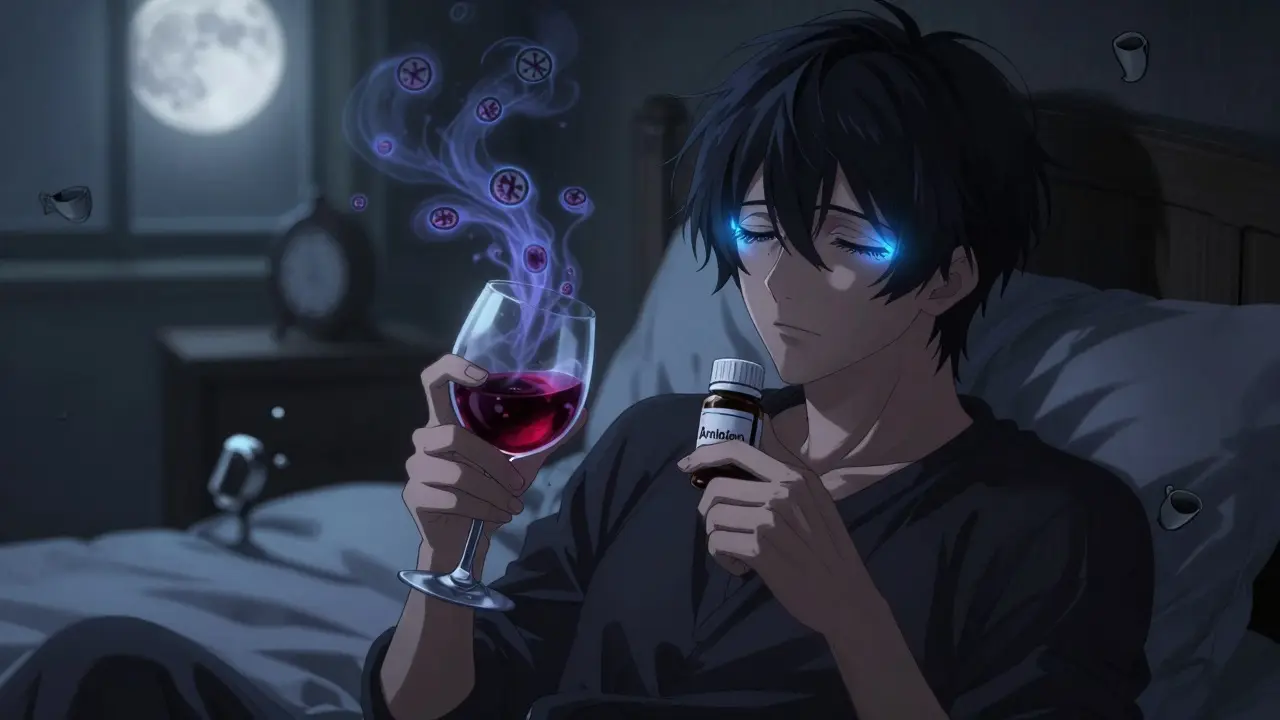
There’s a quiet danger in many homes-someone takes a sleep pill after dinner, then has a glass of wine or a beer before bed. They think it helps them unwind. What they don’t realize is they’re playing Russian roulette with their breathing, their memory, and sometimes their life.
Why Alcohol and Sleep Pills Don’t Mix
Alcohol and prescription sleep medications both slow down your central nervous system. Alone, they make you drowsy. Together, they can shut it down completely. This isn’t just "feeling extra sleepy." It’s a dangerous chemical handshake that multiplies the effect-not adds to it.
Both substances work on the same brain receptors, especially GABA, which controls relaxation and sleep. When alcohol meets a sleep pill like Ambien or Lunesta, it doesn’t just add to the sedation-it supercharges it. Your brain gets the signal to slow down so hard that your breathing becomes shallow, your heart rate drops, and your body loses the ability to wake up if you stop breathing. That’s when things turn fatal.
The U.S. National Institute on Alcohol Abuse and Alcoholism says there’s no safe amount of alcohol when you’re taking sleep meds. Even one drink can be enough to tip the scale. A 2022 FDA safety report found that blood alcohol levels as low as 0.02%-just a sip of wine-can double the time Ambien stays in your system. That means you’re sedated longer, deeper, and more dangerously than you ever intended.
The Three Types of Sleep Medications That Risk Death With Alcohol
Not all sleep aids are the same when mixed with alcohol. Some are far more dangerous than others.
Z-drugs like Ambien (zolpidem), Lunesta (eszopiclone), and Sonata (zaleplon) are the worst offenders. They’re fast-acting, designed to help you fall asleep quickly-but that speed makes them unpredictable with alcohol. In clinical trials, combining Ambien with alcohol caused 2.7 times more driving impairment than alcohol alone. People have woken up miles from home, driving, with no memory of how they got there. That’s not a glitch-it’s a known side effect. The FDA now requires a black box warning on all Z-drugs: "Do not consume alcohol while taking this medication."
Benzodiazepines like Ativan, Klonopin, and Restoril are older sedatives, often prescribed for anxiety but sometimes used for sleep. They’re less likely to cause sleepwalking than Z-drugs, but they’re still deadly with alcohol. A 2021 study showed that mixing Restoril with alcohol reduced breathing rates by nearly half. In older adults, this combination is especially risky because their bodies process both substances slower, meaning the danger lingers longer.
OTC sleep aids like ZzzQuil (diphenhydramine) and Unisom (doxylamine) are often seen as "safe" because they’re sold without a prescription. They’re not. In people over 65, combining these with alcohol increases the risk of falling by 300%. Emergency room data shows hip fractures from these mix-ups jumped from 12.7 to 51.3 cases per 100,000 older adults in just four years. And it’s not just falls. Delirium rates spike 400% in seniors who take diphenhydramine with even a small amount of alcohol. Confusion, hallucinations, and hospitalization follow.
What the Numbers Don’t Tell You-Real Stories
Behind every statistic is a person who didn’t think it would happen to them.
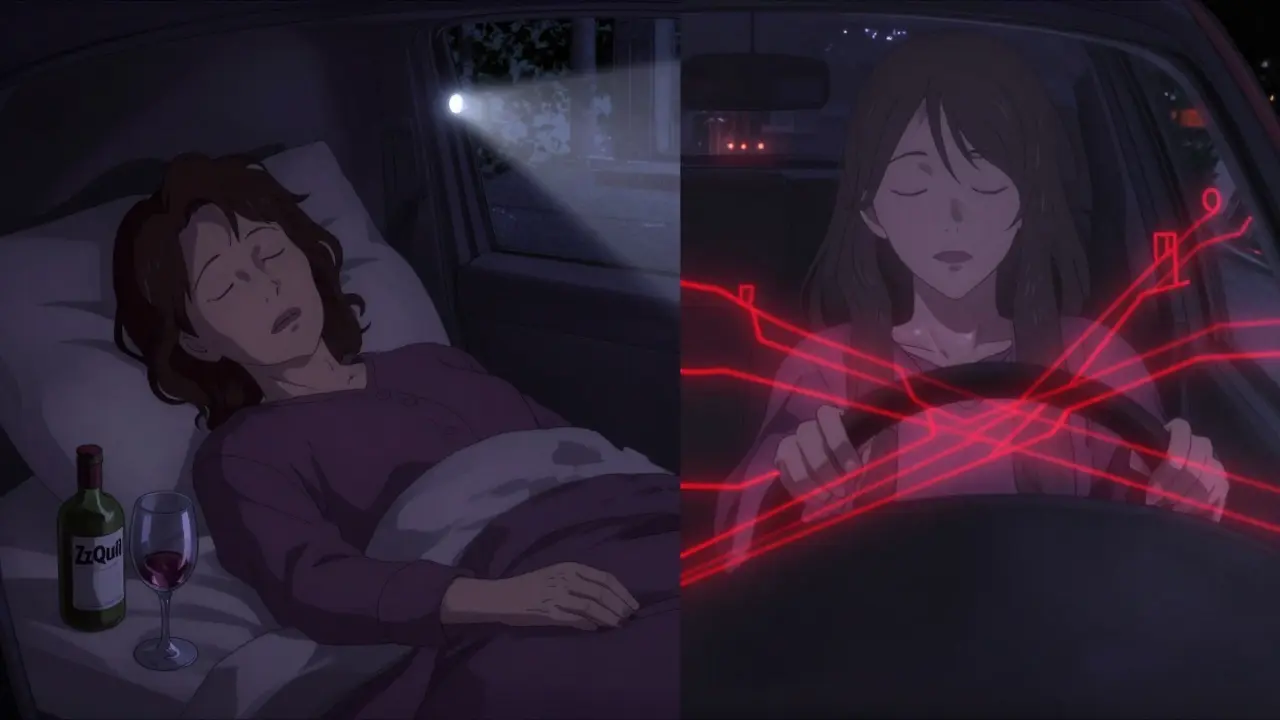
A Reddit user named u/SleepWalker99 posted in March 2023: "Took half an Ambien with two glasses of wine. Woke up two miles from home. Didn’t remember driving. Police found me asleep in my car." That’s not rare. Clinical studies show that mixing alcohol with Z-drugs raises the chance of sleep-driving from 0.15% to 2.4%. That’s 16 times more likely.
On Drugs.com, Ambien has a 1.8/5 safety rating when mixed with alcohol. The top complaint? "Extreme drowsiness lasting 12+ hours." Lunesta users report confusion and memory loss. And for older adults, the stories are even more heartbreaking. In AARP forums, 73% of posts describe severe disorientation after mixing OTC sleep aids with alcohol-some ended in hospital stays, others in permanent brain damage.
The FDA recorded 1,872 consumer complaints in 2021 alone about alcohol-sleep med interactions. Sixty-two percent of those people said they had "no memory of events." That’s not just scary-it’s a sign your brain is shutting down.
Who’s Most at Risk?
You might think this only happens to heavy drinkers or people taking too many pills. It doesn’t.
The biggest group affected? Adults aged 35 to 54. They’re the ones juggling work, kids, stress-and reaching for a pill to get through the night. They’re also the ones who think "one drink won’t hurt." But data from the Nationwide Emergency Department Sample shows this age group makes up over half of all alcohol-sedative ER visits.
Older adults? They’re the ones most likely to die from it. Even small amounts of alcohol and sleep meds can overwhelm their slower metabolism. A 2022 study found that people over 65 process both alcohol and sedatives 40-60% slower. That means the dangerous effects last longer. And because they’re more likely to be on multiple medications, the risk compounds.
And here’s the worst part: most people don’t know they’re at risk. A 2022 survey by the National Sleep Foundation found that 68% of patients prescribed sleep meds received "inadequate counseling" about alcohol. Doctors assume patients know. Patients assume it’s fine. Neither is true.
What You Can Do-And What You Should Avoid
There’s no safe way to mix alcohol and sleep medication. But there are safe alternatives.
Wait it out. If you’ve had alcohol, wait at least six hours before taking a Z-drug. For benzodiazepines, wait 12 hours. This isn’t arbitrary-it’s based on how long these substances stay active in your system. The University of Pittsburgh’s pharmacy team modeled this precisely. Cutting it close doesn’t work.
Ask your doctor about alternatives. Newer sleep medications like Dayvigo (lemborexant) don’t work on GABA receptors. Instead, they target orexin, a brain chemical that regulates wakefulness. In trials, Dayvigo showed only a 15% increase in half-life when mixed with alcohol-compared to 150-200% for Ambien. It’s not perfect, but it’s safer.
Try non-drug solutions. The American Medical Association now recommends cognitive behavioral therapy for insomnia (CBT-I) as the first-line treatment, especially for people who drink alcohol. It works better than pills over time and has zero interaction risks.
Avoid OTC sleep aids completely if you drink. They’re not safer-they’re sneakier. People think they’re harmless because they’re on the shelf. But diphenhydramine and doxylamine are powerful antihistamines. With alcohol, they turn your brain into a foggy, unsteady mess.
The Future Is Changing-But Not Fast Enough
The FDA now requires sleep med labels to say "Do not consume alcohol while taking this medication" in bold, 14-point font. Pharmacists are required to warn patients at the counter. Compliance is at 87%. That’s progress.
But the problem is growing. In 2022, over 58 million Z-drug prescriptions were filled in the U.S.-up 12% since 2018. Alcohol-sedative combinations now account for 18% of all prescription drug overdose deaths, up from 9% in 2015. That’s a doubling in less than a decade.
Researchers are now working on biomarkers to identify who’s most vulnerable to these interactions. A $4.7 million NIH grant is funding studies to find genetic or metabolic signs that predict who’s at highest risk. That could one day lead to personalized warnings.
Meanwhile, drugmakers are shifting away from GABA-targeting drugs entirely. Seven out of the 12 sleep medications currently in clinical trials use non-sedative mechanisms. That’s the future: sleep aids that don’t depress your breathing, don’t interact with alcohol, and don’t leave you waking up somewhere you don’t remember going.
But that future isn’t here yet. Right now, the only surefire way to stay safe is simple: don’t mix them. Not one drink. Not one pill. Not even once.
Can I have one glass of wine with Ambien if I wait a few hours?
No. Even one glass of wine can significantly increase the sedative effects of Ambien. Alcohol slows how quickly your body clears the drug, making it last longer and hit harder. The FDA and NIAAA state there is no safe amount of alcohol when taking Z-drugs like Ambien. Waiting six hours reduces risk but doesn’t eliminate it. The safest choice is complete avoidance.
Is melatonin safe to take with alcohol?
Melatonin has minimal dangerous interactions with alcohol compared to prescription sleep meds. It doesn’t affect GABA receptors or suppress breathing. However, studies show combining melatonin with alcohol can increase next-day drowsiness by 35%. While it’s not life-threatening, it can impair your coordination and alertness. It’s still best to avoid mixing them.
Why are older adults at higher risk?
As people age, their liver processes alcohol and medications more slowly. This means both substances stay in the body longer, increasing sedation and side effects. Older adults are also more likely to take multiple medications, which can compound the risk. The American Geriatrics Society warns that combining alcohol with any sleep aid-including OTC ones-can cause severe confusion, falls, and hospitalization in people over 65.
What should I do if I accidentally mixed alcohol and sleep medication?
If you’ve mixed alcohol and a sleep medication and feel extremely drowsy, confused, or have trouble breathing, call emergency services immediately. Do not try to sleep it off. Symptoms like slow breathing, blue lips, or unresponsiveness are signs of overdose. Even if you feel fine, monitor yourself closely for several hours. If you experience memory loss or sleepwalking, seek medical advice even if you’re not in immediate danger.
Are there any sleep aids that are safe with alcohol?
No prescription sleep aid is truly safe with alcohol. Even newer drugs like Dayvigo, which have lower interaction risks, still carry warnings. The only sleep aids with no significant interaction risk are non-pharmacological approaches: cognitive behavioral therapy for insomnia (CBT-I), sleep hygiene changes, and relaxation techniques. If you drink regularly, these are the safest long-term solutions.
Final Thought: Your Sleep Shouldn’t Cost You Your Safety
Insomnia is hard. Stress is real. Alcohol feels like a quick fix. But the cost of mixing them isn’t just a bad hangover or a foggy morning. It’s the risk of not waking up. It’s the risk of driving while asleep. It’s the risk of never remembering what happened.
There’s no shame in needing help sleeping. But there’s a huge risk in choosing the wrong kind of help. Talk to your doctor about alternatives. Try CBT-I. Give your body time to reset. And if you drink-don’t take the pill. Your life is worth more than one night of sleep.


